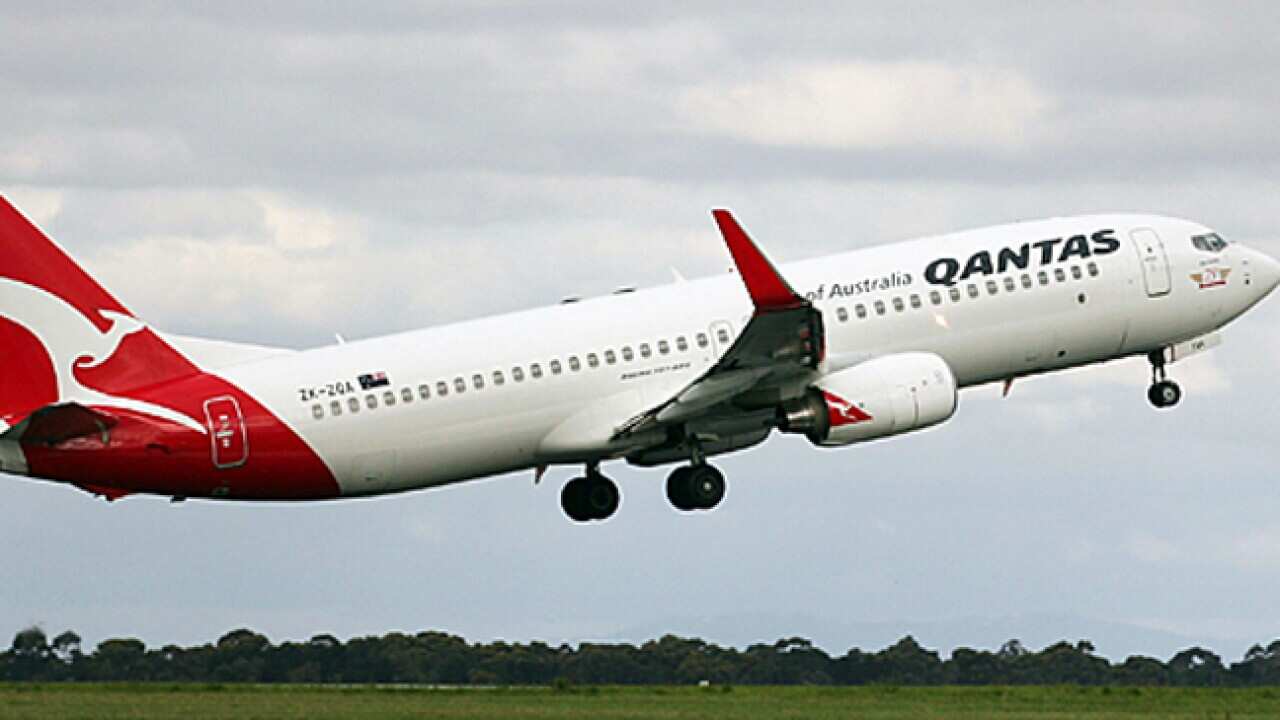
Another 30 Qantas engineers are expected to lose their jobs after Fair Work Australia (FWA) ordered them to stop checking planes before all domestic flights.
The airline and the Australian Licensed Aircraft Engineers Association (ALAEA) again found themselves before the industrial umpire in Sydney on Thursday, after Qantas changed its maintenance procedures for the Boeing 737-800 and its Airbus A330.
The airline announced on Wednesday that it no longer wanted safety checks on the aircraft before every flight, saying the new planes did not need as much maintenance.
But ALAEA told members to carry on checking the aircraft under the old system.
In Thursday's hearing, FWA upheld Qantas' application to stop engineers from carrying out the checks.
News that makes sense
Your trusted source for staying up-to-date with the world around you. Get free daily news updates and analysis, straight to your inbox.
"FWA has upheld Qantas' application against the ALAEA and will issue legally binding orders requiring the union to cease all unprotected industrial action immediately," Qantas said in a statement after the hearing.
A Qantas spokesman confirmed the changes would lead to 30 redundancies but all would be voluntary not compulsory.
It comes a month after the airline announced it would shed 500 jobs at its heavy maintenance facilities in Victoria and Queensland.
ALAEA Federal Secretary Steve Purvinas said they would be taking their concerns over aircraft safety to the Civil Aviation Safety Authority (CASA), despite Qantas having already received approval for the changes.
"If CASA doesn't listen, we will go to the Transport Minister (Anthony Albanese)," Mr Purvinas told AAP.
He said having both an engineer and a pilot do a pre-flight check by "walking around" the aircraft led to eight times the amount of defects being spotted and that Qantas' new procedures of pilot-only checks would lead to errors being missed.
"It is apparent that Qantas is turning a blind eye to all the safety concerns and tying to turn it into a low-cost carrier," he said.
But Qantas said there was "absolutely no safety risk" and that it was simply" scaremongering by the union.
"The figures he is quoting were produced by the union and have not been verified by Qantas or any third party," a spokesman said in a statement.
"This system is what other airlines around the world do, including Virgin Australia and Jetstar. It is endorsed by the regulator and it is recommended by the aircraft manufacturers themselves."







