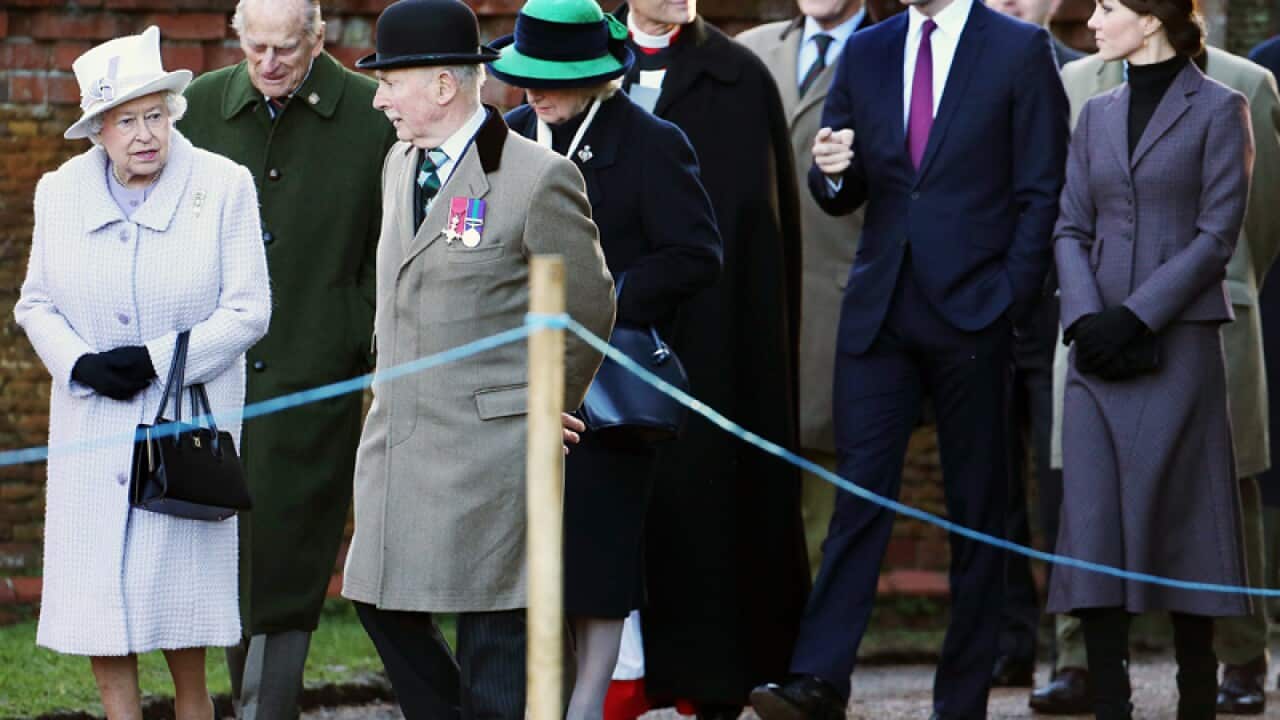
The Duke and Duchess of Cambridge have made a surprise appearance at a poignant ceremony marking 100 years since the end of the disastrous Gallipoli campaign.
William and Kate on Sunday joined the Queen and Duke of Edinburgh at a wreath-laying service held at a war memorial on the monarch's Sandringham estate.
The Cambridges were not scheduled to attend the ceremony which marked the 100th anniversary of the final withdrawal of allied troops from the Gallipoli peninsula in the First World War.
But after attending a traditional Sunday service at Sandringham's St Mary Magdalene Church with the Queen and Philip they walked behind the monarch to the nearby war memorial cross.
Kate, who celebrated her 34th birthday on Saturday, was joined at church by her parents Michael and Carole Middleton and siblings Pippa and James.
News that makes sense
Your trusted source for staying up-to-date with the world around you. Get free daily news updates and analysis, straight to your inbox.
The Queen and Prince Philip, who is patron of the Gallipoli Association, stood still as the Last Post was played by a bugler and a minute's silence was observed.
Then, with solemnity and quiet dignity, the Queen and Duke each placed a wreath at the war memorial dedicated to local men who fought in the Great War and paid the ultimate sacrifice.
The Gallipoli land campaign against Turkey was one of the major engagements of the First World War, involving more than 400,000 British and around 140,000 Commonwealth and Irish servicemen.
At dawn on April 25, 1915, waves of Allied troops launched an amphibious attack on the strategically important peninsula, which was key to controlling the Dardanelles straits, the crucial route to the Black Sea and Russia.
But the plan backed by Winston Churchill was flawed and the campaign, which faced a heroic defence by the Turks, led to stalemate and withdrawal eight months later.
Some 44,000 Allied troops died, including 8700 from Australia and 2700 New Zealanders. Almost 87,000 Turks lost their lives.
The last Allied troops were withdrawn on January 9, 1916.







