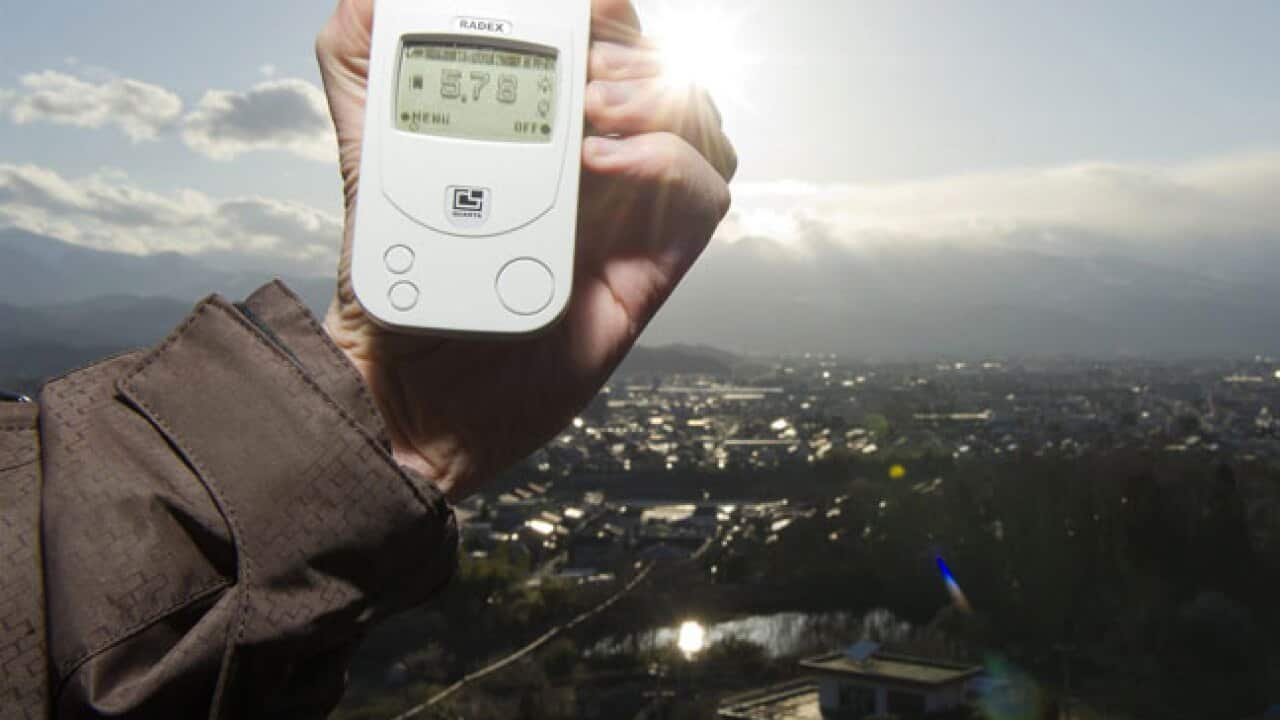
Radiation levels recorded at a village outside the evacuation zone around the quake-stricken Fukushima nuclear plant are improving daily and now appear to be back below safe levels, the UN atomic watchdog said Friday.
Two days ago, the International Atomic Energy Agency said safe limits had been exceeded at Iitate village, 40 kilometres (25 miles) northwest of Fukushima, well outside the government-imposed 20 kilometre exclusion zone and the 30-kilometre "stay indoors" zone.
But by Friday, more samples had been taken and they showed that levels were back below IAEA operational criteria for evacuation.
News that makes sense
Your trusted source for staying up-to-date with the world around you. Get free daily news updates and analysis, straight to your inbox.
"The latest assessment shows that it's actually within the range of one of the IAEA criteria for evacuation," the head of the agency's Incident and Emergency Centre, Elena Buglova, told a regular briefing here.
"The current level is below IAEA recommended limits."
As many as 15 soil samples had now been taken at the village between March 19-29 and "taking into account the radioactive decay which has occurred since the first measurements, the current average deposition is about 7.0 megabecquerels per square metre," said Gerhard Proehl, an environmental specialist at the IAEA.
"This value is lower than what was reported two days ago and together with with radioactive decay, this situation improves daily," Proehl said.
Iodine-131, one of the radiouclides released into the air from the damaged Fukushima reactors, decayed at a rate of around 8.0 percent per day, Proehl said.
On Wednesday, the watchdog had advised Japanese authorities to "carefully assess the situation" at Iitate after a single reading of 20 megabecquerels was recorded out of a total of six samples there. That reading is about twice as high as the levels the IAEA views as a criteria for evacuation.
The IAEA does not have the mandate to order national authorities to act and its comments on Wednesday did not constitute a call or a recommendation for a general widening of the exclusion zone, insisted Denis Flory, the IAEA's head of nuclear safety and security.
Iitate lies 40 kilometres (25 miles) northwest of the Fukushima nuclear power plant, which was crippled by a tsunami on March 11 and several explosions, leading to frantic efforts to prevent a catastrophic meltdown.
Greenpeace has said the 20-kilometre evacuation zone is too small.
Flory said Friday that the overall situation at Fukushima "is basically unchanged and still very serious."







