
in brief
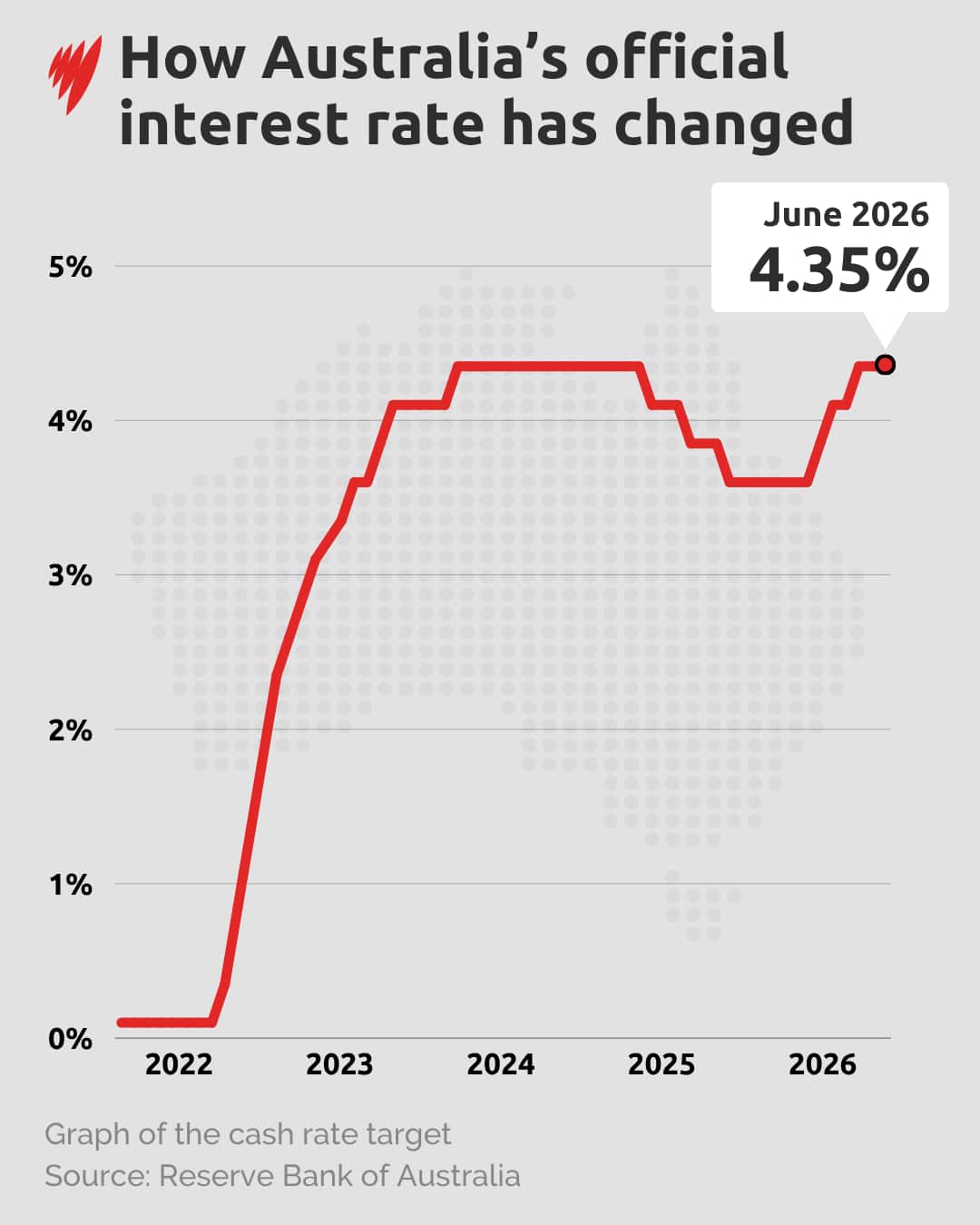
- The Reserve Bank board will decide on Tuesday whether to leave the cash rate at 4.35 per cent or change it.
- Inflation, unemployment and household spending are three key economic indicators shaping the decision.
Millions of borrowers will be watching closely when the Reserve Bank of Australia (RBA) announces its latest interest rates decision today.
A mortgage expert says it will be a close call despite expectations among the 'big four' banks — Commonwealth Bank, Westpac, NAB and ANZ — that the central bank will leave the cash rate on hold at 4.35 per cent.
The RBA has already lifted rates three times this year, while governor Michele Bullock has refused to rule out further hikes as inflation remains above its 2-3 per cent target band.
"They've got a clock ticking in the background, particularly when it comes to inflation," said Sally Tindall, the data insights director at Canstar.
"The RBA board has repeatedly said that time is a factor in this battle with inflation because the longer we take to get back down, the harder it becomes, and the more entrenched inflation becomes".
News that makes sense
Your trusted source for staying up-to-date with the world around you. Get free daily news updates and analysis, straight to your inbox.
The board will examine three key economic indicators released in recent weeks before handing down its decision on Tuesday.
Inflationary pressures
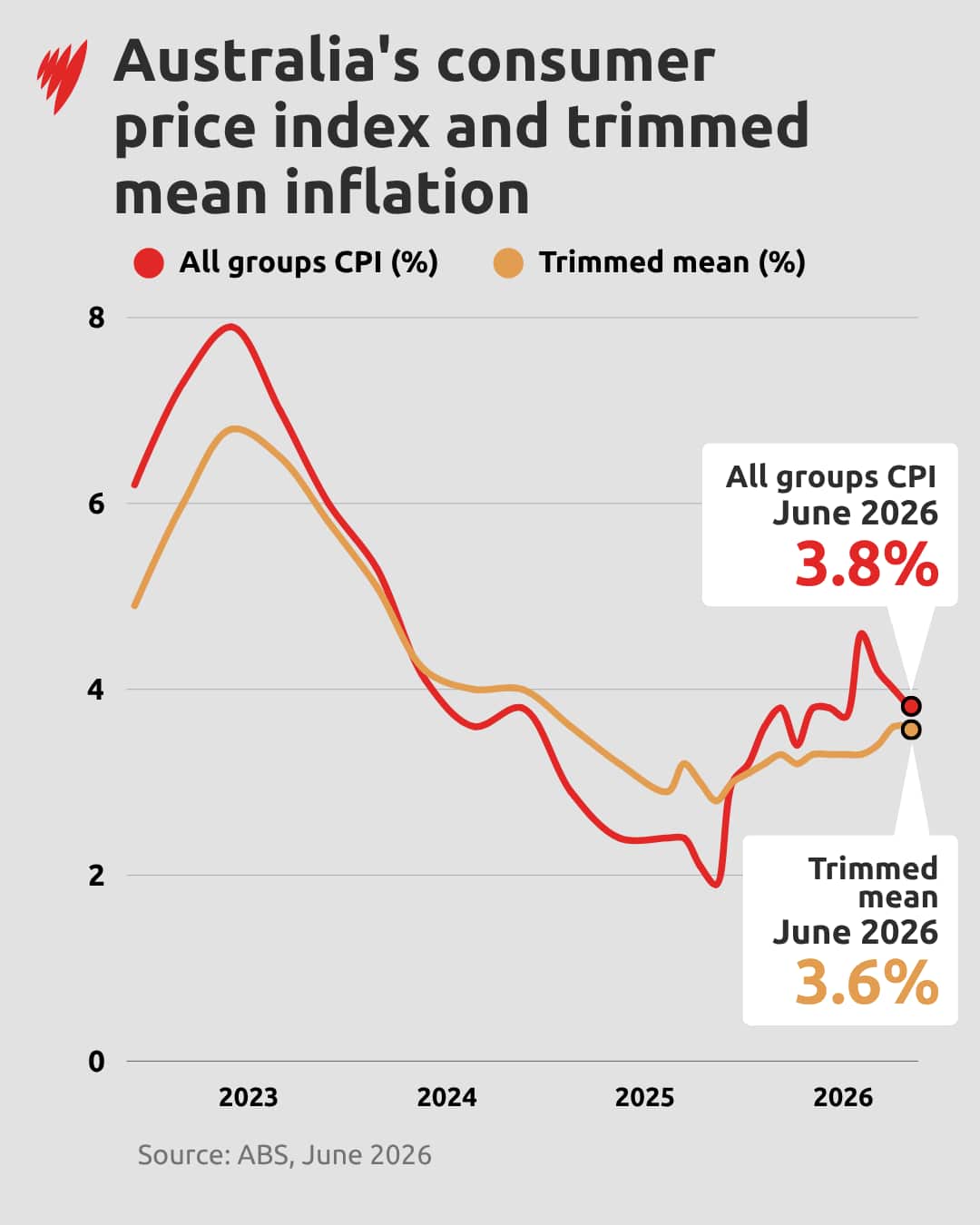
Inflationary pressures, as measured by both the consumer price index (CPI) and trimmed mean inflation, are frequently cited in the RBA's statements on its decision-making.
In June, the RBA said inflation was still too high and warned higher fuel and commodity costs are starting to flow into other parts of the economy, including housing and construction.
Bullock said Australia already had an inflation problem before disruptions to global oil markets caused by conflict in the Middle East.
The most recent data from the Australian Bureau of Statistics (ABS) showed a shift in inflation in June.
Headline inflation fell from 4 per cent to 3.8 per cent while the trimmed mean, which strips out volatile items, remained steady at 3.6 per cent.
Tindall said that inflation predictions have shifted over time primarily due to the war in the Middle East, which has added to inflationary pressures.
The figures for June were "perhaps better than we were expecting," Tindall said, "but still a long way from target".
The RBA aims to bring inflation down to between 2 and 3 per cent, fulfilling one of its mandates to keep it low and stable.
Its other mandate is to support full employment, meaning as many Australians in work as possible without creating excessive inflation.
Unemployment rate
Tindall described the unemployment rate as "a critical data set for the RBA".
In June, the unemployment rate was 4.4 per cent, slightly below the 2026 peak of 4.5 per cent in April.
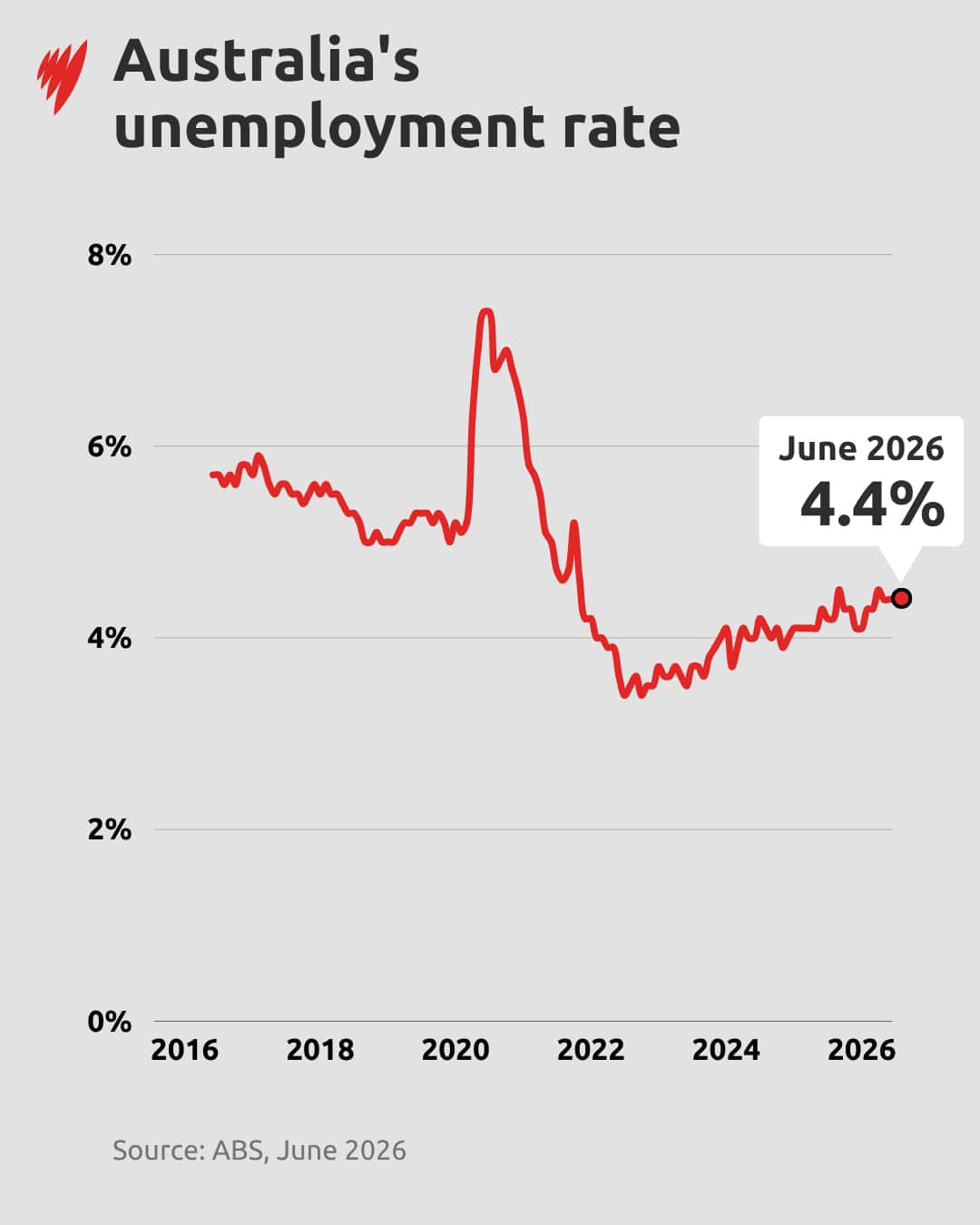
These figures have been on the RBA governor's mind. Earlier this month, Bullock said they were higher than expected.
However, Tindall said that while elevated, this figure of 4.4 per cent in itself is not going to push the board into "ringing an alarm bell".
Consumer spending
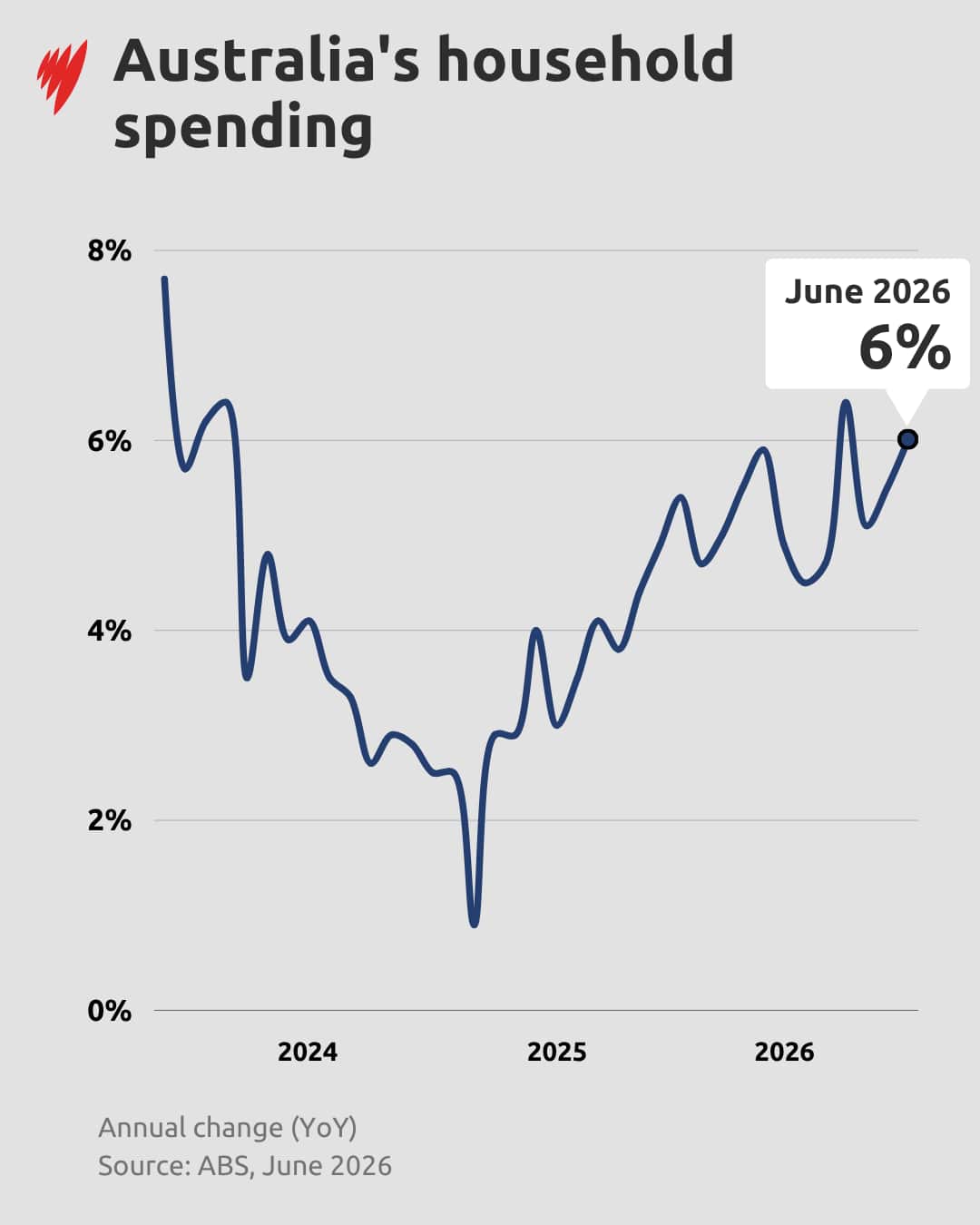
The amount households spend can give a sense of the average Australian's disposable income after they've made their mortgage payments.
This indicator gives the RBA a window into how households are faring amid economic pressures, including cost of living and the impact of higher interest rates.
However, Tindall said this data can be hard to interpret.
"It's difficult to isolate in this data the families that are doing it incredibly tough versus the ones that aren't really sweating from the economic pressures at the moment," she said.
In June 2026, household spending rose 0.8 per cent month-on-month.
"Going further back with this data set, it's actually quite volatile, and there have been rises in June and May but a fall in April," Tindall said.
"The RBA will be paying attention to this, but will also look at other data points, including liaison programs, to better understand how Australian families are going."
Under these liaison programs, RBA economists consult with hundreds of private firms, industry associations, government agencies, and community organisations across Australia.
'Don't bank on it'
While the big four banks expect the RBA to leave rates unchanged on Tuesday, Tindall said borrowers should still be prepared for the possibility of another rate rise.
"I would say if you've got a mortgage, don't bank on it. Spend the weekend just going over your finances, making sure that you can withstand another rate hike. It might not happen on Tuesday, but it could still happen in the future," she said.
The big four banks predict the RBA won't move on rates until next year, when it will likely make its first cut since August 2025.
But that could change should overseas conflict escalate and put pressure on essential products like oil.
"Go out there and see if you can potentially get yourself a better deal with your bank," Tindall said.
"You can use the interest rate uncertainty as ammunition to negotiate with your own bank, or you could end up ultimately refinancing.
"But if you can get your own personalised rate cut, that will help future-proof your finances should we see another rate hike."
Disclaimer: This article is general information. Please see a professional if you need financial advice.
For the latest from SBS News, download our app and subscribe to our newsletter.







