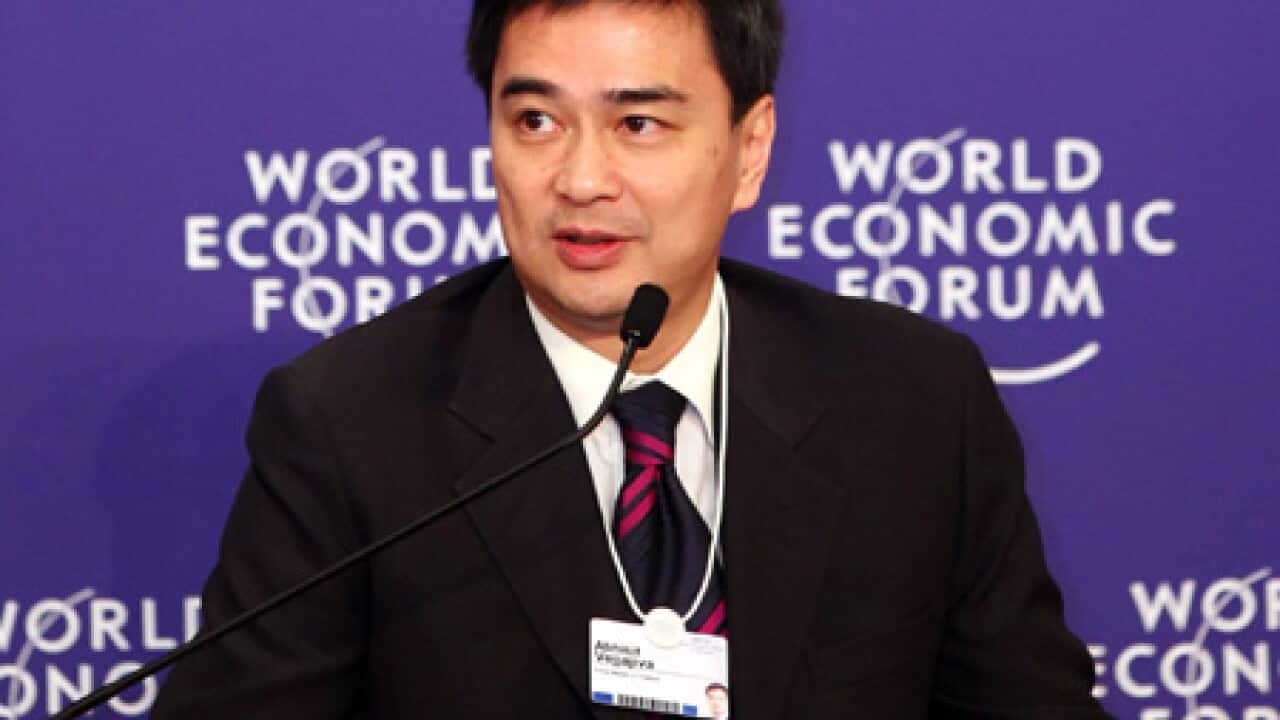
Thailand's Prime Minister has appealed to the country to join a reconciliation effort aimed at mending political divisions and paving the way for elections after the recent violent anti-government protests.
Prime Minister Abhisit Vejjajiva held the meeting at the Government House with ministers and officials from different provinces to brainstorm on his five-point reconciliation roadmap.
Southeast Asia's second-largest economy saw its latest bout of political convulsion from March to May when protesters occupied two parts of Bangkok including an affluent shopping district, calling for the government to call snap polls.
The rallies spiralled into clashes between soldiers and shadowy gunmen when troops moved in to dislodge the protesters, who broadly support former Prime Minister Thaksin Shinawatra.
In all, 89 people were killed and more than 1,800 wounded.
News that makes sense
Your trusted source for staying up-to-date with the world around you. Get free daily news updates and analysis, straight to your inbox.
Prime Minister Abhisit first floated the reconciliation plan in early May at the height of the crisis but most protest leaders rejected it as inadequate.
Televised address
He stressed the importance of pushing forward the plan in a televised address on Thursday.
"Hatred, vengeance and anger cannot build a future for Thailand and our posterity, it is time for us to reconcile to reform Thailand," Abhisit said.
But few expect a quick end to an entrenched conflict that some analysts see as pitting an old military- and royalist-linked establishment against a new, economically powerful class represented by former telecoms tycoon Thaksin.
The opposition has dismissed Abhisit's plan as little more than a bid to win popularity by his ruling Democrat party, saying reconciliation without Thaksin would not bring lasting peace.
Five-point plan
The five-point plan includes a "national reform" agenda to address social and economic disparity, a media reform plan, assessments of ways to amend a military-backed constitution, the establishment of a fact-finding commission into the violence, and protection of the most revered institution, the monarchy.
Abhisit said details of the plan would be completed by the end of the year after a public hearing process.
In May, Abhisit proposed November polls but he has backed off that, saying a peaceful vote was not possible in such a tense climate.
He said last week an election early next year was possible if reconciliation went well. His term ends in 2012. He did not mention an election in his address to the nation.







