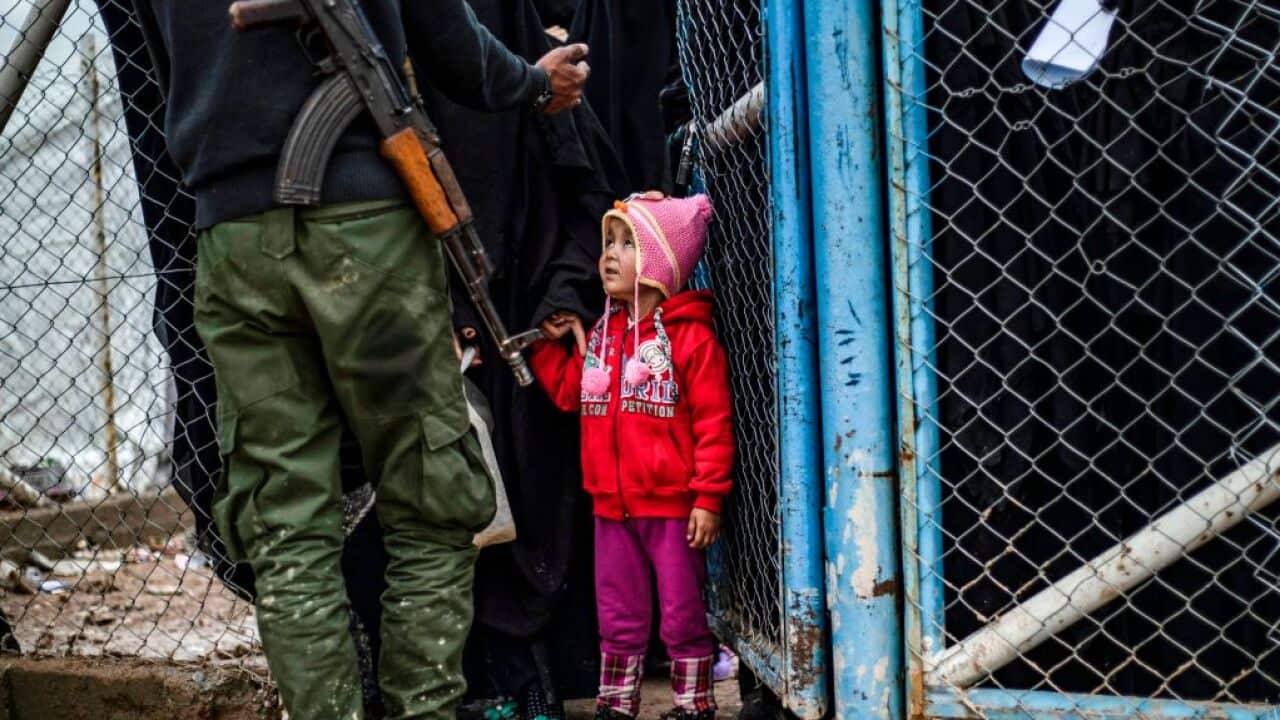
The children are living without their parents at the Al-Hol camp in northeastern Syria that holds between 80,000 and 100,000 people displaced in the assault by US-backed forces against the last IS holdout.
About 10,000 foreign women and children with ties to IS foreign fighters are held in a separate area of the camp, with children under 12 accounting for two-thirds of this group.
"Our priority is to proactively look to bring kids back to their country of origin where there are hopefully still family if there are unaccompanied," Peter Maurer, president of the International Committee for the Red Cross (ICRC), told reporters.
Foreigners at Al-Hol camp are from some 30 to 40 countries.
News that makes sense
Your trusted source for staying up-to-date with the world around you. Get free daily news updates and analysis, straight to your inbox.
Once the identity of the children is established, the Red Cross will notify governments and see if there is family in those countries "to which we can send the kids back", Maurer told reporters.
He did not have a specific figure for the number of children without their parents at Al-Hol camp, but estimated that there were "certainly hundreds, maybe more."
With the collapse of the last IS bastion in Syria last month, several governments have been grappling with the problem of what to do with captured jihadist fighters from their country, the women who married them and their children.
The ICRC president complained that governments were showing little interest in tackling the problem of foreign nationals linked to IS, limiting their response to offering emergency assistance.
"That's not really the big issue," said Maurer. "The big issue will be: how do we find a system which deals with the different categories of people, which tries to identify who is a victim, to look at individual cases," he said.
France last month took in five orphans, but it has a case-by-case approach to the return of the children.







