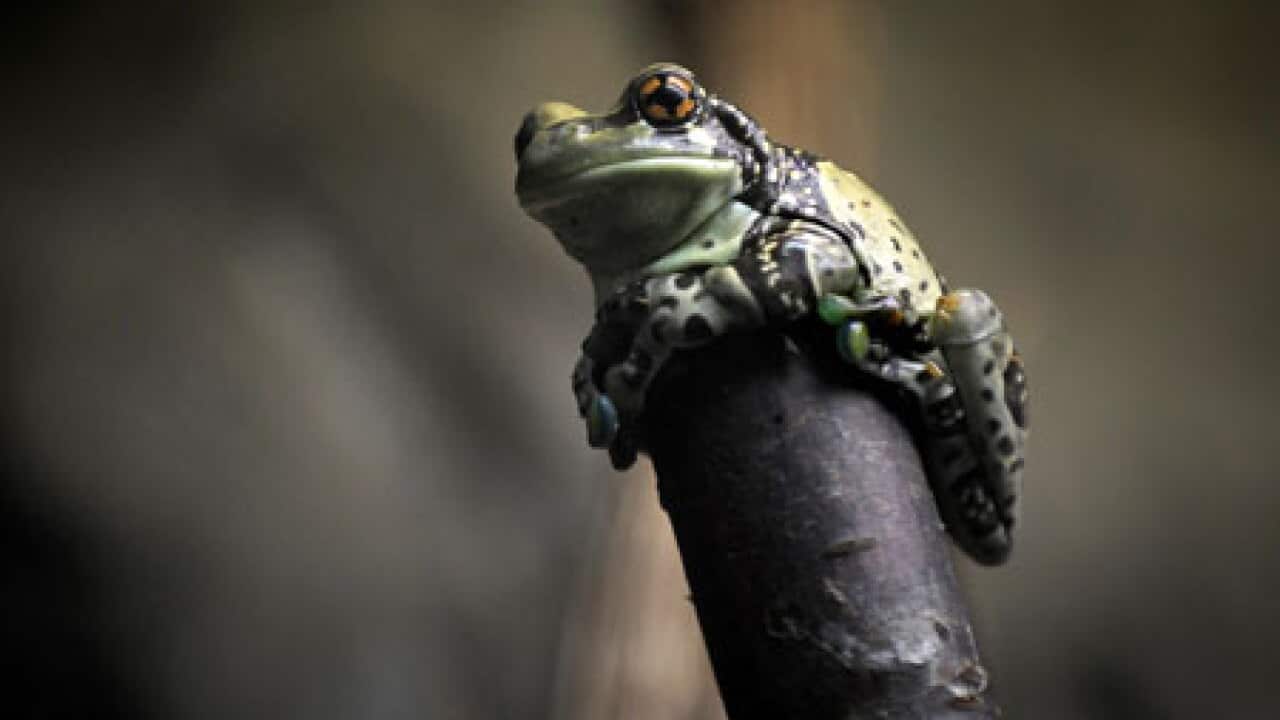
Scientists announced they had cracked the genetic code of an African clawed frog, the latest project aimed at understanding how genes work for potential applications in human health.
The genome - or collection of genetic information - of Xenopus tropicalis, a frog living entirely in water in sub-Saharan Africa, was published in the April 30 issue of the journal Science.
Authors included Jacques Robert, an immunologist at the University of Rochester Medical Center, one of two dozen institutions worldwide that cooperated in the study.
The overall effort was led by Uffe Hellsten of the US Department of Energy Joint Genome Institute in Walnut Creek, California.
The amphibian joins the spotted green puffer fish, the honeybee, and the human among the more than 175 organisms that have had their genetic information nearly completely sequenced.
News that makes sense
Your trusted source for staying up-to-date with the world around you. Get free daily news updates and analysis, straight to your inbox.
The researchers believe the finding has the potential for human health applications by giving scientists a new tool to understand how our genes work at the most basic level.
The Xenopus tropicalis genome is composed of more than 1.7 billion chemical bases spread out on 10 chromosomes.
Its genome has between 20,000 and 21,000 genes, including more than 1700 genes that are very similar to those in people that are related to conditions like cancer, asthma, and heart disease.
"This is a great starting point for really working with Xenopus to understand how genes are regulated," said Robert.
"It's a big step forward. Now the real work begins - understanding how and when those genes are turned on or off, and how they work together during development and disease. Xenopus holds the promise of becoming a very powerful model to help us learn more about our own genes."
The researchers said the information also may help scientists better understand the factors causing the vast die-off of amphibians around the globe.
The findings published in Science are based on a single African clawed frog whose DNA was broken down into small pieces that were replicated many, many times, then sent to laboratories around the world for analysis.
The project sprang from a meeting of researchers in California in 2002, when the world's top Xenopus experts, including Robert, decided to join forces to conquer the genome of the frog, a common research subject for genetics researchers.
Previously, scientists had sequenced the genome of other organisms including a mosquito, fruit fly, flower, worm, dog, rat and chicken.
According to researchers, frogs and humans have many features in common in the earliest stages of their development, sharing an evolutionary history from 360 million years ago.
Robert is one of two authors who specialise in the immune system, or understanding how the body protects itself from threats like microbes and other foreign invaders, and how the body understands what to attack and what not to attack.
Confusion on that front leads to disorders that afflict hundreds of millions of people with conditions like asthma, lupus, multiple sclerosis and rheumatoid arthritis.
Up to now, the promise for medical breakthroughs from genome researchers has yet to be realised even though it has been nearly a decade since two teams published the first working blueprint of human DNA.







