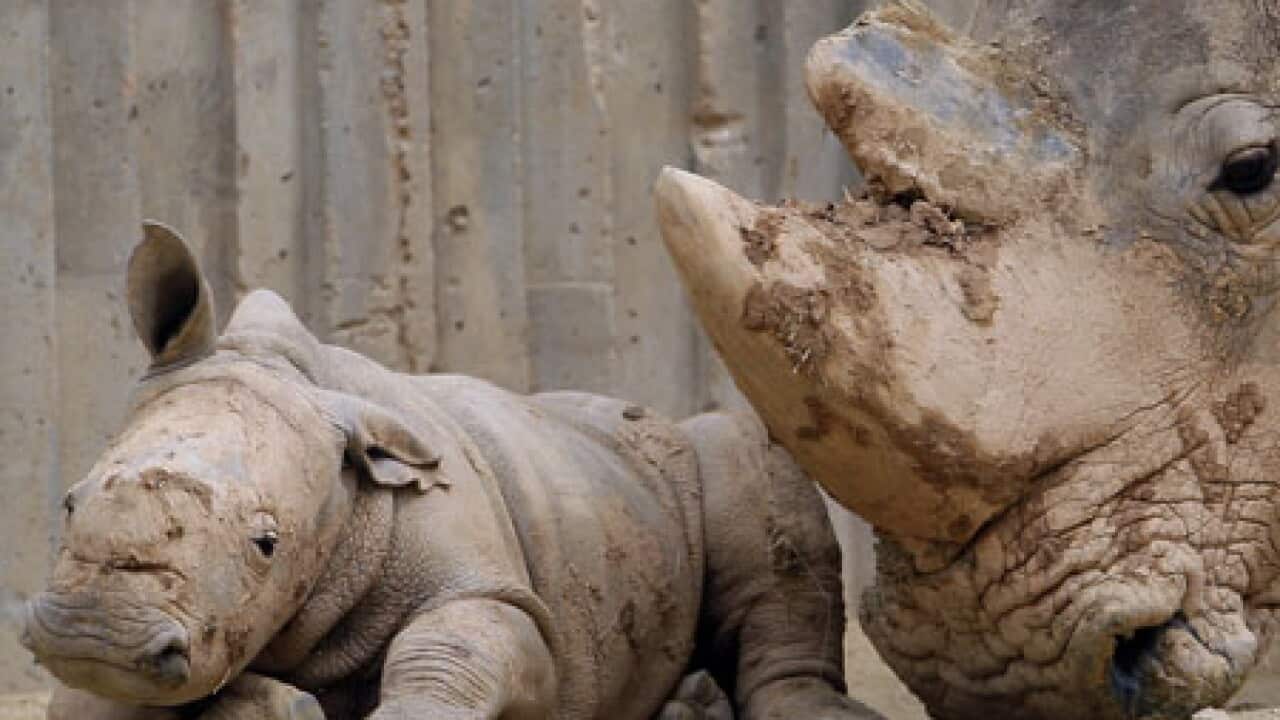
Four extremely rare Northern White rhinos recently transferred to Kenya from a Czech zoo have been dehorned to protect them from poachers, a conservation group said Tuesday.
"With the increase of poaching in Kenya, we are simply not taking any chances," Elodie Sampere from the Ol Pejeta Conservancy, which is overseeing the animals' acclimatisation told AFP.
"Without a horn, these rhinos are of no value to poachers," she said.
News that makes sense
Your trusted source for staying up-to-date with the world around you. Get free daily news updates and analysis, straight to your inbox.
The rhinos, two males and two females, are among only eight members of a very rare sub-species of white rhinos known to be alive worldwide and were transferred back to Kenya with the hope they would reproduce.
Kenyan wildlife rangers earlier this month arrested 12 men from an illicit game trade syndicate suspected of killing a 10-year-old white rhino and hacking off its horns.
The east African country, which has the world's third largest rhino population -- around 600 black and 300 white rhinos -- suffered its worst year for rhino poaching in 2009, when 12 black and six white rhinos were killed.
The illegal trade is driven by Asian and Middle Eastern demand for ivory used in traditional medicines for fevers, convulsions and as an aphrodisiac.
Sampere said that sawing off the four Northern White rhinos' horns would also allow them to grow back straight.
"All the rhinos had horns that didnGÇÖt grow upright. This is a result of them being in the zoo and not having trees to rub against," she said.
The conservationist also said that a radio-transmitter the size of a matchbox was screwed into the base of the hacked off horn to enable the tracking of the animals as they are released back into the wild.







