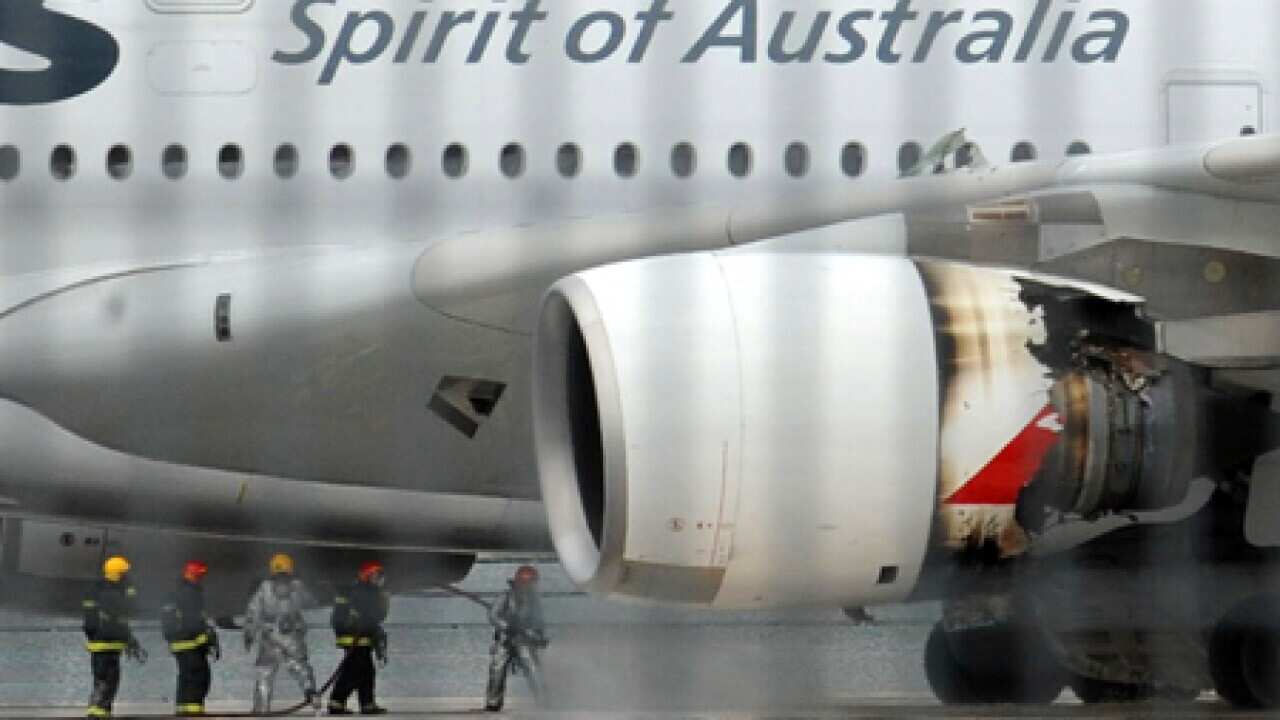
Rolls-Royce said Monday it had made progress in understanding the cause of a mid-air engine blow-out that forced a Qantas Airbus A380 superjumbo to make an emergency landing last week.
The British group was issuing only its second statement since Thursday's incident in Singapore involving a Rolls-Royce Trent 900 engine. Company shares have since then taken a battering.
"Rolls-Royce has made progress in understanding the cause of the engine failure on the Trent 900-powered A380 Qantas flight QF32 on 4 November 2010. It is now clear this incident is specific to the Trent 900 engine," the statement said.
News that makes sense
Your trusted source for staying up-to-date with the world around you. Get free daily news updates and analysis, straight to your inbox.
"As a result, a series of checks and inspections has been agreed with Airbus, with operators of the Trent 900 powered A380 and with the airworthiness authorities," it added.
"These are being progressively completed, which is allowing a resumption of operation of aircraft in full compliance with all safety standards."
The statement came after Qantas extended the grounding of its Airbus A380 superjumbos for at least three more days on Monday after finding oil leaks in some engines.
On Friday, a Qantas Boeing 747 had to turn back to Singapore after another model of Rolls-Royce engine failed in mid-air.
Rolls-Royce has been almost silent in the wake of the incidents, issuing only a brief statement last week to say that it had recommended basic precautionary checks to be carried out on its Trent 900 turbofans.
Shares in Rolls-Royce rose by 2.62 percent to 606.49 pence Monday on London's benchmark FTSE 100 index, recovering from early losses of 4.7 percent to 563 pence, at which point they were 14 percent down from Thursday.
On Monday, Singapore Airlines said that its inspections had found no problems with the Rolls-Royce Trent 900 engines used on the carrier's own Airbus A380s.
In a further boost to Rolls, the group said it had won an order from Egyptair for the long-term maintenance of Trent 700 engines on 12 Airbus A330 aircraft in a deal worth 350 million dollars (251 million euros).







