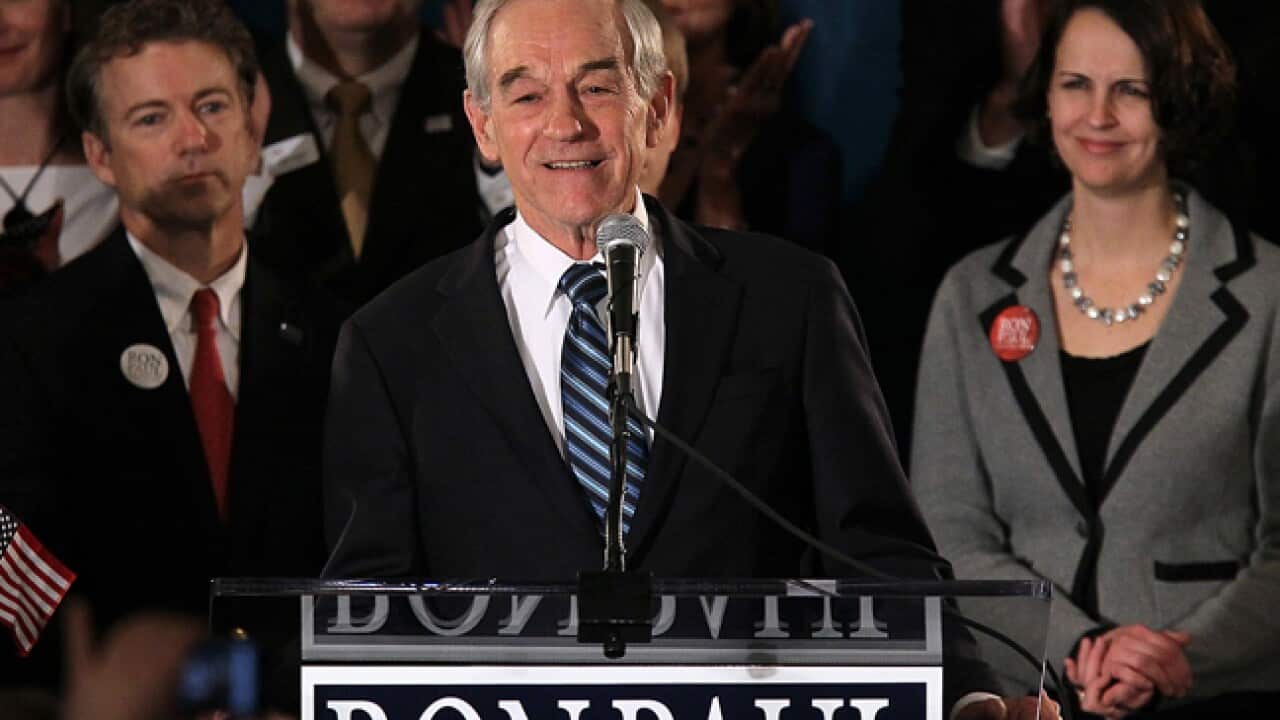
Ron Paul, the US congressman who led a doggedly persistent presidential bid against presumptive Republican nominee Mitt Romney and other rivals, said he is suspending active campaigning.
The unorthodox Paul, some of whose stances on legalizing drugs, decimating military spending and ignoring Iran's nuclear program are anathema to Republicans, did not win a single state contest in the months-long battle for the nomination.
But his campaign electrified young voters turned off by years of war and skyrocketing deficits. And his fellow Republican contenders were forced to take notice.
News that makes sense
Your trusted source for staying up-to-date with the world around you. Get free daily news updates and analysis, straight to your inbox.
In an email to supporters Paul said he will "no longer spend resources campaigning in primaries in states that have not yet voted. Doing so with any hope of success would take many tens of millions of dollars we simply do not have."
He said he is instead opting to work on amassing delegates to the party's national convention, even though his chances of winning the nomination are virtually nil.
Paul insists his team "will continue to work in the state convention process" and seek to win delegates in order to "carry a strong message" to the Republican National Convention in Tampa, Florida in late August.
A Republican candidate needs 1,144 delegates in order to be declared the nominee in the campaign to oust President Barack Obama in November. Romney has some 949, according to a count by respected website RealClearPolitics (RCP), and is expected to wrap up the nomination on May 29 when he wins the Texas primary.
Paul has 99 delegates, according to RCP, but his campaign insists their candidate's tally is being underreported and that Paul's ground game in states like Missouri, Maine and Nevada have helped them secure additional delegates.
The 76-year-old obstetrician by training, from Texas, has been in and out of the US House of Representatives for 36 years, and has run for president twice before.
He has always acknowledged his latest White House bid was a long shot, and that part of his motivation for running was a desire to get Americans focusing on issues he thought were being neglected, such as US foreign policy, "constant wars overseas" and the US Federal Reserve.
After coming in third in Iowa and second in New Hampshire -- the first votes to choose the Republican who will face Obama -- Paul shot unexpectedly into the mainstream.
Few believed he could parlay his support into enough delegates to win the nomination, but party elders have been careful not to trample his ideas in case he bolts altogether and launches a third-party presidential bid.
"I think (Paul's) effort to acquire delegates has always been to have a say in the platform and party rules," Linda Fowler, a professor of government at Dartmouth College, told AFP.
"I think he has enough now to accomplish that goal."
Romney's two main challengers, religious conservative Rick Santorum and former House speaker Newt Gingrich, dropped out in April and May, respectively, leaving Paul as Romney's lone Republican opponent for the past two weeks.
"This campaign fought hard and won electoral success that the talking heads and pundits never thought possible. But, this campaign is also about more than just the 2012 election," Paul said.
"It is about the campaign for liberty, which has taken a tremendous leap forward in this election."







