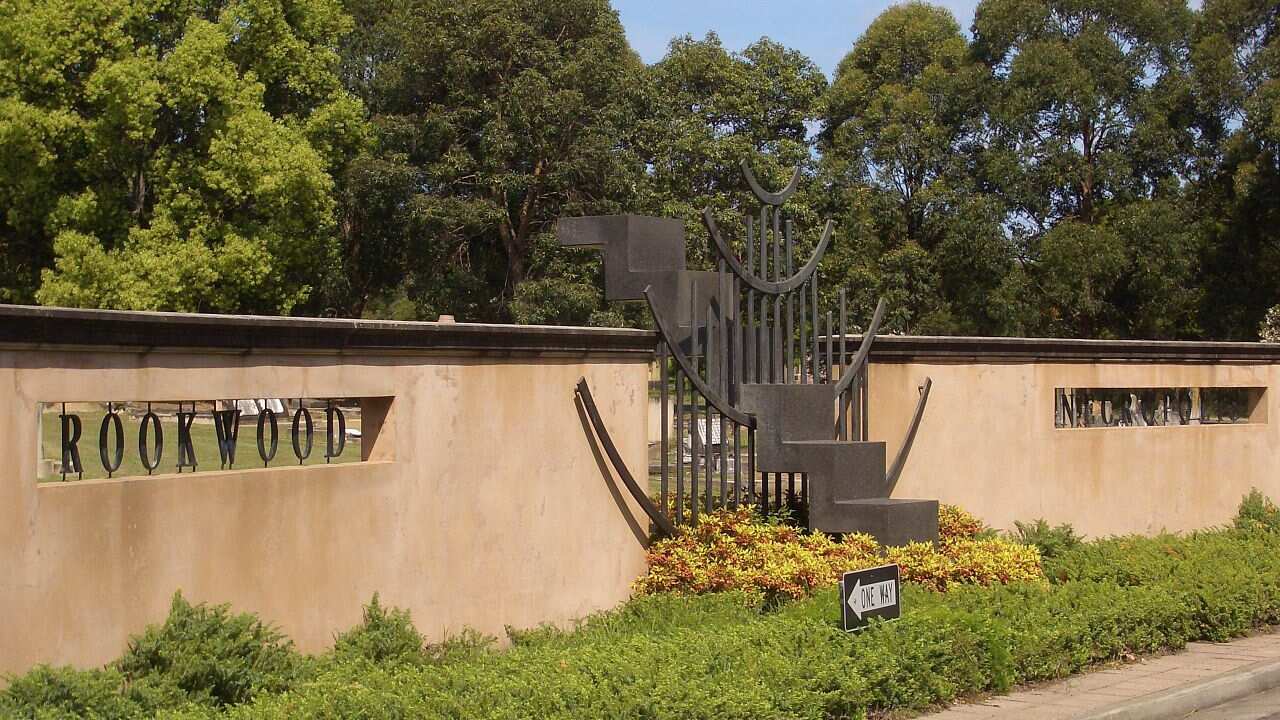
Rookwood is a bit crook. A report on one of the three trusts that run Sydney’s Rookwood Cemetery, the biggest burial ground in the southern hemisphere, paints a picture of dysfunctional board, “deeply divided” and the subject of claims of bullying and cultural insensitivity.
The NSW Minister for Lands and Water, Niall Blair, has accepted all the recommendations of a review of the Rookwood General Cemeteries Reserve Trust, ordered by the industry regulator, Cemeteries and Crematoria NSW, and conducted by Elton Consulting.
“It is our finding that the board is highly polarised around the status and role of two board members and their nominating organisations, the Jewish Board of Deputies and the Lebanese Muslim Association,” says the report, released on Friday.
To be precise, the LMA and the Jewish Board of Deputies were allies on the same pole of the board, fighting what they saw as poor management with a commercial bent and a determination to drastically jack up prices for funeral plots. On the other pole were board members who believed the pair was too focused on advocating for their own communities rather than all the 90 different faith groups represented by the general trust.
Among the recommendations to be implemented, any future board members and the executive will undergo training in anti-bullying and faith-based cultural competency.
News that makes sense
Your trusted source for staying up-to-date with the world around you. Get free daily news updates and analysis, straight to your inbox.
In May, the NSW Government dissolved the general trust after Cemeteries and Crematoria found evidence of poor governance and conflict of interest. The chief executive had been dumped and the chairman and other board members quit. In the board’s place, Jason Masters was appointed as interim administrator. He will now manage the affairs of the trust for a year, Mr Blair said.
The general trust operated separately to Rookwood’s Catholic and necropolis trusts.
But distrust between board members was a feature of the general trust, the Elton Consulting investigation found.
A backdrop to the tensions is the shrinking availability of land for burials in a growing city. The Jewish community worried it had as little as seven years left at Rookwood.
Both communities are pressing for the release of land elsewhere to guarantee future burials. Their push for separate faith-based section managers at Rookwood will be among measures considered under the report’s recommendations.
Other areas of tension include planning for “renewable tenure” for grave plots. For families who take this option, a plot will be dug up as little as 25 years after a burial to make way for someone else, a practice already commenced at Waverley Cemetery. This is not an option for the Jewish faith, which insists upon perpetual burial.
But, as the report notes, the Jewish community is sustaining burial plots with double burials – allowing for two people in the one plot.
Former trust chairman Bob Wilson’s response to the review, contained in the report, said it “ignored” the trust’s submission of pricing and the findings appeared to have been “negatively affected by the limited range of stakeholders consulted in its preparation. This is a shame, as it has resulted in a misrepresentation of cultural appreciation and community engagement practices.”
Jewish Board of Deputies chief executive Vic Alhadeff commended the government for addressing “critical deficiencies” in the way the trust had been governed and managed. He was confident “the recommendations will lead to significant improvements at Rookwood. We are already working co-operatively with the newly appointed administrator.”
The minister, Mr Blair, said: “Today draws a clear line in the sand – I have taken decisive action to address community concerns and ensure that Rookwood General Cemeteries Reserve Trust is placed on a sustainable footing into the future.”







