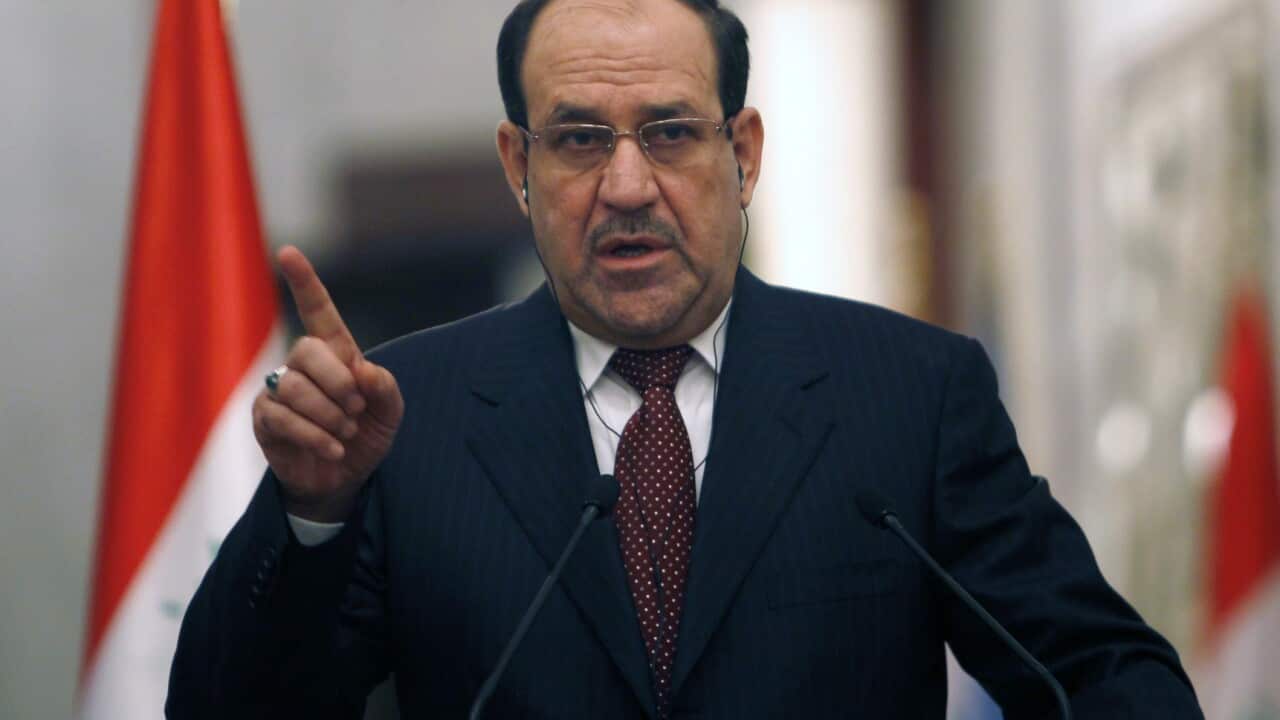
Saudi Arabia and Qatar are supporting militant groups in Iraq and have effectively declared war on the country, Prime Minister Nuri al-Maliki said as nationwide violence left 15 dead on Saturday.
The rare direct attack on the Sunni Gulf powers, with Maliki also accusing Riyadh of supporting global terrorism, comes with Iraq embroiled in its worst prolonged period of bloodshed since 2008, with more than 1,800 people killed already this year, ahead of parliamentary elections due next month.
The bloodletting in Iraq, which shares a long border with Saudi Arabia, has been driven principally by widespread discontent among the country's Sunni Arab minority and by the civil war in neighbouring Syria.
Maliki, a Shiite, has in the past blamed unnamed regional countries and neighbours for destabilising Iraq.
But in an interview with France 24 broadcast on Saturday, Maliki said allegations he was marginalising Sunnis were being pushed by "sectarians with ties to foreign agendas, with Saudi and Qatari incitement".
News that makes sense
Your trusted source for staying up-to-date with the world around you. Get free daily news updates and analysis, straight to your inbox.
Referring to the two countries, he said: "They are attacking Iraq, through Syria and in a direct way, and they announced war on Iraq, as they announced it on Syria, and unfortunately it is on a sectarian and political basis."
"These two countries are primarily responsible for the sectarian and terrorist and security crisis of Iraq."
He said Riyadh and Doha were providing political, financial and media support to militant groups and accused them of "buying weapons for the benefit of these terrorist organisations".
In the interview, Maliki also accused Saudi Arabia of supporting global terrorism, both inside the Arab world and in other countries.
He slammed "the dangerous Saudi stance" of supporting "terrorism in the world - it supports it in Syria and Iraq and Lebanon and Egypt and Libya and even in countries outside" the Arab world.
Maliki in January blamed "diabolical" and "treacherous" Arab countries but has consistently refused to point directly at particular states.
But as violence has worsened markedly in Iraq - the death toll from violence last month was more than double that of February 2013 - and with elections due on April 30, Maliki has taken a hard line, pushing security operations against militants.
He has also called for greater co-ordination against militancy, with Baghdad due to host an international counter-terrorism conference on March 12.
Attacks across Iraq killed 13 people on Saturday, including a parliamentary candidate and four children, as the country suffers its worst violence in years.







