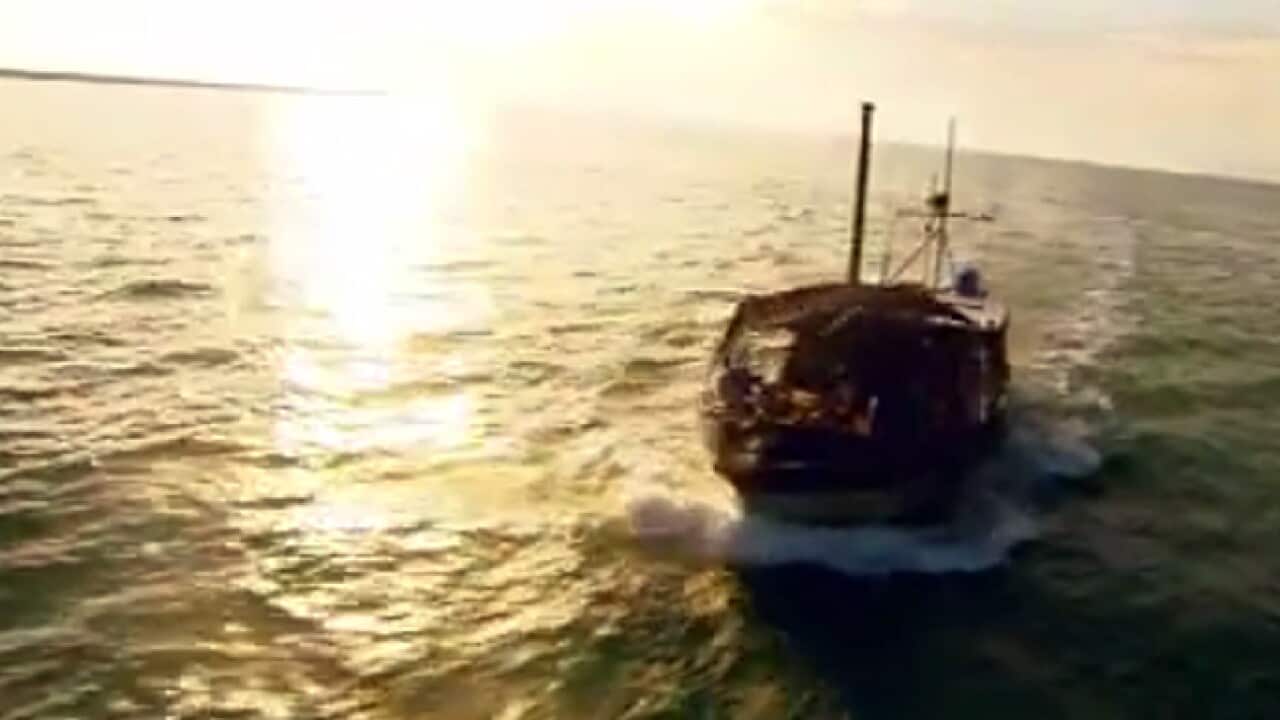
In 'Go Back to Where You Came From' six Australians go on a confronting 25-day journey tracing in reverse the journeys that real refugees have taken to reach Australia.
Watch a preview of the documentary:
News that makes sense
Your trusted source for staying up-to-date with the world around you. Get free daily news updates and analysis, straight to your inbox.
They end up in refugee camps Kenya, Iraq, the Congo and Malaysia.
SBS Commissioning Editor Peter Newman says the show was designed to show the full complexity of the issue.
"We've tried to bring all the sides in this debate into one microcosm and send them on this journey," he said.
"We are not taking sides. The show is editorially neutral".
About 70 people applied to participate in the program. The six featured range in age from 21 to 63, come from all over Australia and differ greatly in their political views.
Like most of the participants in the show, Raye Colbey has strong views about people arriving in Australia by by boat.
“I'm more informed now and I can see their side and understand why they do it, and even though I don't like it and I don't agree with it, on the other hand I am very anti the boat people, because I feel as though they are taking the place of the genuine refugee who has waited and waited for years and years and years to be resettled and they are just being overlooked.
“I don't have a problem with their motives or anything, because I would probably do the same, but they're demanding so much from us and taking so much from us and expecting so much from us, they're not appreciating the fact that they're here, and that freedom is just months away maybe," she said.
“That freedom for the people in Kakuma or the people in Kuala Lumpur -- freedom to them is a dream if they dare to dream".
A 2011 report from the United Nations High Commissioner for Refugees shows Australia is only receiving about two per cent of the industrialised world's asylum claims.
However, the UN report says while there was a five per cent decrease in the total number of asylum claims made in 44 Western countries last year, Australia experienced a one-third increase.
The United Nations cautions that despite this increase, it's only 2,000 people more than the year before, a much lower figure than in many other Western countries.
In total, an estimated 358,000 people fled persecution in their homelands in 2010 to seek asylum in industrialised countries.
Business student Darren Hassan is descended from Australia's early Afghan cameleers and is a contributor to the series.
He thinks Australia should discourage others by not accepting asylum-seekers arriving by boat.
He also thinks the debate needs to be broadened.
“I think we need to be able to have a rational discussion about the pros and cons. I find people are a bit more left or bleeding heart, as soon as you disagree with them they bring in all these straw man arguments: [saying] 'You're a racist'".
“It's actually really disappointing that those who say we should be intolerant are actually themselves intolerant of any other view that doesn't agree with theirs. So I think that there are negatives with this, it's costing the Australian taxpayers a lot of money to be doing this.
“Is there some other way we could be doing this? It is entirely our responsibility? These are questions we should have every right to discuss in sensible bipartisan way.
In the program, the group visits Kuala Lumpur, where thousands of asylum-seekers and refugees are now living.
The visit was made before the Australian Government announced plans to send up to 800 new boat arrivals, including unaccompanied children, to Malaysia for processing.
Despite concerns raised by the United Nations, the Australian government says Malaysian authorities have assured Australia's asylum-seekers will be treated humanely.
For Raye Colbey, her trip to the country was an experience she described as both informative and horrific
“In Kuala Lumpur we went on what they call a raid with the immigration department on a building site and it was conducted at about 2.30 or 3 o'clock in the morning where there was a whole lot of legal and illegal refugees living in these little tiny shanty plywood little rooms that they slept in and they worked on the building site for a very meagre existence.
“[In] the raid they were herded like animals and it was emotionally just so upsetting and confronting. They were then taken to the jails and the detention centre, they were stripped naked and their buttocks were caned until they were red, raw and bleeding, and shredded and this was just accepted that that's what they do to deter them to come there.
Doctor David Corlett acted as the 'tour guide' on the show.
He has worked with refugees and asylum-seekers as a case worker, researcher and adviser.
He says there are a couple of themes that have emerged in the public debate around asylum-seekers and refugees, and he hopes the program will trigger new ways of discussing the issue.
Like many of those working in the field, he says there are no easy answers.
As for Australia's deal with Malaysia, after seeing how asylum-seekers are treated there, David Corlett has some concerns.
“Both governments have said that asylum-seekers sent to Malaysia won't be treated any differently to the rest of the refugee and asylum-seeker population in Malaysia and we know that Malaysia's human rights record with regard to refugees and asylum-seekers is pretty poor so I certainly wouldn't want to be an asylum-seeker sent to Malaysia, given what I know about Malaysia.
For Raye Colbey the trip overseas changed her views on some things, but not on asylum-seekers arriving by boat.
She still thinks it's a bad idea.
She continues to oppose of a facility housing asylum-seekers that's been built in her home town of Inverbrackie in Adelaide.
Despite this, she feels powerless and confused by the suffering experienced by refugees and asylum-seekers.
She says one conversation with an African refugee in a camp in Kenya has stayed with her.
“He said 'I put my head on the pillow at night Raye and all I ask for is tomorrow.' Because there's nothing more than tomorrow. To think that these people, and there are literally hundreds of thousands of them in that same predicament who dare not dream, who dare not even think beyond tomorrow because that's what it is: a day-to-day proposition”.
Go Back To Where You Came screens on SBS One on the June 21, 22, and 23 at 8.30pm.
Watch an extended interview with SBS Commissioning Producer Peter Newman







