A third of English schools were closed and another third were affected, officials said, as up to 350,000 teachers, lecturers and education staff took action against plans to make them work longer and pay more into their pensions.
Tax offices, museums and job centres were also brought to a standstill as a further 100,000 civil servants walked out on the first nationwide day of strike action since the coalition government took office last year.
News that makes sense
Your trusted source for staying up-to-date with the world around you. Get free daily news updates and analysis, straight to your inbox.
However, airport operator BAA said feared delays at London Heathrow because of a walkout by immigration and customs staff failed to materialise, and ministers said only half the civil servants who could have downed tools actually did so.
Prime Minister David Cameron has insisted the labour changes are fair and inevitable, warning this week that the pension system is "in danger of going broke" faced with an ageing population.
Francis Maude, the minister who oversees the civil service, told BBC radio on Thursday: "You cannot continue to have more and more people in retirement being supported by fewer and fewer people in work. Long-term reform is needed."
'NO NEGOTIATION'
But the unions say they have already accepted pension reforms over the past decade and accuse ministers of pushing through new changes without negotiation.
Thousands of strikers marched through central London on Thursday, brandishing banners calling for "Fair Pensions for All" and "Education Cuts Never Heal", and around 80 further demonstrations were held in towns around the country.
"I will lose £60,000 (AU$90,000), I'll pay an extra £60 a month and I'll have to work seven or eight years longer," said Richard Jones, a 39-year-old civil servant marching in London.
Kevin Courtney, deputy general secretary of the National Union of Teachers, admitted the action was "very disruptive for parents," adding "we do regret that".
Cameron's Conservative-Liberal Democrat coalition has been the focal point of public sector anger ever since it announced a two-year pay freeze and 330,000 job losses by 2015 in an attempt to rein in a record budget deficit.
The strike was the largest public sector strike since a million local government workers walked out in March 2006, and some union leaders have warned it may only be the beginning of months of industrial unrest over pensions.
"This is the best-supported strike we've ever had," insisted Mark Serwotka, general secretary of the Public and Commercial Services civil service union.
He said members had sent "a clear message to the government that they will not tolerate these attacks on their hard-earned pensions rights".
Unison, the largest public sector union with 1.3 million members, has opted to keep talking to ministers rather than join the strike but warned it could take action later in the year, which could be highly disruptive.
In a sign of more unrest to come, doctors' trade union the British Medical Association also voted Thursday in favour of considering strike action over pensions.
Ed Miliband, the leader of the main opposition Labour party which has historically close ties to the unions, urged both sides to resume talks.
"These strikes are wrong at a time when negotiations are still going on but parents and the public have been let down by both sides because the government has acted in a reckless and provocative manner," he said.
A ComRes poll this week found 49 percent of the public believed the workers had a legitimate reason to strike.
Large-scale industrial action is rare in Britain, partly because of tough strike laws dating back to the premiership of Margaret Thatcher in the 1980s.
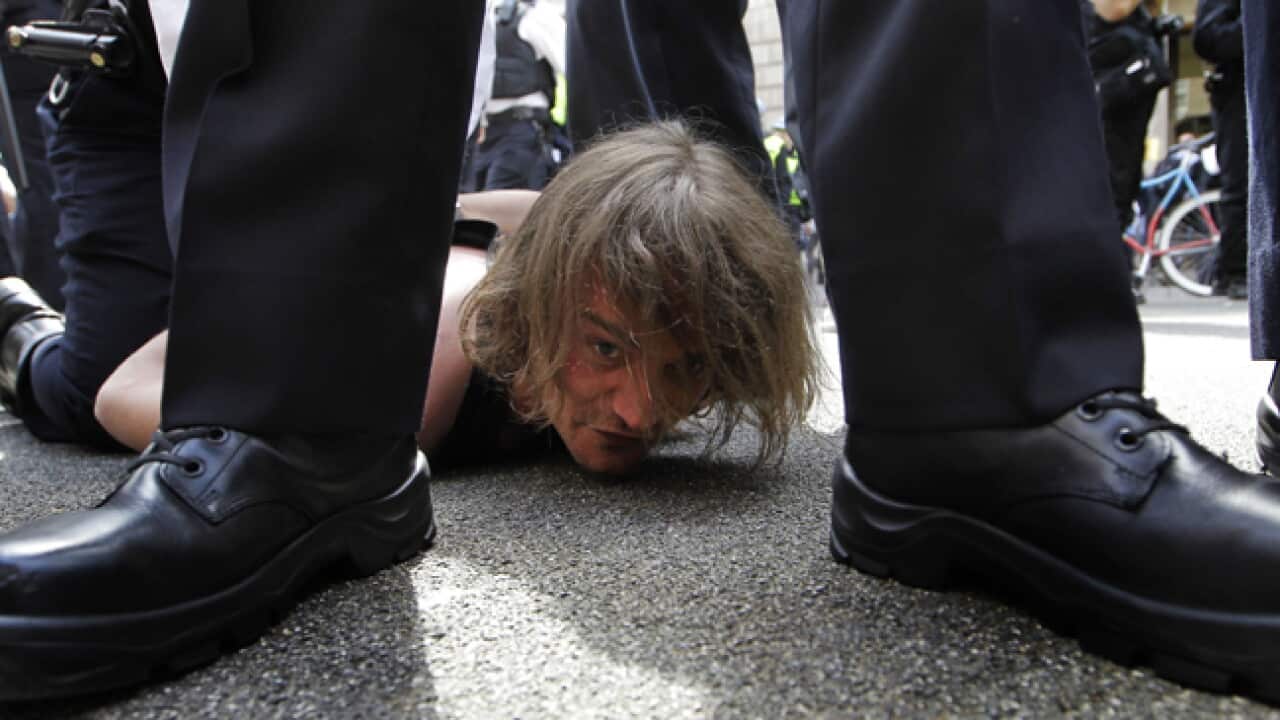
And strikes rarely have the same energy -- and violence -- as in other European countries, although 30 people were arrested on the London march.
Tirza Waisel, a 51-year-old social worker remarked; "We're all suffering already and we're going to suffer more, like in Greece. We're more polite here but it's the same cause."







