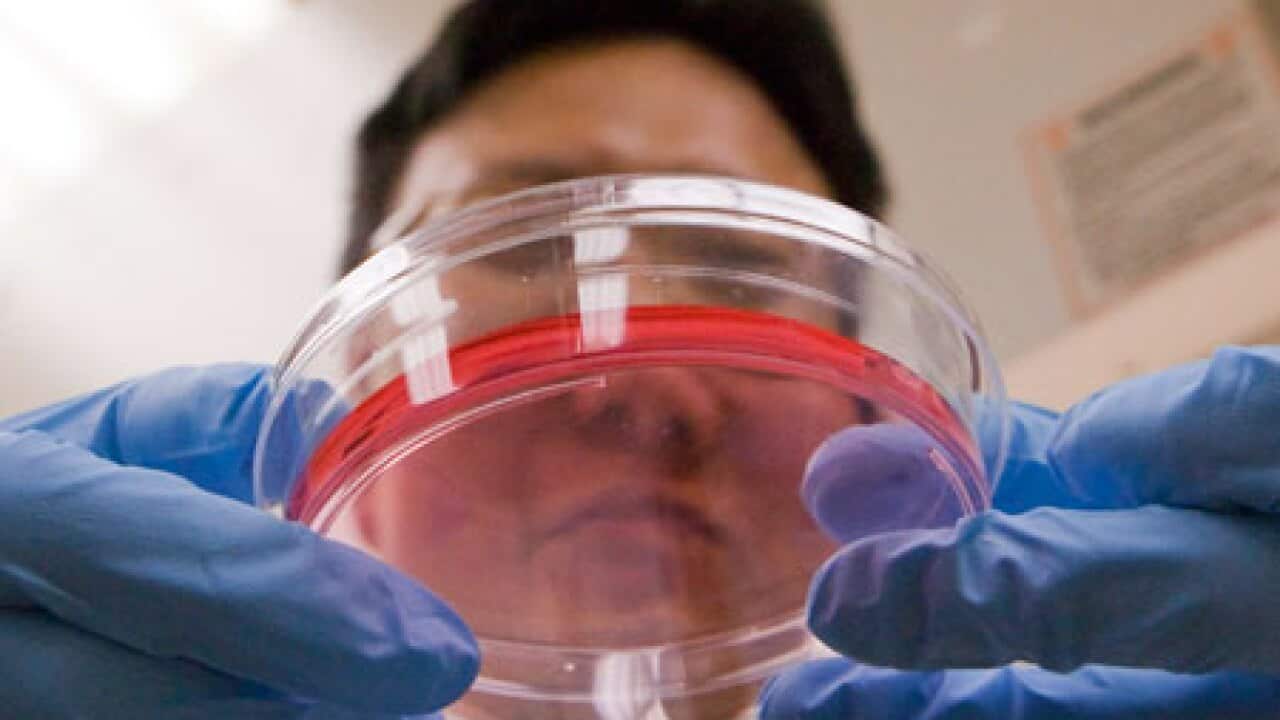
Australian scientists are targeting cells that cause childhood leukaemia in the hope it could lead to improved treatment and prevent relapse.
Researchers at the Royal Melbourne Hospital and the University of Melbourne discovered the cells - T cell Acute Lymphoblastic Leukaemia (T-ALL) - while studying mice prone to developing leukaemia.
The team found that with irradiation treatment in animals, more than 99 per cent of cells in the thymus were killed, but these stem cell-like cells persisted and rapidly recovered.
News that makes sense
Your trusted source for staying up-to-date with the world around you. Get free daily news updates and analysis, straight to your inbox.
This suggests that these cells may survive therapy and be responsible for relapsed disease following treatment.
Currently, children with T-ALL are given extended therapy over two to three years in an attempt to stop a relapse.
The scientists say more targeted therapy on the thymus cells could reduce the length and toxicity of treatment and prevent relapse.
Cells 'remarkably resistant' to treatment
The team, led by Dr Matthew McCormack and Dr David Curtis of the Rotary Bone Marrow Research Laboratories and the university's medicine department at Royal Melbourne, have had the results published online by the international journal Science.
Dr McCormack said the cellular origins of childhood leukaemia are not well understood.
"Our discovery that these cells are similar to normal stem cells explains why they are capable of surviving for long periods," he said.
"It also explains why they are remarkably resistant to treatment."
About 50 new cases of T-ALL are diagnosed every year in Australia, two thirds of these in children or adolescents.
Dr Curtis, a clinical haematologist and head of the Leukaemia Research Program at Royal Melbourne, said the identification of the cells provided an important target for the development and testing of new treatments.
The team now will focus on treatments capable of killing these cells, which may lead to linical trials within the next five years.







