A huge fire and blasts have killed more than 75 people at an ammunition factory looted by Al-Qaeda, officials said, as parts of south Yemen eluded government control amid mounting protests.
A security official said the explosions rocked the plant as dozens of residents were inside helping themselves to whatever ammunition and guns were left after Sunday's raid by suspected Al-Qaeda fighters.
Al-Qaeda militants had lured the civilians into a "lethal trap," charged a spokesman for the restive southern province of Abyan, where he said a series of blasts set off a blaze which destroyed the plant.
News that makes sense
Your trusted source for staying up-to-date with the world around you. Get free daily news updates and analysis, straight to your inbox.
The blasts were triggered by explosive powder left behind by Al-Qaeda, according to the unnamed official quoted on the defence ministry newspaper's 26sep.net website.
Another local official, Nasser al-Mansari, told AFP earlier that between 75 and 80 people were killed. Many victims were burnt beyond recognition and reduced to bone by the blasts and fire at the factory near the city of Jaar.
Around 20 women and several children were among the dead. In keeping with Islamic tradition, several of the victims were buried within hours.
An Abyan health department official, Khedr al-Saidi, said 54 wounded were taken to hospital in Jaar, 10 kilometres (six miles) away, and 30 others for treatment in the main southern city of Aden.
He said a wounded woman later died in Aden hospital of her injuries, raising the overall death toll to 76. Rescue operations had ended at the site and an inquiry opened into the causes of the disaster.
Yemen is a country where carrying firearms is a national passion and guns outnumber the 24-million population by nearly three to one.
With the district falling into the hands of Al-Qaeda militants on Sunday, around 30 armed and hooded gunmen looted the factory and made off in four vehicles with cases of weapons, witnesses said.
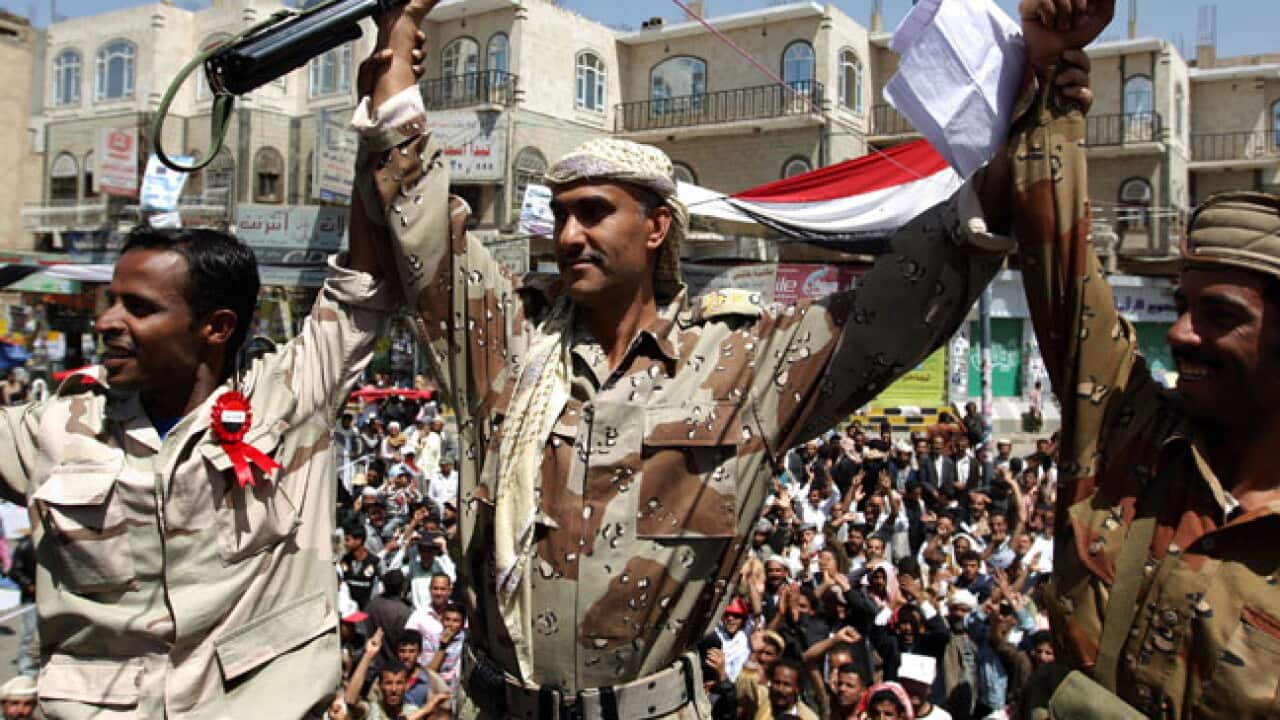
The incident, two months into a nationwide revolt against President Ali Abdullah Saleh, came as a security official said suspected Al-Qaeda militants had seized control of Jaar and surrounding villages.
Lawless regions of southern Yemen have turned into a base of operations for Al-Qaeda in the Arabian Peninsula (AQAP), the network's franchise in the Arab world's poorest nation, despite its proximity to oil-rich Saudi Arabia.
Washington warned on Sunday that the fall of the embattled Saleh, a key US ally in its war against Al-Qaeda, would pose a "real problem" for the United States.
"I think it is a real concern because the most active and at this point perhaps the most aggressive branch of Al-Qaeda, Al-Qaeda in the Arabian Peninsula, operates out of Yemen," said US Defence Secretary Robert Gates.
"And we've had counter-terrorism cooperation with President Saleh and the Yemeni security services," he said.
"So if that government collapses, or is replaced by one who is dramatically more weak, then I think we'd face some additional challenges out of Yemen, there's no question about it. It's a real problem."
Saleh himself said that the opposition demanding his ouster should opt for dialogue in order to avoid a Somalia-style "civil war" in Yemen.
"If we do not act, along with good-willed and friendly countries, to close the rift and start a political dialogue, there will be a devastating civil war that will disturb the whole region," he warned in a television interview.
Saleh has reportedly offered to step down by the end of 2011, a proposal snubbed by the opposition. But his ruling party on Friday said he should serve out his current term until the next scheduled presidential election in 2013.
Defections from his regime have multiplied since a bloodbath in Sanaa on March 18 when 52 protesters were gunned down by Saleh loyalists, drawing widespread international condemnation.







