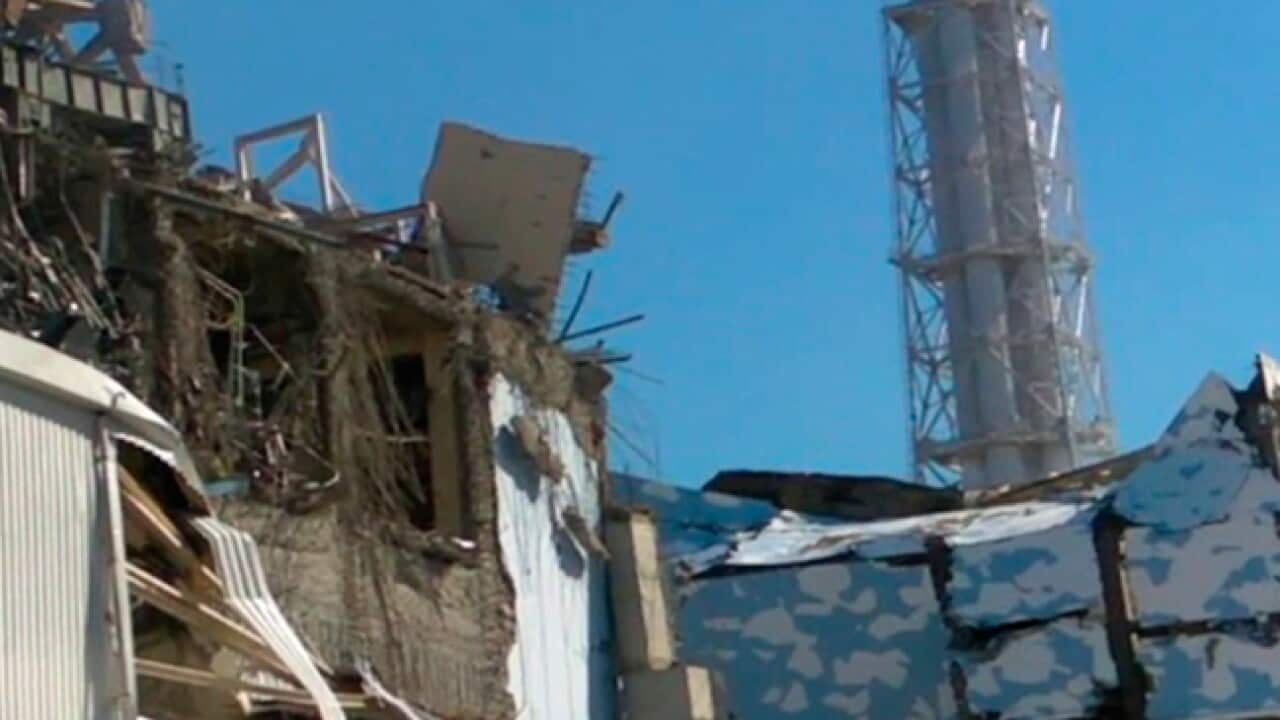
Tokyo Electric Power Co. (TEPCO) said the level of iodine-131 was 126.7 times higher and caesium-134 was 24.8 times higher than government-set standards.
The substances were detected in seawater which was sampled about 100 metres (320 feet) south of the Fukushima No.1 plant, a TEPCO official said.
News that makes sense
Your trusted source for staying up-to-date with the world around you. Get free daily news updates and analysis, straight to your inbox.
The level of caesium-137 was also 16.5 times higher while that of cobalt-58 was lower than the standard, Naoki Tsunoda added, stressing the levels were not a threat to human health.
Smoke slows race to cool nuclear plant
Meanwhile, smoke belched from the stricken nuclear plant, disrupting urgent efforts to repair the cooling systems as Tokyo halted some food shipments owing to radiation worries.
Rain complicated rescue efforts and compounded the misery of tsunami survivors fearful of dangerous radioactive leaks from the wrecked Fukushima power station, which has suffered a series of explosions and fires.
Japan has ordered the suspension of shipments of milk and certain vegetables including spinach from regions around the plant after abnormal radiation levels were found in the products, said chief government spokesman Yukio Edano.
But "even if you eat and drink them several times it will not be a health hazard. So I would like you to act calmly," Edano said at a televised news conference.
Workers evacuated from Fukushima
Workers were forced to evacuate from part of the troubled Fukushima plant, located 250 kilometres (155 miles) northeast of the capital Tokyo, after grey smoke rose from reactor number three, operator Tokyo Electric Power Co. said.
The cause was unclear but it was not believed to be linked to the all-important efforts to restore power to the reactor unit systems, officials said.
The smoke abated more than two hours later but white smoke was later seen rising from the number two reactor, although there were no immediate reports of an increase in radiation from the plant.
Shortly before the crews' evacuation, Prime Minister Naoto Kan said there was "slow but steady progress" in dealing with the atomic crisis.
Before the smoke incident, the nuclear safety agency had said engineers were close to restoring some functions in the control room of reactor number two, such as temperature and pressure instruments and the air filtering system.
"As a result, the environment for workers will significantly improve," an agency official said.
The cooling systems -- designed to protect the plant's six reactors from a potentially disastrous meltdown -- were knocked out by the 9.0-magnitude earthquake and tsunami that struck Japan's northeast Pacific coast on March 11.
Fire trucks have been spraying water to help cool the reactor units, but those operations were also disrupted by the smoke scare.
The situation has 'progressed'
"Workers' efforts at the risk of their lives have made the situation progress little by little," Kan said, according to a government spokesman.
The Japanese head of the UN atomic watchdog, Yukiya Amano, said in Vienna after a trip to Tokyo that he had "no doubt" the nuclear crisis would be "effectively overcome" -- while warning that the situation remained serious.
But the head of the French nuclear safety agency, Andre-Claude Lacoste, warned that local contamination from the plant would continue to be a problem "for decades and decades".
The natural disaster -- Japan's deadliest since 1923 -- has left 8,805 people dead and 12,664 missing, after entire communities were swept away by the horrific tsunami or levelled by the record quake.







