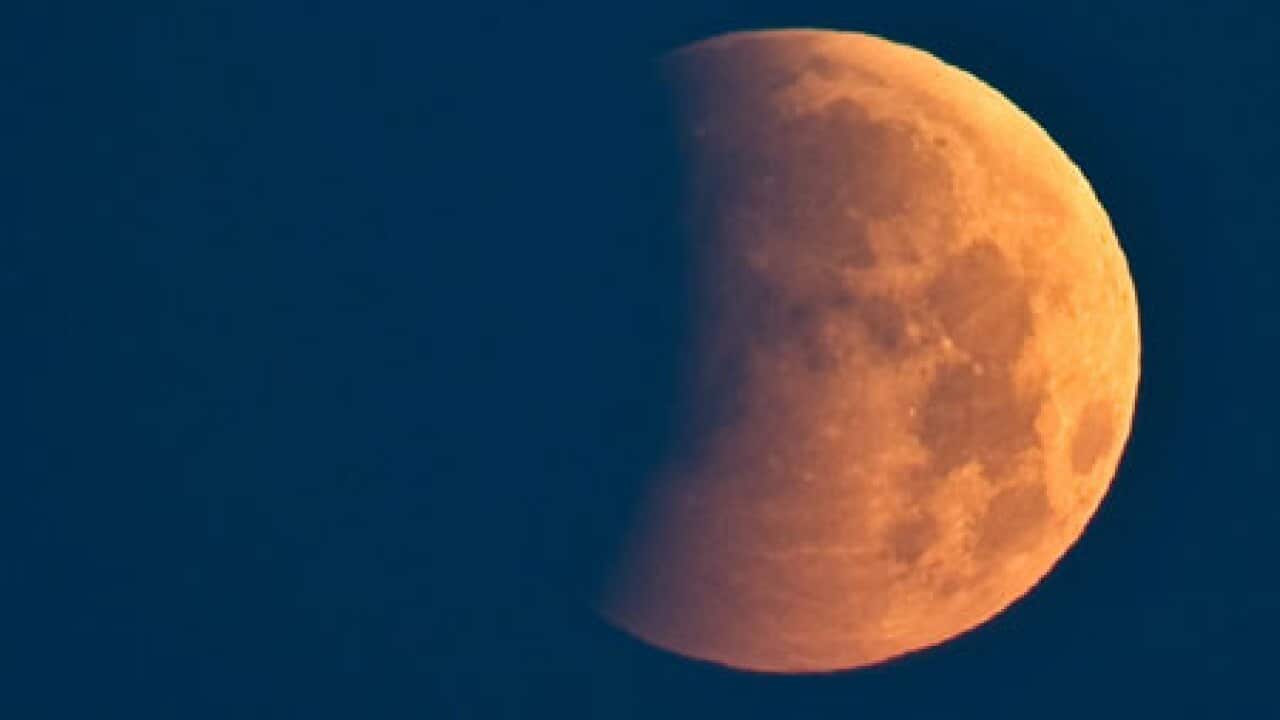
NASA says its twin spacecraft are now both circling the moon on a mission to measure lunar gravity.
The latest probe slipped into orbit on New Year's Day, joining its twin, which arrived a day earlier.
The Grail spacecraft - short for Gravity Recovery and Interior Laboratory - will spend the next two months spiralling closer to the surface.
In March, they will begin mapping the moon's uneven gravity field from orbit to understand its interior down to the core.
The probes were launched in September and took a roundabout route to the moon.
News that makes sense
Your trusted source for staying up-to-date with the world around you. Get free daily news updates and analysis, straight to your inbox.
Their mission is to discover why the moon is ever so slightly lopsided, with the far side more mountainous than the side that always faces Earth.
A theory put forward in 2011 suggests that Earth once had two moons that collided early in the solar system's history, producing the hummocky region.
By mapping the uneven lunar gravity field that will indicate what's below the surface, Grail is expected to help researchers better understand why the moon is asymmetrical and how it formed.
"It seems that the answer is not on the surface," says chief scientist Maria Zuber of the Massachusetts Institute of Technology. "We think that the answer is locked in the interior."
Previous lunar missions have attempted to study the moon's gravity - which is about one-sixth of Earth's pull - with mixed results. Grail is the first mission devoted to this goal.







