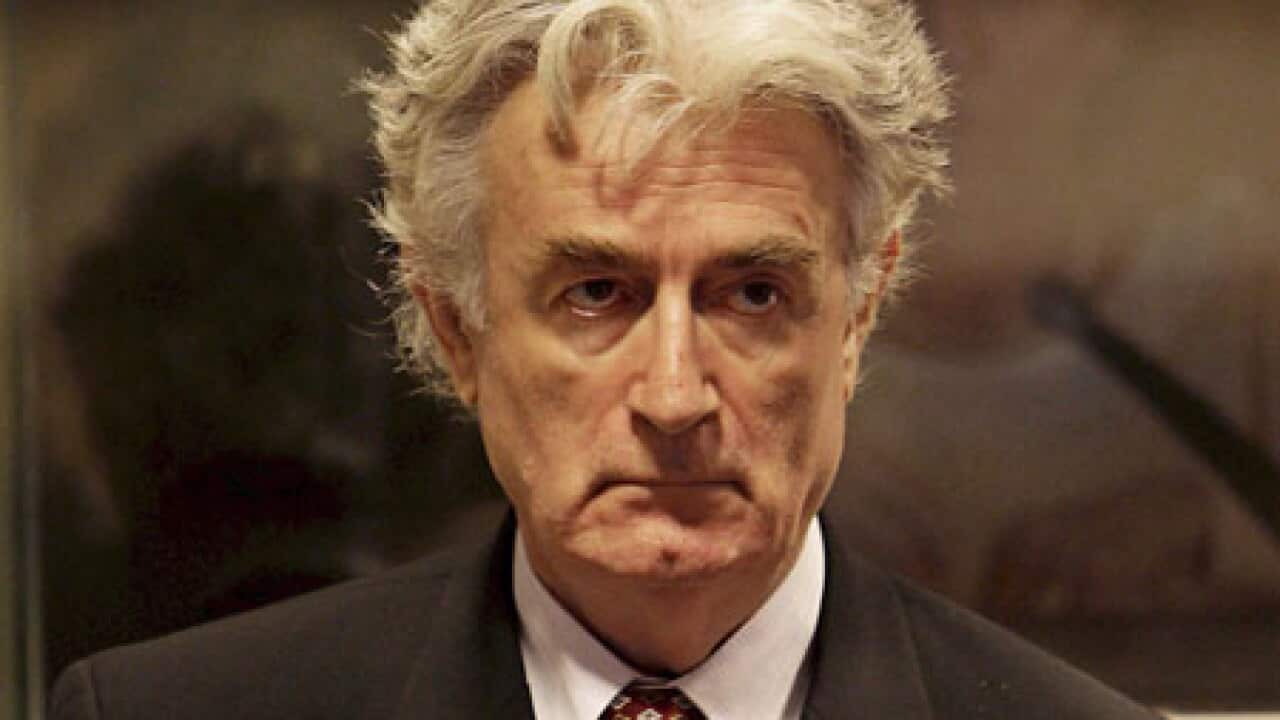
Wartime Bosnian Serb leader Radovan Karadzic ended a months long boycott of his genocide trial on Monday, defiantly declaring that a conflict which left 100,000 dead was "just and holy".
Addressing the International Criminal Tribunal for the former Yugoslavia, the 64-year-old said he would use his trial "to defend the greatness" of the Bosnian Serb republic which emerged from the 1992-95 war.
"I will defend that nation of ours and their cause that is just and holy," said a confident and measured Karadzic as he made his opening statement from the dock in the courtroom in The Hague.
News that makes sense
Your trusted source for staying up-to-date with the world around you. Get free daily news updates and analysis, straight to your inbox.
"We have a good case. We have good evidence and proof," he added.
Karadzic stands charged as the "supreme commander" of an ethnic cleansing campaign of Croats and Muslims in the Bosnian war in which 100,000 people were killed and 2.2 million displaced.
Wearing a dark suit and tie, the wartime political leader of Bosnia's Serbs ended a boycott of his trial to outline his defence to 11 counts of genocide, war crimes and crimes against humanity in an opening statement scheduled to be delivered over two days. He has pleaded not guilty.
"I stand here before you not to defend the mere mortal that I am, but to defend the greatness of a small nation in Bosnia Hercegovina, which for 500 years has had to suffer and has demonstrated a great deal of modesty and perseverance to survive in freedom," he told the court.
Karadzic is accused of having colluded with the late Yugoslav leader Slobodan Milosevic with the aim of creating a "Greater Serbia" that was to include 60 percent of Bosnian territory. Serbs made up about one-third of Bosnia's population.
Among the charges against Karadzic are the 1995 Srebrenica massacre of more than 7,000 captured Muslim men and boys, and the 44-month siege of the capital Sarajevo that ended in November 1995 with some 10,000 people killed.
"This case is about that supreme commander, a man who harnessed the forces of nationalism, hatred and fear to implement his vision of an ethnically separated Bosnia: Radovan Karadzic," prosecutor Alan Tieger told the court last year.
Karadzic had refused to attend the opening of his trial last October, insisting on more time to prepare his case and causing a four-month delay.
Arrested on a Belgrade bus in July 2008 after 13 years on the run, he faces life imprisonment if found guilty.
Karadzic had sought a new delay of the trial until June 17 after his two-day opening statement concludes on Tuesday, to study an additional 400,000 pages of prosecution evidence he claims have been filed since October.
His request was refused by the court which ruled last Friday that the first prosecution witness, whose identity is being withheld, will testify on Wednesday.
Under these circumstances, Karadzic was likely to resume his boycott, his legal adviser Marko Sladojevic told AFP. "I am not sure he will come" to court on Wednesday.
The court in November appointed British lawyer Richard Harvey to take over the defence if Karadzic opted to continue his boycott of the court.







