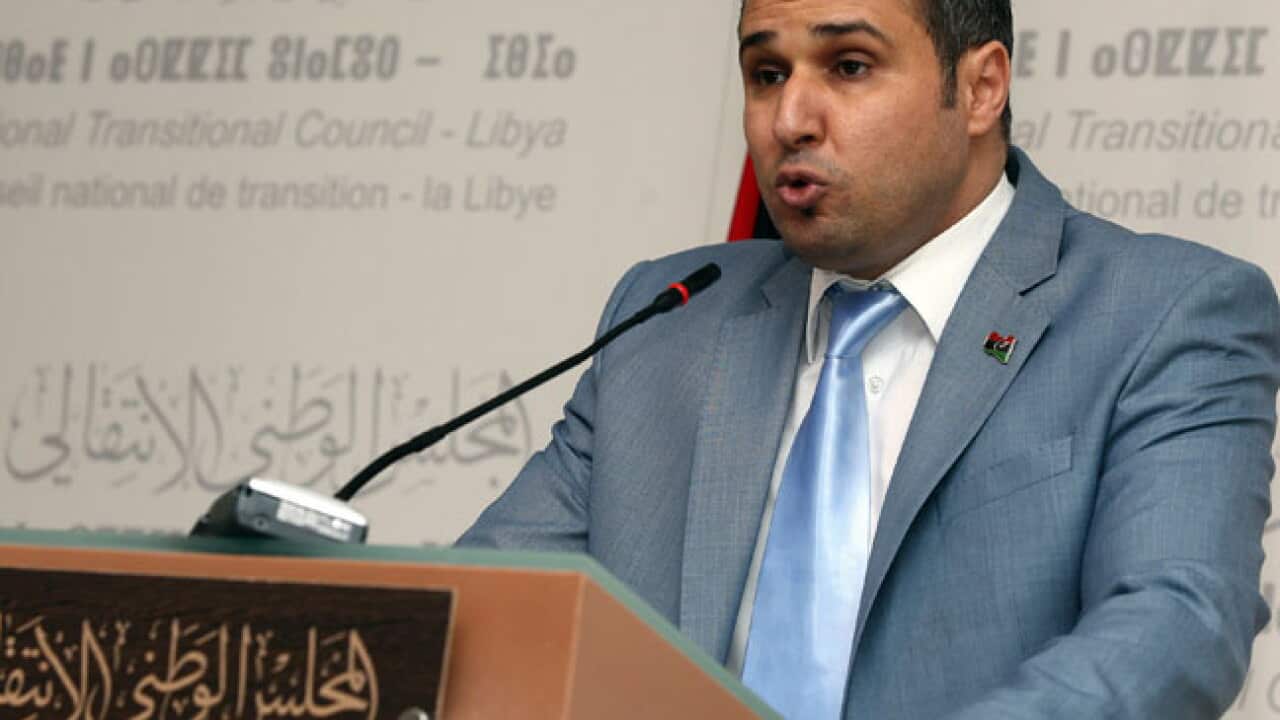
Libya's outgoing National Transitional Council said on Thursday that Islamic law (sharia) should be the "main" source of legislation and that this should not be subject to a referendum.
"The Libyan people are attached to Islam, as a religion and legislation," NTC spokesman Saleh Darhoub said, reading from a statement.
"As such the National Transitional Council recommends that the (next) congress make sharia the main source of legislation.
News that makes sense
Your trusted source for staying up-to-date with the world around you. Get free daily news updates and analysis, straight to your inbox.
"And this should not be subject to a referendum," he added, speaking to journalists in Tripoli.
He later explained that the decision was made to reassure elements of society fearful of being saddled with a constitution that does not take into account Islamic law, or sharia.
"We are not afraid of holding a referendum on sharia. But we wanted to reassure elements of society who are scared of the referendum," Darhoub said.
Libyans are to vote on Saturday for a General National Congress, which will be tasked with appointing a new government and a constituent authority.
The constitution needs to be approved in a national referendum, under a transition framework laid out by the NTC, which took power when long-time leader Moamer Kadhafi was slain last year.
Some of the key issues to be determined by the constitution are the form of governance, the weight of Islam in state and society, the role of women and the rights of minorities.
After the constitution is approved, the newly elected congress will have 30 days to issue a new election law, with elections for a government to be held 180 days after that, according to the NTC's roadmap.
If these benchmarks are met, the new authorities will be in power for a period of roughly 12 months, a short window of opportunity to tackle major challenges such as disarming militias and reviving the judiciary.
Hundreds of armed men calling for Islamic law and rejecting democracy as "Western" staged a demonstration last month in the eastern city of Benghazi, which held the NTC's war-time headquarters.
Well-armed Islamist groups in the east, such as the Partisans of Sharia, oppose the vote, saying that the conservative Muslim country needs no constitution other than the Koran.
Libya's interim rulers say that radical Islamists are a minority.
There are no sizeable religious minorities in the oil-rich nation and secular values have little traction among conservative Sunni Muslims who make up the majority of the population.







