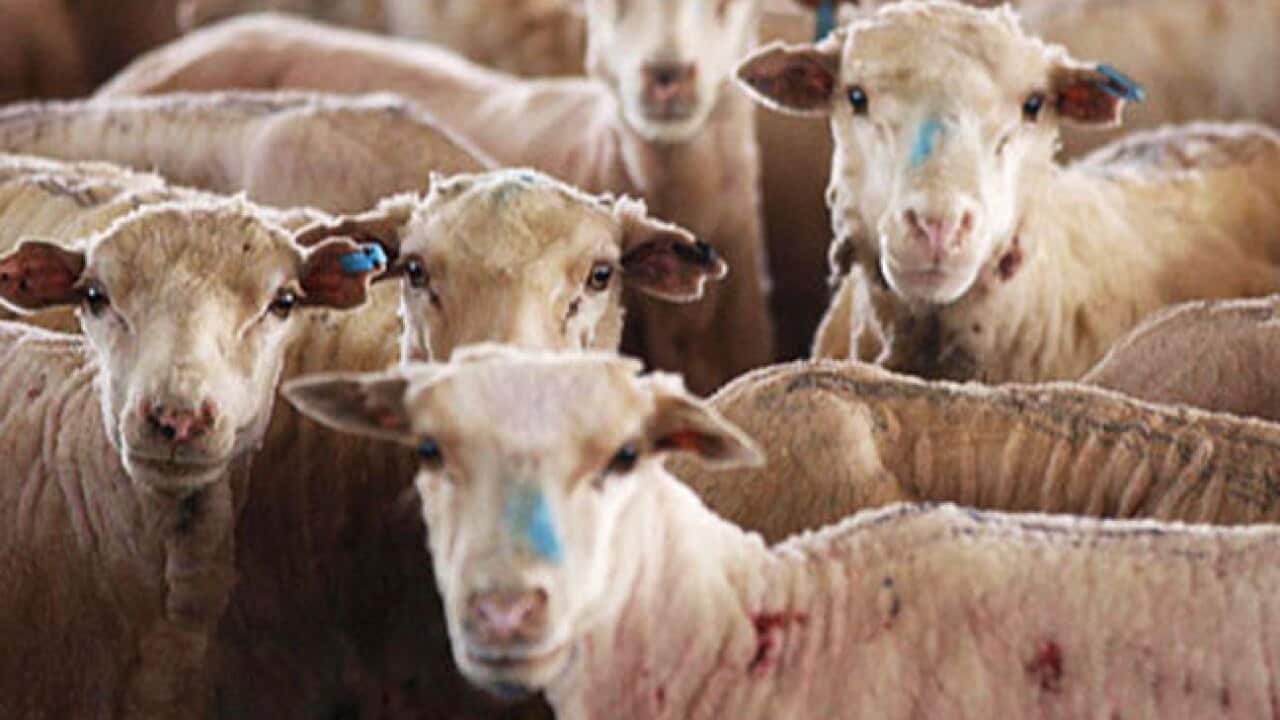
Sheep have a greater diversity of genes than many other animals in Australia because of the way they have been bred, a new study has found.
Scientists from the CSIRO say this information is good news for continued breeding of sheep and bodes well for increasing the production of meat and wool.
The study details how humans have effectively changed sheep to suit different environments and also to improve the production of meat, wool and milk.
"Our detailed gene map is telling us that sheep breeds have been formed in a fluid way that makes them different from other species of domestic animals," lead author James Kilas from the CSIRO said in a statement.
The scientists examined nearly 3000 sheep from 74 different breeds around the world and looked at about 50,000 DNA sites across the genome.
News that makes sense
Your trusted source for staying up-to-date with the world around you. Get free daily news updates and analysis, straight to your inbox.
They were able to identify the genetic consequences of domestication and the resulting division of sheep into hundreds of breeds.
The researchers found particular regions of the genome showed strong evidence for accelerated change in response to artificial selection.
The best example of this was evidence of breeding for the absence of horns.
"Frequent mating and strong gene flow between animals of different breeds has ensured that most modern sheep breeds have maintained high levels of genetic diversity, in contrast to some breeds of dogs and cattle that generally have higher levels of inbreeding," Dr Kilas said.
"This high level of genetic diversity means that sheep breeders can continue to expect strong improvements in important production traits, improvements that could play a part in feeding the growing number of people in the world, with an increasing demand for animal protein."
The team also hopes that the study will provide a basis for further research into better management of threatened breeds.
"The technology that we have used in this study is helping to identify genes that control economically important traits, and to track down genetic variants that cause diseases," Dr Kilas said.
"This may ultimately help producers to intensify or remove certain traits through targets breeding practices."







