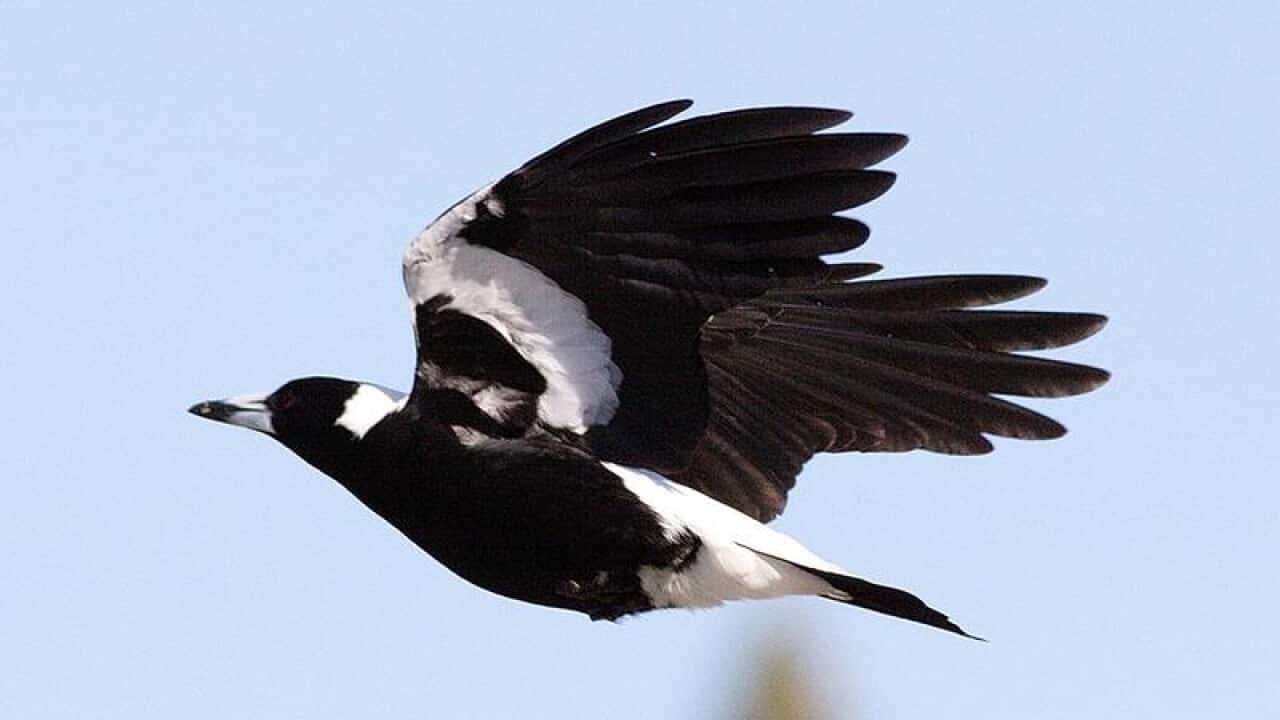
The demands of a busy social life will make you smarter and increase the chance of raising a healthy baby, if you're a West Australian magpie, a study has found.
A series of intelligence tests on wild suburban Perth magpies has found birds that nest in larger groups are smarter than those from smaller families.
In female birds, higher intelligence also increases the chances of successful reproduction.
The joint University of WA and University of Exeter study conducted tests with 56 magpies from 14 groups, ranging in number from three to 12 birds.
The magpies completed four tasks designed to test the theory of social intelligence, or social brain hypothesis, which suggests the balancing act of forming and maintaining relationships, anticipating other's actions and keeping track of who knows who drives cognitive evolution.
News that makes sense
Your trusted source for staying up-to-date with the world around you. Get free daily news updates and analysis, straight to your inbox.
Lead researcher Ben Ashton says the magpies' test results suggest social environment plays a key role in the development of cognition.
"They also suggest a positive relationship between female cognitive performance and reproductive success, indicating there is the potential for natural selection to act on cognition," Dr Ashton said.
The magpies completed puzzle tasks including foraging for cheese hidden in a transparent cylinder and in different coloured containers to test associative learning, and a memory task where food was hidden in the same place many times.
Dr Ashton says differences in energy intake and task attention can also affect cognitive performance, so the study took into account body weight, foraging efficiency and the magpies' enthusiasm, or lack of, towards the task.
The study is one of the first to conduct large-scale cognitive tests on wild populations and find a strong link between cognition, group size and reproductive success.







