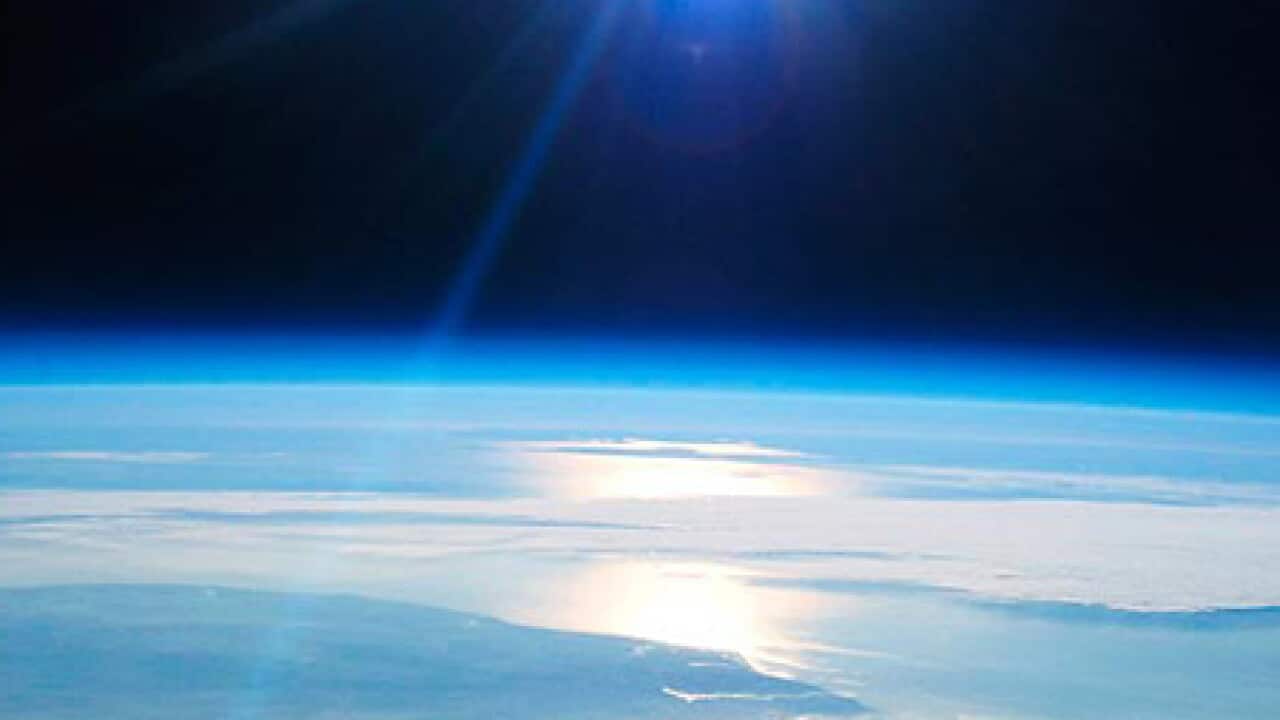
A British aerospace enthusiast has created a device that takes breath-taking photographs of space, for a fraction of the price of the high-tech alternatives.
IT director Robert Harrison uses a balloon, a digital camera, duct tape and a GPS device to snap the stunning pictures.
His balloon-mounted creation can travel up to 35km above the Earth's surface, and costs a little over $800 to make.
News that makes sense
Your trusted source for staying up-to-date with the world around you. Get free daily news updates and analysis, straight to your inbox.
An average space mission costs nearly $490 million dollars.
NASA interested
The device has caught the attention of American space agency, NASA.
"A guy phoned up who worked for Nasa who was interested in how we took the pictures," Mr Harrison told British newspaper The Times.
"He wanted to know how the hell we did it. He thought we used a rocket. They said it would have cost them millions of dollars."
Mr Harrison began his unusual hobby when trying to use a remote control helicopter to take aerial photos of his West Yorkshire home.
In the last two years, he has launched a dozen high-altitude balloons.
Mr Harrison uses a regular Canon digital camera programmed with a free Interet application to snap eight photos and a video every five minutes.
The camera and a GPS device are wrapped in loft insulation, which allows them to function in the -60 celcius temperatures of the Earth's atmosphere.
Harrison 'gobsmacked' by achievement
The insulated camera and GPS are then mounted on a weather balloon, which pops once it reaches maximum expansion in space.
Once the balloon is back on Earth, Mr Harrison can track it using the GPS.
The 38-year old says he was gobsmacked when he first saw the photographs.
"Seeing the highest pictures was amazing — that's a lifetime achievement."







