
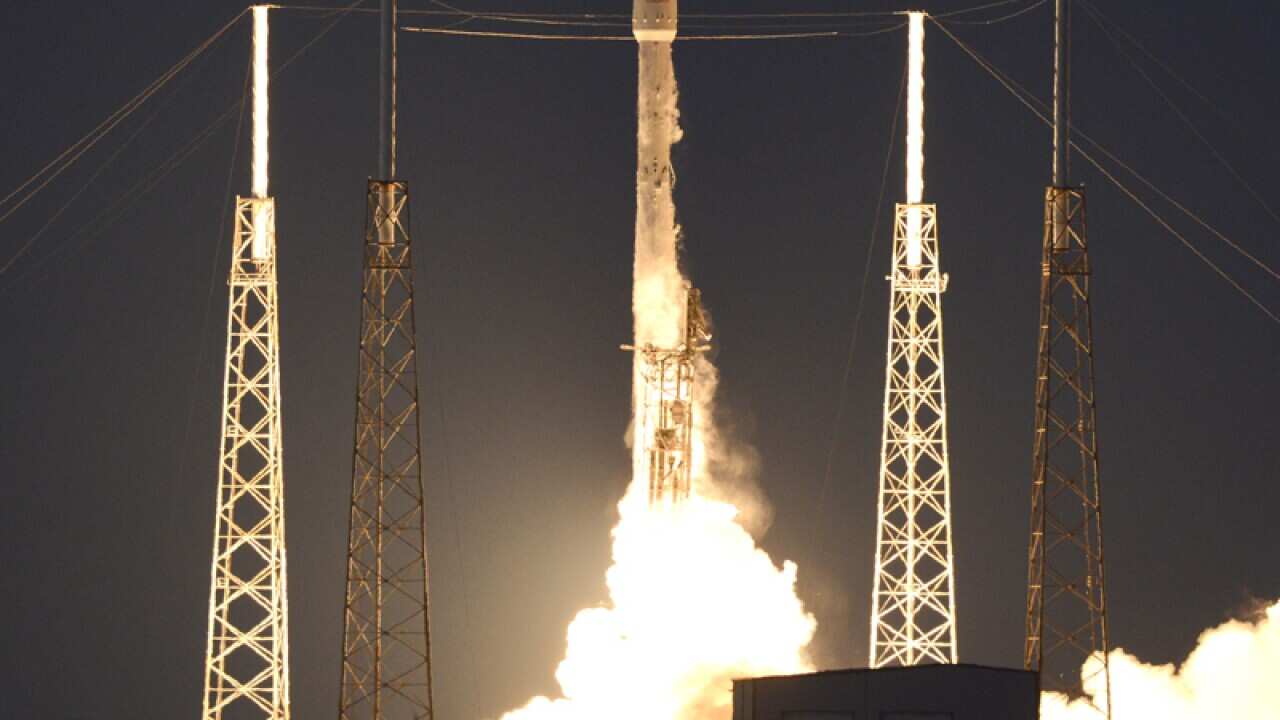
SpaceX has another launch under its belt, but not another rocket landing.
The leftover first-stage booster hit the company's floating platform hard on Friday (Saturday AEDT), said SpaceX chief Elon Musk.
SpaceX never expected to nail the landing, he said, because of the faster speed of the booster that was required to deliver the satellite to an extra-high orbit.
The company scored a rocket landing on the ground at Cape Canaveral in December, but has yet to nail a trickier barge landing at sea.
The good news, though, is that the unmanned Falcon 9 rocket successfully hoisted the broadcasting satellite for Luxembourg-based company SES.
It was the fifth launch attempt during the past one-and-a-half weeks. Sunday's try ended with an engine shutdown a split second before liftoff. Friday's sunset launch provided a stunning treat along the coast.
As it has tried a handful of times before, SpaceX tried to land the discarded first-stage booster on a barge, this time 640km off the coast of Cape Canaveral. Right before touchdown, 10 minutes into the flight, the TV camera on the platform cut out, drawing loud groans from the crowd at company headquarters in Hawthorne, California.
"Didn't expect this one to work (v hot re-entry), but next flight has a good chance," Musk later reported via Twitter - more than an hour after liftoff.
The mission required that the booster fly much faster than usual and therefore use more fuel, leaving less for a precision touchdown.





