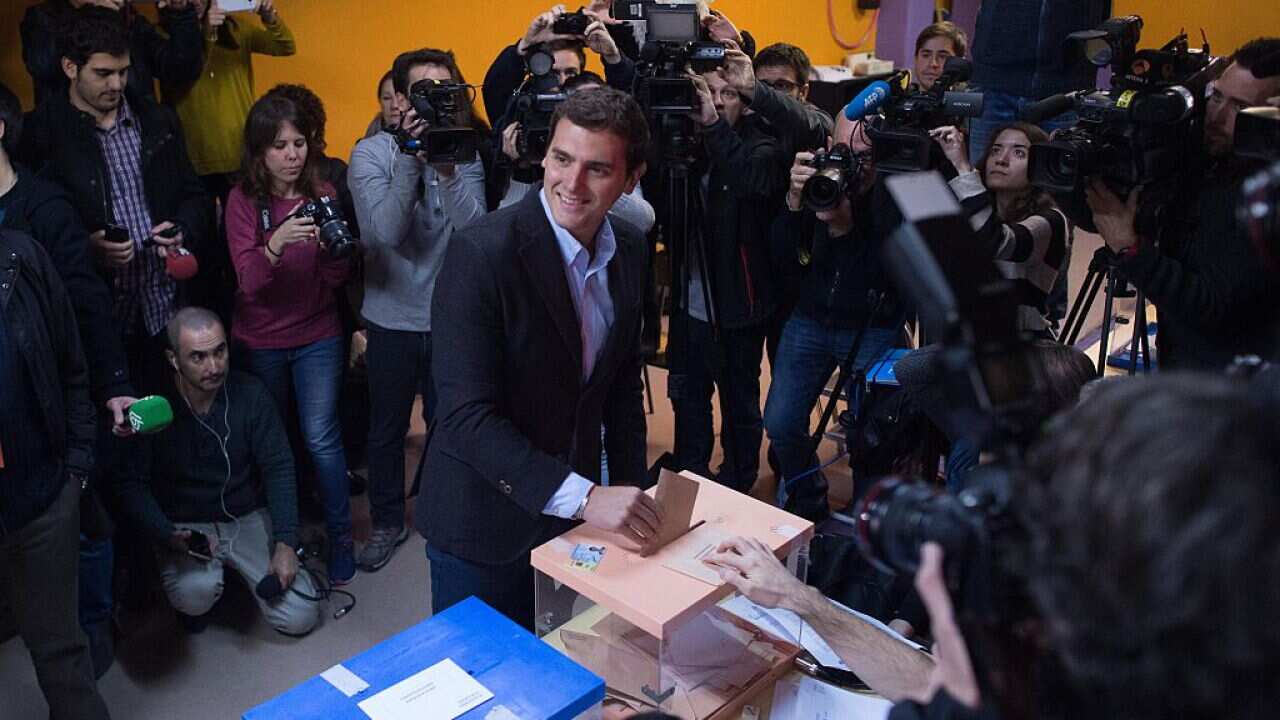
With many people saying they are willing to shake up a political system they consider corrupt and unable to resolve Spain's economic woes, the outcome is the most uncertain in the 40 years since the end of the Franco dictatorship and the return of democracy.
About one in three of the 36.5 million eligible voters are still undecided.
Opinion polls show the ruling conservative People's Party (PP) of Prime Minister Mariano Rajoy will win the vote but fall well short of an absolute majority.
The Socialists are expected to come second with anti-austerity party Podemos ("We Can") and a second major newcomer, liberal Ciudadanos ("Citizens"), vying for the third place which would make them kingmakers in post-election talks.
That prediction makes any of three outcomes possible - either a right-wing or left-wing coalition government or a minority administration.
News that makes sense
Your trusted source for staying up-to-date with the world around you. Get free daily news updates and analysis, straight to your inbox.
Rajoy said on Wednesday he would consider a cross-party pact to ensure a stable administration over the scheduled four-year term, but all the other main parties have come out against joining the PP in a coalition.
That points to a stalemate that analysts agree would probably disrupt an economic reform program that has helped pull Spain - the EU's fifth-largest economy - out of recession and made inroads into a still high unemployment rate.
Ciudadanos and Podemos insiders say both parties are looking beyond Sunday's vote with their main ambition to keep stealing voters from the PP and the Socialists, giving them little incentive to agree on a pact unless they win major concessions.
The Spanish constitution does not set a specific deadline to form a government after the election. Analysts say the negotiations to secure enough parliamentary support for a new prime minister to be picked could go over many weeks - and maybe even trigger another election.
While the current government has already passed next year's budget and low interest rates and cheap oil should keep boosting economic growth, soothing any market concern over political instability, such a deadlock may be used by pro-independence Catalan parties to push their cause.
The Catalan issue is expected to quickly move back up at the top of the national political agenda as separatist parties have to decide on a joint government no later than Jan. 9. If they failed to agree, new elections would have to be held in the region within two months.







