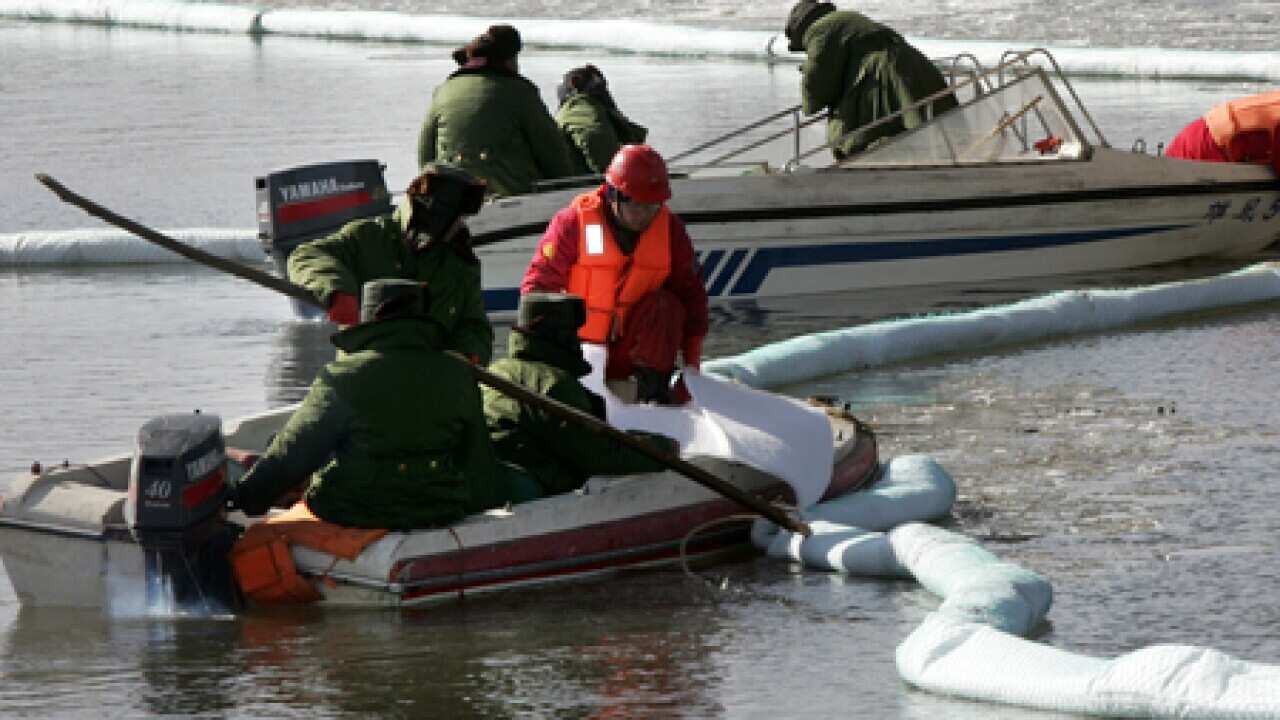
Up to 150,000 litres of diesel spilled into the Chishui and Wei rivers last Wednesday after a pipeline operated by China's largest oil producer, China National Petroleum Corp., ruptured, state media said.
"Due to this incident, the Chishui river was seriously polluted and the Wei river was relatively seriously polluted," the government in northern Shaanxi province said in a statement posted on its website.
But it said the pollution on the Wei river had been "effectively controlled". Water quality on the two rivers had on Monday reached grade five, the worst level in China's pollution monitoring scale, after falling off the register following the oil spill, it said.
News that makes sense
Your trusted source for staying up-to-date with the world around you. Get free daily news updates and analysis, straight to your inbox.
Level five water is unfit for drinking, but can be used for agricultural purposes, according to government standards.
The two rivers flow into the Yellow River, one of China's longest rivers and the source of drinking water for millions of people, including residents of eight cities that lie downstream from the oil spill, Xinhua news agency said.
On Sunday, diesel was detected in water in the Sanmenxia reservoir on the Yellow River in neighbouring Henan province, it said.
Su Maolin, of the Yellow River Water Resources Commission, rejected a claim by pipeline owner PetroChina that the break was caused during construction work.
In an effort to contain the pollution, authorities shut down electricity production on the Sanmenxia dam in an effort to keep the contamination from flowing downstream to the cities of Zhengzhou and Kaifeng, the report said.
The two cities, with a total population of nearly 3.5 million people, get up to 95 per cent of their tap water from the Yellow River, the report said.
Residents in the cities have long depended on bottled water for drinking. More than 30 years of unbridled economic growth have left most of China's lakes and rivers heavily polluted, while the nation's urban dwellers also face some of the world's worst air pollution.
More than 200 million Chinese currently do not have access to safe drinking water, according to government data.







