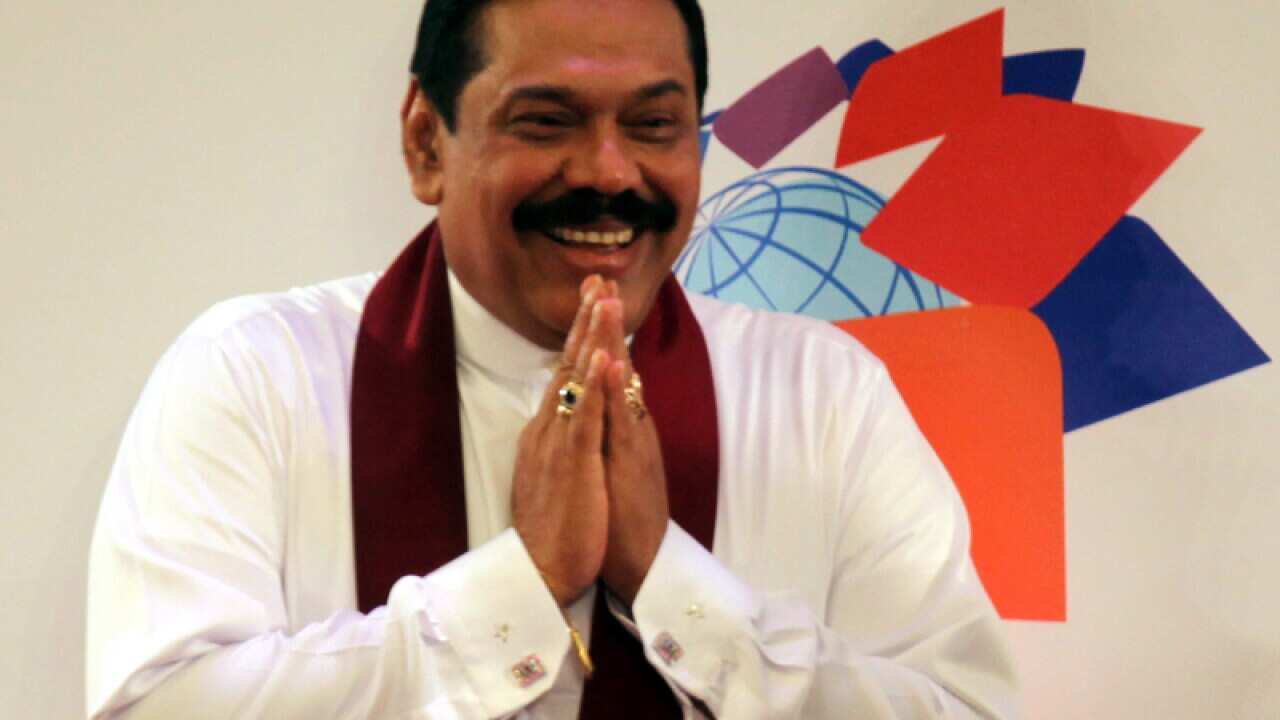
Sri Lankan President Mahinda Rajapakse has hit back at allegations of war crimes which are set to overshadow this week's Commonwealth summit, saying he has "nothing to hide" from his critics.
Rajapakse, who will chair the three-day summit in Colombo, said on Thursday he was ready to confront the likes of Britain's Prime Minister David Cameron but would not be lectured to.
The summit has already been dogged by boycotts, with the leaders of Canada, India and Mauritius staying away over the bloody end in 2009 to one of Asia's deadliest civil wars.
Rajapakse has been under fire from rights groups and UN bodies over his refusal to allow an independent investigation into the finale of the conflict, which pitted ethnic Tamils against the majority Sinhalese government.
"We are very open, we have nothing to hide," the president, who is Sinhalese, told reporters on the eve of the summit.
News that makes sense
Your trusted source for staying up-to-date with the world around you. Get free daily news updates and analysis, straight to your inbox.
Rajapakse said he was ready to meet Cameron to discuss allegations that up to 40,000 ethnic Tamil civilians were killed by Sri Lankan forces in the closing stages of the 37-year conflict in the island's north.
"I will be meeting him and we will see what (happens), I will also have to ask some questions," said the president, who visibly bristled and raised his voice as he answered questions from reporters.
Rajapakse, who was elected president of the former British colony in 2005, mounted a stout defence of his administration's handling of allegations of rights abuses.
"We have a legal system in Sri Lanka," he told the press conference.
"We have a human rights commission, now the Commonwealth is ready to strengthen it.
"If there are any violations, we will take actions against anybody."
The 67-year-old leader said his administration deserved credit for ending the conflict.
"People were getting killed for 30 years, at least after 2009 we have stopped it. There is no killing in Sri Lanka today."
At least 100,000 people lost their lives in the conflict.
As well as the allegations against government forces, Tamil Tiger rebels - who were known for their trademark suicide bombings - are also accused of killing thousands of people.
Cameron, who intends to travel to the war-torn northern Jaffna peninsula, has said he wants to have "tough conversations" with Rajapakse during the summit.
The British premier, who has rejected calls to join the boycott, will be the first foreign leader to visit the north since Sri Lanka's independence in 1948.
"There needs to be proper inquiries into what happened at the end of the war, there needs to be proper human rights, democracy for the Tamil minority in that country," he said in comments broadcast by India's CNN-IBN network on Thursday.
"There's always a case for not going somewhere, but I think actually we will get further by going and having conversations with the Sri Lankans about what needs to happen and shining a light on some of the issues and problems that are there."
The Australian Senate on Thursday passed a resolution calling on Prime Minister Tony Abbott to "raise the matter of an independent investigation into allegations of violations of international human rights law and international humanitarian law" with the Sri Lankan president
Abbott said he did not know what action would be taken at CHOGM, but he was committed to human rights.
Kamalesh Sharma, the Commonwealth's secretary-general, denied suggestions the organisation had been ineffective in dealing with allegations against the summit hosts.
Asked whether Sri Lanka's alleged right abuses made a mockery of the Commonwealth's charter of shared values, the former Indian diplomat said the organisation had made progress by engaging with Rajapakse's regime.
"It (alleged rights abuses) is not making a mockery. It is showing the Commonwealth in action," he said.
Rights groups said the relevance of the organisation was now on the line.
"The Commonwealth risks its credibility as an international forum if it doesn't publicly press Sri Lanka on its rights record and the lack of accountability for wartime atrocities," said Brad Adams, Human Rights Watch's Asia director.
A report by Brussels-based think tank, the International Crisis Group (ICG), said Colombo's "attempts to mask its growing authoritarianism ... appear increasingly flimsy", accusing it of undermining judicial independence after the impeachment of the chief justice earlier this year.
Commonwealth leaders "should press the government to address human rights abuses, prevent attacks on religious minorities and restore judicial independence", said the ICG report.







