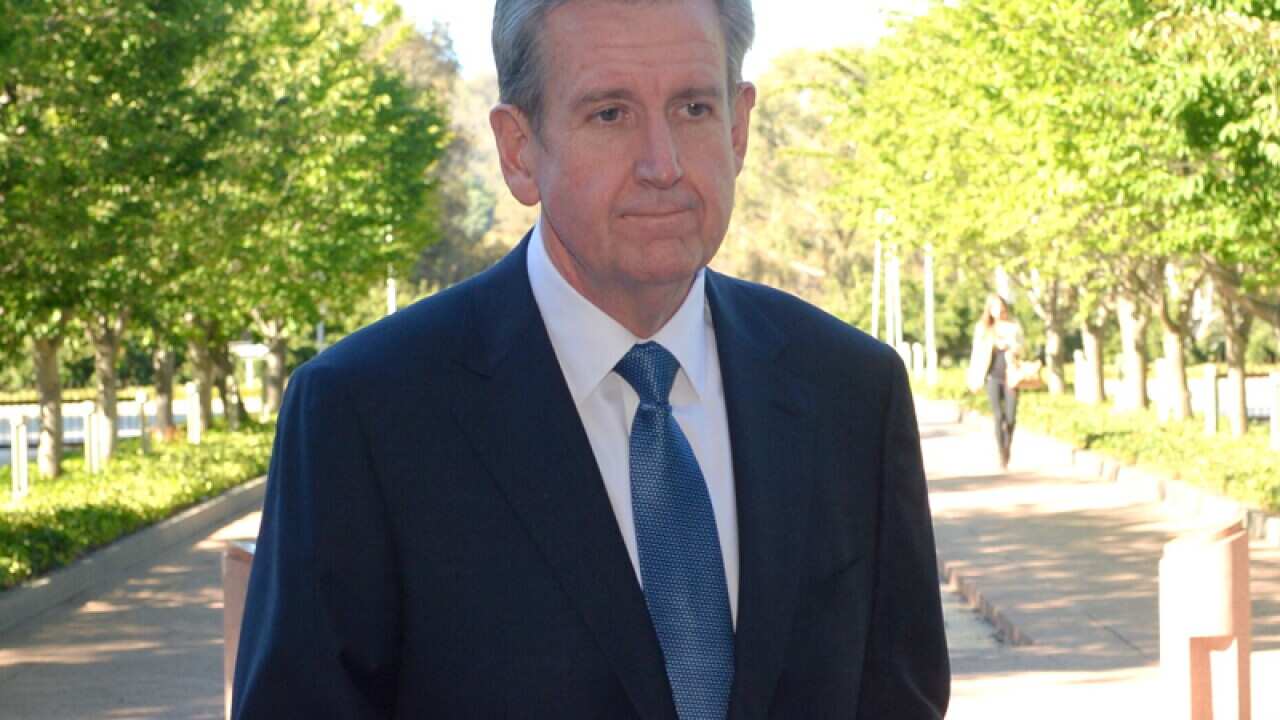
NSW Premier Barry O'Farrell has nominated productivity concerns and infrastructure funding as his priorities for a meeting of the country's leaders.
Prime Minister Tony Abbott is hosting his first Council of Australian Governments gathering in Canberra on Friday.
The meeting is being held against the backdrop of a decision by US car giant General Motors to cease manufacturing in Australia by 2017.
"Productivity and the need to improve productivity is the single greatest challenge this country faces," Mr O'Farrell told reporters at Parliament House.
Lack of productivity risked the jobs across the country and state and federal government has to tackle the issue, he said.
News that makes sense
Your trusted source for staying up-to-date with the world around you. Get free daily news updates and analysis, straight to your inbox.
Mr O'Farrell said it was important that Australian products were not priced out of global markets.
The premier said he was always after more Commonwealth funding for infrastructure in NSW and ensuring federal government red tape didn't get in the way of state projects.
West Australian Premier Colin Barnett agreed infrastructure funding would be an issue for the meeting along with the Abbott government's planned parental leave scheme.
"And I'm sure there's going to be some discussion about the car industry," he told reporters.
Mr Barnett said there was no point blaming governments, workers, unions, the mining industry or the high dollar for the industry's predicament.
"What we are seeing is significant structural change in the Australian economy."
The discussion should be "where to from here" and pursue areas where Australia had a clear natural advantage such as minerals and gas processing.
Victorian Premier Denis Napthine said his priority was the Commonwealth's response to the Holden decision.
"I'll be fighting hard for an assistance package particularly for the affected workers and their families," he told reporters.
A substantial transformation package was needed for Victoria to grow new job opportunities.
Mr Napthine rejected reports car maker Toyota had asked his government for more taxpayer assistance.
Tasmanian Premier Lara Giddings is concerned about some of the items listed for discussion including the national disability insurance scheme, the GST and the national broadband network.
It was too early to talk about the future of the NDIS because trial launch sites had been operating for only about four months, she said.
"It needs to have at least 12 months before we get a firm idea as to how that model is working for Tasmanians," she told reporters, adding those benefiting from the scheme were loving it.
Queensland Premier Campbell Newman says taxpayers cannot afford to prop up a car industry that was not competitive on the global stage.
His state's sugar, grains, mining and tourism sectors were all exposed to world economic conditions without government assistance.
"And they are now doing well," he told reporters.
Mr Newman rejected suggestions the taxpayer-funded diesel fuel rebate was a form of assistance for the mining and agricultural sectors.
It was not like the "massive" subsidies - estimated at $50,000 for each worker - given to the car industry.
South Australian Premier Jay Weatherill said the task of responding to the Holden decision deserved a national solution.
"This is more than just one car company, it is more than just one state," he told reporters.
Mr Weatherill said there was broad acceptance that Australia should be more than a country which dug up and grew things.
Stripping the car industry's capabilities and skills represented a massive threat to the whole of the nation, he said.







