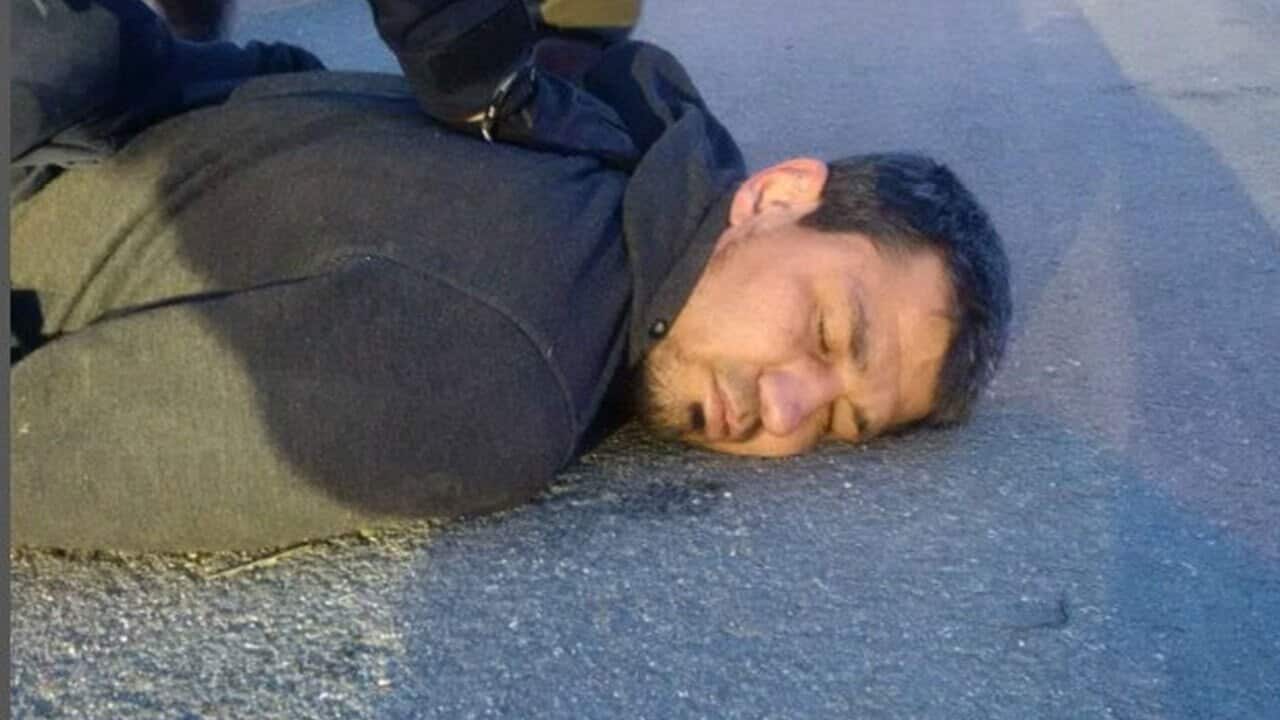
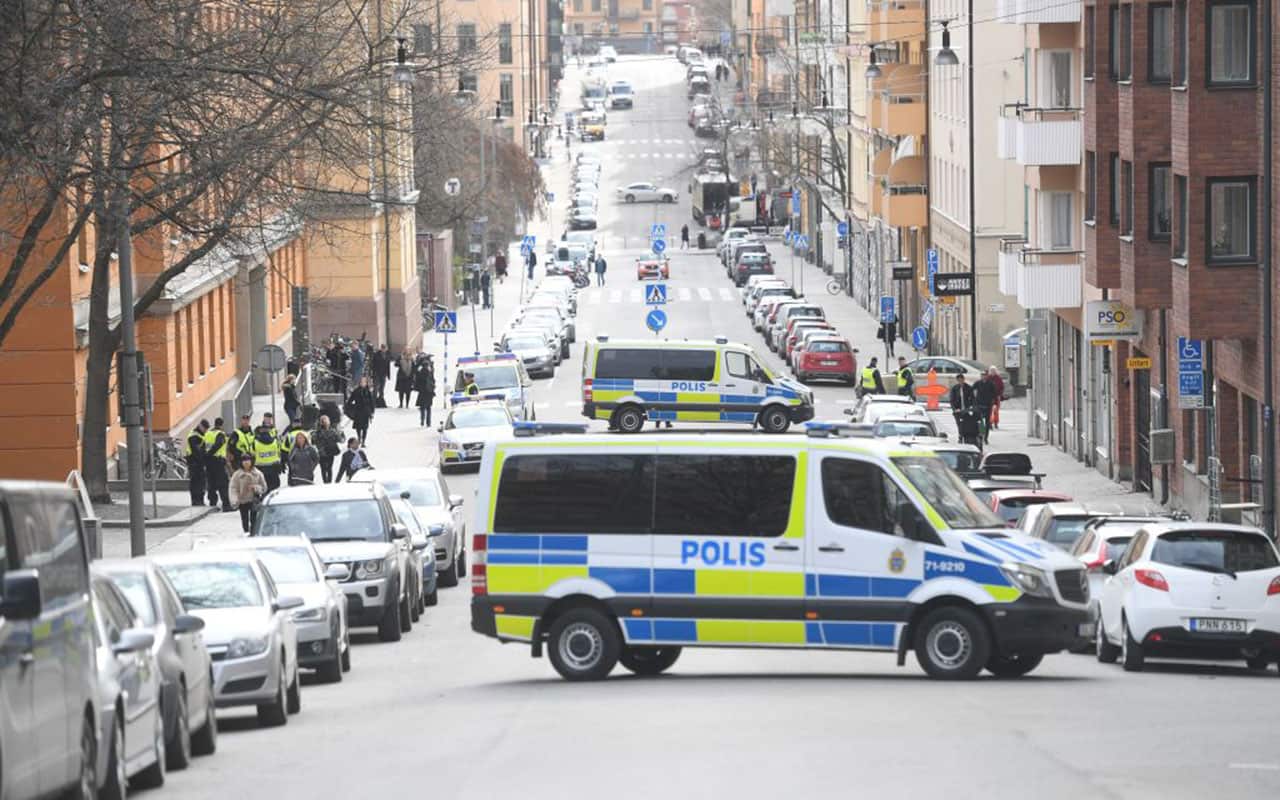
A Swedish court on Thursday sentenced a radicalised and rejected Uzbek asylum seeker to life in prison for terrorism after he mowed down pedestrians with a stolen truck in central Stockholm last year, killing five people.
The assault mirrored other truck attacks in 2016 that left scores dead in France, Germany and the UK. It occurred as Sweden grappled with the aftermath of having taken in more migrants per capita than any other country in Europe.
Arrested hours after the April 7, 2017 attack, Rakhmat Akilov, 40, who swore allegiance to the Islamic State (IS) group on the eve of the assault, said that IS members had given him the green light on encrypted chat sites to carry out a suicide attack in the Swedish capital.
However, the jihadist organisation never claimed responsibility for the assault.
The Stockholm district court convicted Akilov of "terrorist crimes" for five murders and 119 attempted murders in one of Stockholm's busiest shopping streets.
News that makes sense
Your trusted source for staying up-to-date with the world around you. Get free daily news updates and analysis, straight to your inbox.
Three Swedes -- including a girl who would have turned 12 on Thursday -- were killed along with a 41-year-old British man and a 31-year-old Belgian woman. Another 10 people were injured.
Akilov, who confessed almost immediately to the attack, expressed no remorse during his nearly three-month trial.
His gaze often remained empty, even when photographs and footage of the bloody attack were projected onto a large screen in the courtroom.
"The effects (the attack) had on Sweden were rather severe and his intention was to scare the Swedish public," senior judge Ragnar Palmkvist told AFP.
"He acted with the direct intention to kill as many people as possible," the court said in its verdict, adding that Akilov would be expelled after serving the life term, which averages 16 years in Sweden.
After swerving wildly to hit as many people as possible, Akilov's rampage ended when the truck smashed into the facade of a large department store.
Another judge in the trial, Carl Rosenmuller, said Akilov saw the victims as "pins in a game", not human beings.
An explosive device -- made up of five gas canisters and nails -- did not explode as planned and caused fire damage only to the truck.
Akilov fled the scene, running into a nearby metro station, and was arrested several hours later after being identified by public transport video surveillance images and eyewitness reports.
'Disappointed'
Investigators found text messages on Akilov's cell phone with contacts identified only by pseudonyms, and whom Akilov said were high-ranking members of IS or the "Islamic caliphate" declared in parts of Iraq and Syria.
While the text messages indicated Akilov consulted with his contacts on how to carry out his attack, prosecutors have insisted that he acted alone.
Authorities said Akilov "intended to force Sweden to stop participating in the global coalition against IS" and to "spread fear among the population".
Sweden, a non-NATO member, has around 70 military personnel based mainly in northern Iraq to provide training as part of the US-led coalition against IS.
Akilov told the court he had planned to die as a martyr and did not expect to survive the attack.
His lawyer Johan Eriksson said Akilov "was disappointed" with the verdict and was contemplating whether or not to appeal.
Suzanne Diamantakidou, 59, who was almost hit by the truck and suffered from post-traumatic stress disorder after the attack, told the daily Expressen that she was "happy" with the verdict.
Gone underground
After arriving in Sweden in 2014, on the cusp of a huge wave of migration to Europe, Akilov's application for residency was rejected in June 2016.
He later went underground to avoid expulsion and worked odd jobs in construction.
The father of four, who drank alcohol and used drugs according to colleagues and acquaintances, lived alone in Sweden. His wife and children stayed behind in Uzbekistan.
After the attack, Swedish authorities were heavily criticised for having failed to find Akilov and expel him from the country.
While the government has since adopted a series of measures aimed at ensuring that rejected asylum seekers really do leave Sweden, only 1,000 of 3,000 who were definitively rejected actually left the country in the first three months of 2018.
Security and immigration are two of the main themes dominating Sweden's general election campaign ahead of a September 9 vote.
The Scandinavian country has registered 400,000 asylum applications since 2012 -- or one for every 25 inhabitants, a record in Europe -- with a peak of 162,000 applications in 2015.







