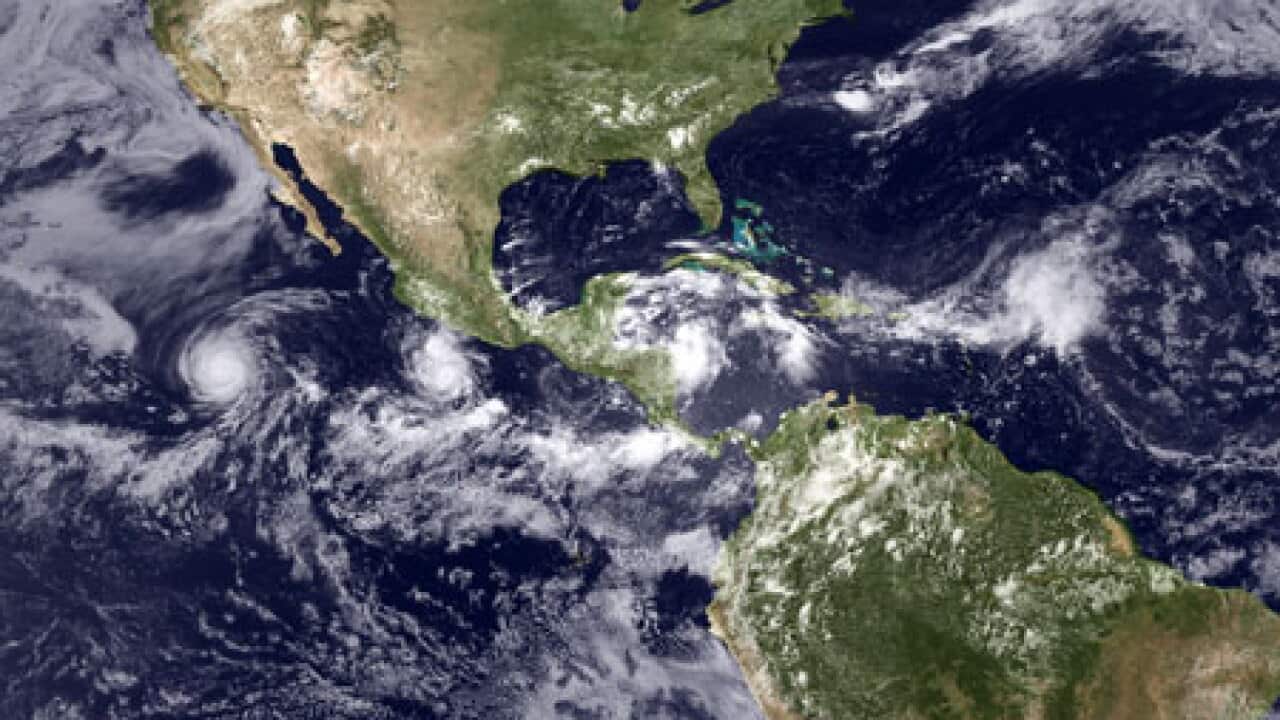
The first major storm of the Atlantic season has entered the Gulf of Mexico after unleashing landslides and floods that killed at least 10 people in Nicaragua, Guatemala and El Salvador.
Alex, which had been downgraded earlier to a tropical depression, strengthened and regained its tropical storm status, the US government said.
Officials in Nicaragua said the bodies of six people had been found in or around the northern city of Esteli, swept to their deaths by torrents from the swollen San Lucas river.
News that makes sense
Your trusted source for staying up-to-date with the world around you. Get free daily news updates and analysis, straight to your inbox.
In eastern El Salvador, on Central America's Pacific coast, two people drowned when they were carried away by strong currents near San Miguel, while more than 500 people were evacuated to shelters from high-risk areas.
In western Guatemala, two farmers working on a road improvement project were buried and killed by a rain-triggered landslide, the national emergency agency Conred reported.
Tropical Storm Alex, which packed sustained winds of 75 kilometres an hour, was entering the Gulf of Mexico some 100 kilometres west southwest of Campeche, Mexico, the Miami-based National Hurricane Center said.
"Additional strengthening is forecast and Alex could become a hurricane within the next 48 hours," the NHC said.
Although it was not due to directly hit the massive BP oil spill off the southern US state of Louisiana, the storm could still generate waves that would hamper clean-up and containment efforts.
Central America was slammed last month by Tropical Storm Agatha, which roared ashore into Guatemala from the Pacific, unleashing heavy rains and floods that left some 275 people dead or missing.
The NHC's long-term forecast has the storm heading over the Gulf of Mexico in the direction of the US-Mexico border, but with a possibility of waves and winds generated by the storm affecting the site of the huge oil slick unleashed by the April 20 explosion of the BP-leased Deepwater Horizon rig.
But a forecaster at the NHC downplayed a direct hit on the oil cleanup area.
"The storm is not an issue for the spill," said NHC spokesman Dennis Feltgen.







