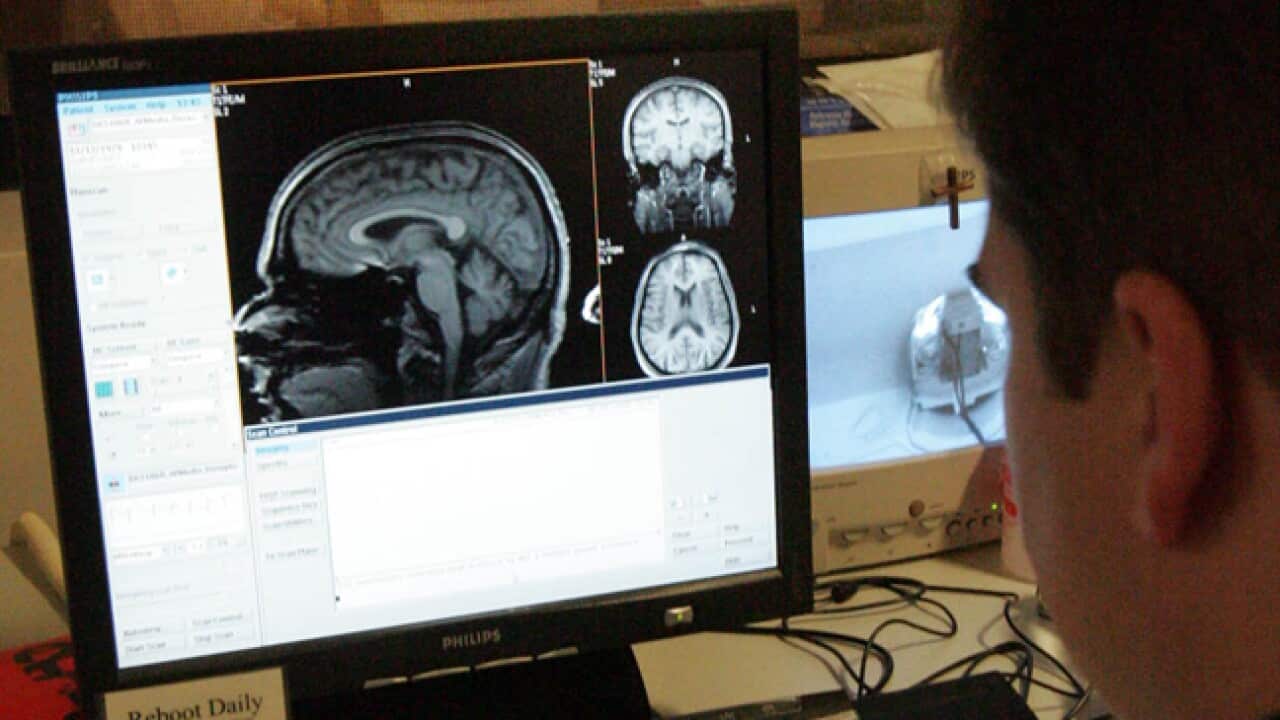
US researchers have conducted a post-mortem analysis of autistic boys which showed their brains were heavier and contained more neurons than counterparts without the disorder.
The findings published in the Journal of the American Medical Association, suggest that brain overgrowth may be occurring in the womb.
Researchers examined the brains of seven autistic boys, age two to 16, most of whom had died by drowning.
When the results were compared to a control group of six boys without autism who also died in accidents, researchers found the brains of autistic boys had 67 per cent more neurons in the prefrontal cortex and were nearly 18 per cent heavier than normal brain weight for their age.
"Because cortical neurons are not generated in postnatal life, this pathological increase in neuron numbers in autistic children indicates prenatal causes," the study said.
News that makes sense
Your trusted source for staying up-to-date with the world around you. Get free daily news updates and analysis, straight to your inbox.
The researchers suggested that "faulty prenatal cell birth or maintenance may be involved in the development of autism."
The prefrontal cortex is where language and communication is based, as well as behaviours such as mood, attention, and social ability. Typically, autistic children have difficulty in these areas.
However, more research is needed to confirm the link, and to determine if and how brain differences may be tied to the severity of an autistic person's symptoms.
"Factors that normally organise the brain appear to be disrupted," said an accompanying editorial by Janet Lainhart of the University of Utah and Nicholas Lange of the Harvard University Schools of Medicine and Public Health.
Previous studies have suggested that clinical signs of autism tend to coincide with a period of abnormal brain and head growth that usually becomes apparent at nine to 18 months of age, according to the findings which were published in the Journal of the American Medical Association.
Autism includes a wide spectrum of developmental differences and may range from mild social awkwardness to complete inability to communicate, repetitive movements, sensitivity to certain lights and sounds, and behavioural problems.







