(Transcript from World News Australia Radio)
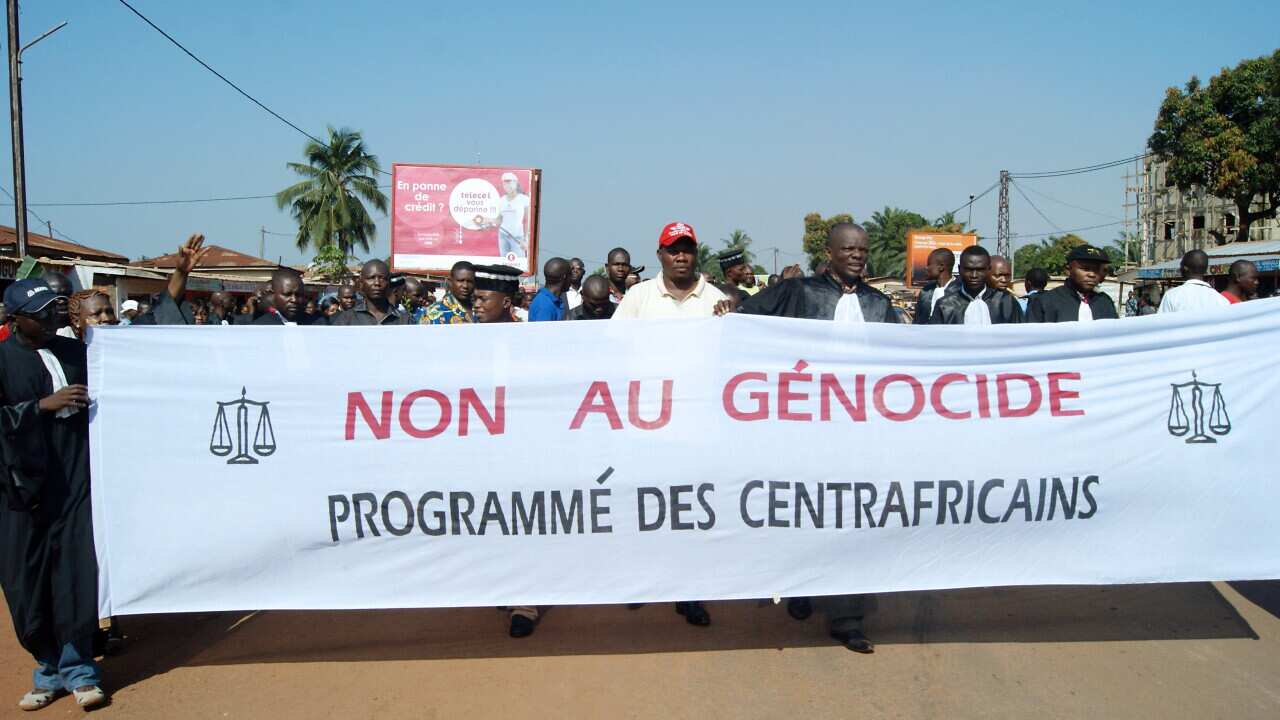
Increasing violence in France's former colony has sparked international alarm in recent weeks, with some warning of a possible genocide.
It's also prompted France to lead calls for a military intervention, backed by the international community, to restore stability in the African nation.
Santilla Chingaipe has more.
(Click on audio tab above to hear full item)
News that makes sense
Your trusted source for staying up-to-date with the world around you. Get free daily news updates and analysis, straight to your inbox.
The United Nations has called for fast action to halt strife in Central African Republic.
Deputy Secretary General Jan Eliasson issued this warning to the UN Security Council.
"The country faces a desperate security situation. There is a breakdown of law and order. The population is enduring suffering beyond imagination, and as we see far too often, children and women are at the gravest risk. The use of child soldiers is rising, sexual violence is growing."
The Security Council is discussing methods to back an African military force trying to restore order in the country where rebels overthrew President Francois Bozize in March.
The United Nations, United States and France have all recently warned that the country's people could be headed for genocide.
And Jan Eliasson says the country is fostering the development of extremism in the region.
"The Central African Republic is becoming a breeding ground for extremists and armed groups in a region that is already suffering from conflict and instability. If this situation is left to fester, it may develop into a religious and ethnic conflict with long-standing consequences, even a civil war, that could spread into neighbouring countries."
According to the UN, the unrest has displaced almost 400,000 of the country's estimated 4.6 million people.
It's left 2.3 million people in need of assistance and more than one million people desperate to find food in the resource-rich but impoverished nation.
The country has descended into violence and chaos since the mostly Muslim Seleka fighters ousted President Bozize.
Since then, the transitional government has lost control of the country, with former rebels staging attacks and rival Christian and Muslim groups also fighting each other.
UN Deputy Secretary General Jan Eliasson says this is cause for concern.
"The Secretary General is particularly concerned over the alarming increase in intercommunal violence. Traditional harmony among communities has been replaced by polarisation and widespread horror."
Mr Eliasson has backed calls to strengthen the African Union-led force in the country, and to turn it into a UN peacekeeping operation.
The African Union has deployed 2,500 soldiers in the CAR, bolstered by around 400 French troops mainly in the capital Bangui.
France has proposed a UN Security Council resolution authorising international troops to use force to end the mounting chaos in the country.
The resolution, which would also impose an arms embargo on the strife-torn country, could be passed by the 15-member Security Council next week.
The former colonial power has announced that it will increase its forces in the CAR to around one-thousand soldiers after the UN resolution is passed.
France's defence minister Jean-Yves Le Drian has told Europe 1 radio the troops will be deployed for six months to support the African peacekeeping force.
"The Central African Republic is in a very serious condition. The state is on the verge of collapsing and we cannot have a country collapsing like that. There is violence, massacres and a humanitarian chaos that comes with a collapse of security."
France's Ambassador to the UN, Gerard Araud says French troops would restore law and order until an African Union force is boosted to 3,600 troops and fully operational.
But Mr Araud has reiterated that even if a decision for UN peacekeepers is decided immediately, it would take a further four to six months before troops can be deployed.
"Even if we create a peacekeeping operation today, it will take - you remember the figures - between four and six months before the actual deployment of the peacekeeping operation. So now, we are acting in urgency and the urgency is to do the job as quickly as possible. We have the African force, the African countries are committed to act so the emergency commands that we support the African force. But we don't exclude the peacekeeping operation down the road, but we need the report to do it."







