
This audio is voiced by AI and may occasionally mispronounce words.
Share your feedback and help us improve this feature. Read more about how we use AI at SBS here.
For years, getting a tattoo meant accepting it was there to stay.
But when Mike Anderson decided he no longer wanted his ink, he discovered just how difficult it was to undo the permanence.
Unable to find a laser tattoo-removal clinic in Sydney's inner-west, he and his wife decided to open one themselves.
"We grew out of it pretty quickly," Anderson tells SBS News.
Twelve years later, what began as a personal solution has grown into a business spanning 12 locations across NSW, Queensland and the United States — part of a booming industry built around a simple idea: what goes on the skin doesn't necessarily have to stay there.
News that makes sense
Your trusted source for staying up-to-date with the world around you. Get free daily news updates and analysis, straight to your inbox.
We are trending heavily towards women. Year on year, it's growing exponentially.
With more than a decade in the industry, Anderson says he has seen his fair share of tattoo regret stories.
"There was one from Bondi that said 'chicken' when they thought it said 'prosper'."
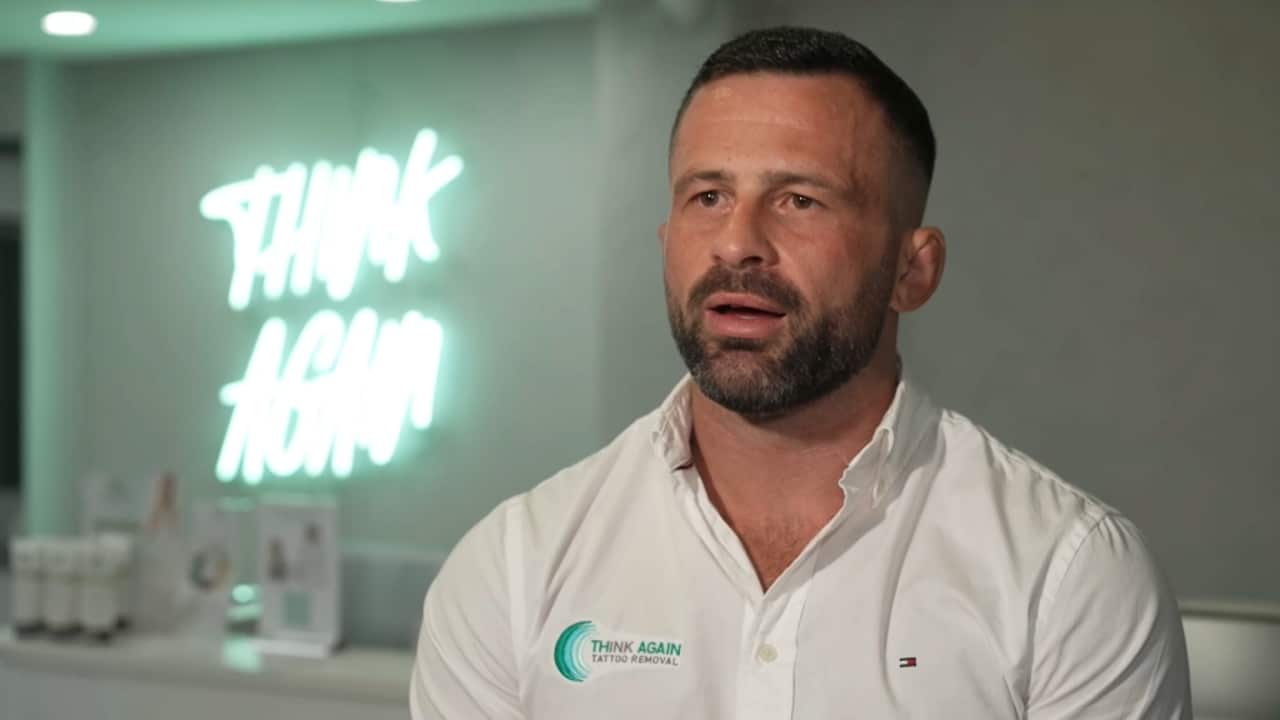
Anderson says the rise of fine-line and highly detailed tattoos has brought a new group of clients into removal clinics.
"With more detail comes more opportunity for mistakes and bad work. When they go wrong, they usually go noticeably wrong."
The growing demand for a second chance at unwanted ink is fuelling a booming global industry. The tattoo-removal market was worth an estimated US$1.29 billion ($1.79 billion) in 2025 and is forecast to reach US$4.87 billion ($6.75 billion) by 2034, according to Fortune Business Insights.
Erasing hate
For some clients, the tattoos they want removed carry a darker history — racist symbols, hate-related words and, in some cases, racist slogans.
For five years, Anderson's clinic has run a charity program offering free removal of these tattoos.
"We've done al-Qaeda tattoos, we've done swastikas and white power symbols," he says.
Anderson says the aim is to help clients distance themselves from the beliefs these tattoos represent.
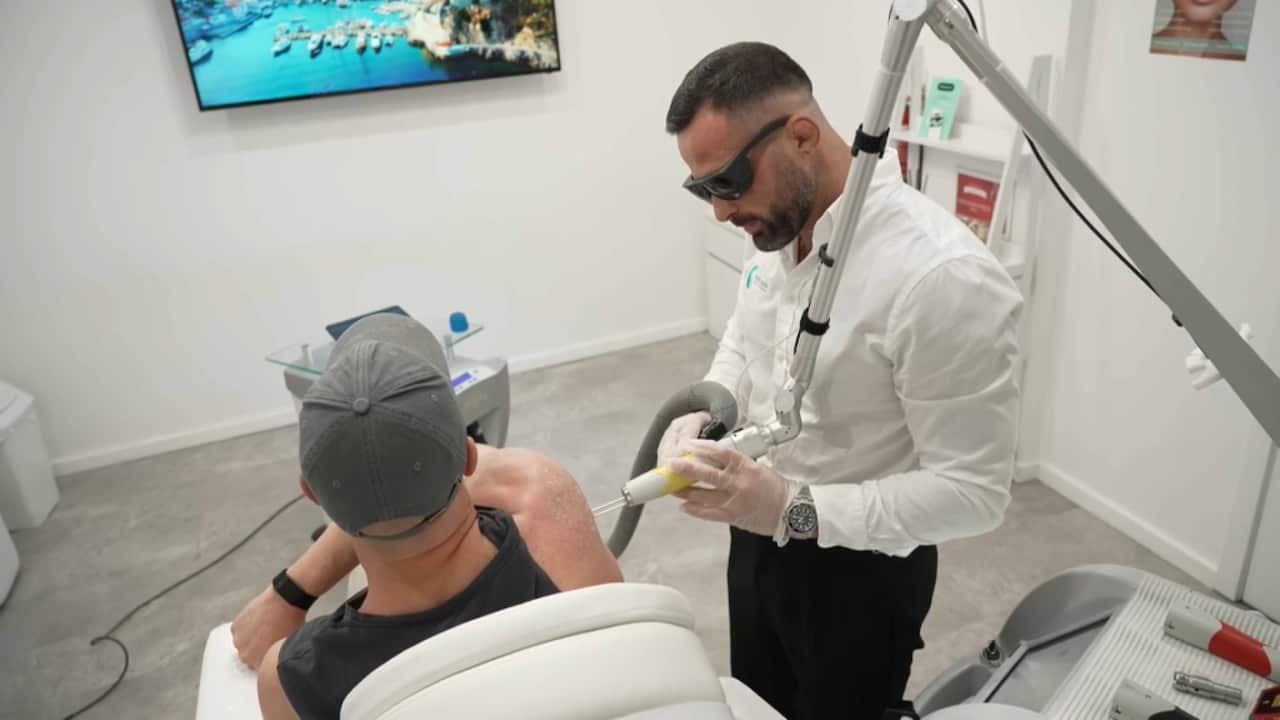
"The idea is that we take those tattoos and break the chain of influence, like, nephews, sons [and] daughters are less likely to fall into those same paths."
Anderson says the program attracts a high volume of applicants, but clients must demonstrate genuine remorse.
"We judge it on a case-by-case basis. We ask questions about the crimes they've committed; we expect transparency.
We get a lot of people referred by parole officers, particularly young people who've been under some bad circumstances.
"They have to tell us what it means to them; are they looking to get employed? And make sure they're the right person."
How tattoos went mainstream
Today's tattoo removal industry is part of a much longer story: how tattooing evolved from a practice associated with particular communities and subcultures into mainstream body art.
In Australia, the history stretches back to the convict era.
The State Library of Victoria estimates around a quarter of convicts sent to Australia had at least one tattoo.
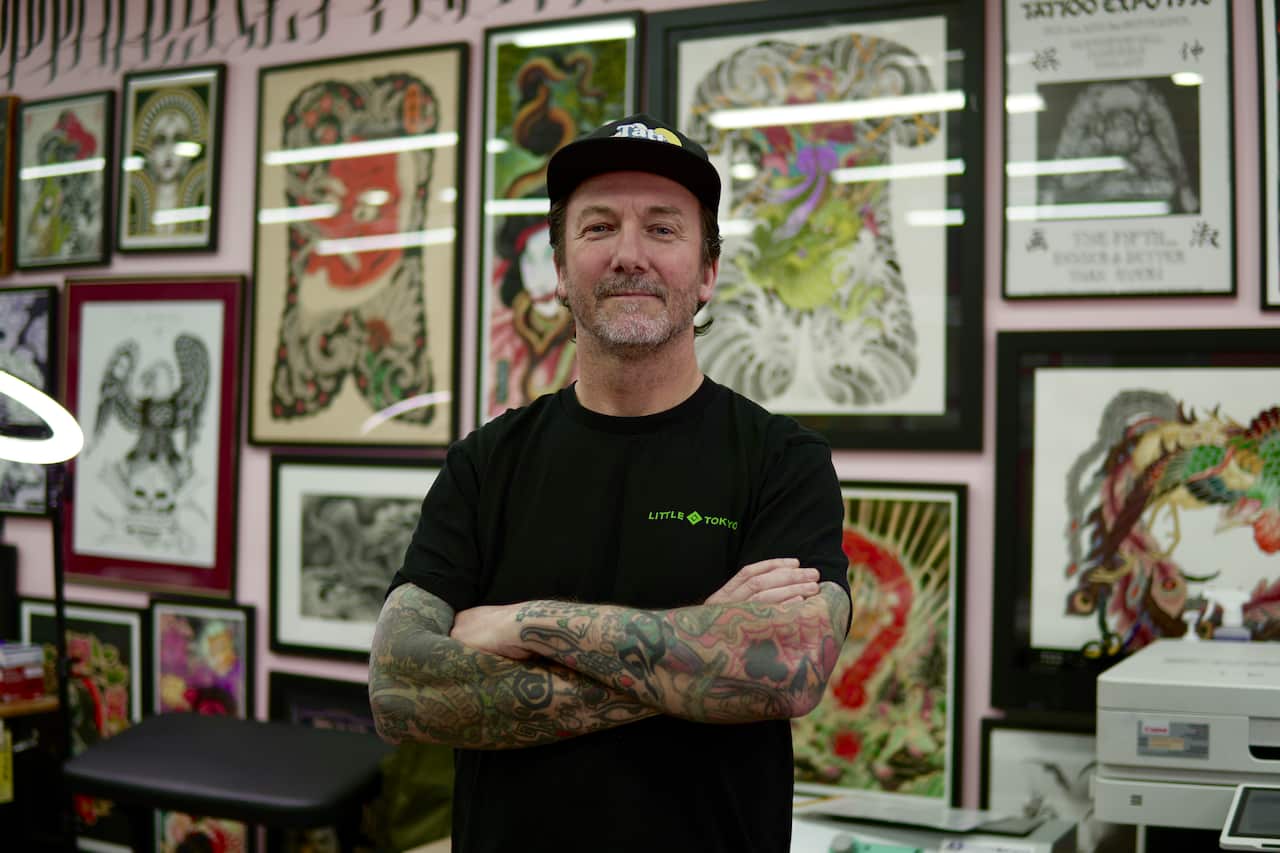
Research by historian Simon Barnard, based on more than 10,000 convict records from Van Diemen's Land (modern-day Tasmania), found about 37 per cent of male convicts and 15 per cent of female convicts arrived in the 19th century with tattoos.
He found these tattoos were rarely random; they were carefully chosen and often deeply symbolic.
Tattoo historian and artist Rhys Gordon says some tattooing also took place during the long voyages to Australia aboard convict ships.
"There's evidence of hand-poked tattooing being done on the [convict] ships, and that was maybe the name of a town, a loved one," he tells SBS News.
Many also picked up the art form from settlers seeking fortune during the Gold Rush in the 1850s.
While tattooing has a long history across many cultures, its history in Australia also intersects with First Nations forms of body modification. Historical accounts distinguish tattooing from practices such as scarification and ceremonial body painting among Aboriginal and Torres Strait Islander peoples.
As Sydney and Melbourne grew into major port cities, merchants and other travellers brought European tattooing traditions. Gradually, commercial tattooing developed in Australia, with sailors among its early clientele.
By the 20th century, tattoos were associated with different groups and identities.
"In the 70s, it became the biker culture, rock'n'roll, AC/DC, Rose Tattoo ... this started to have an impact on the youth of the day, and then it sort of spread from there," Gordon says.
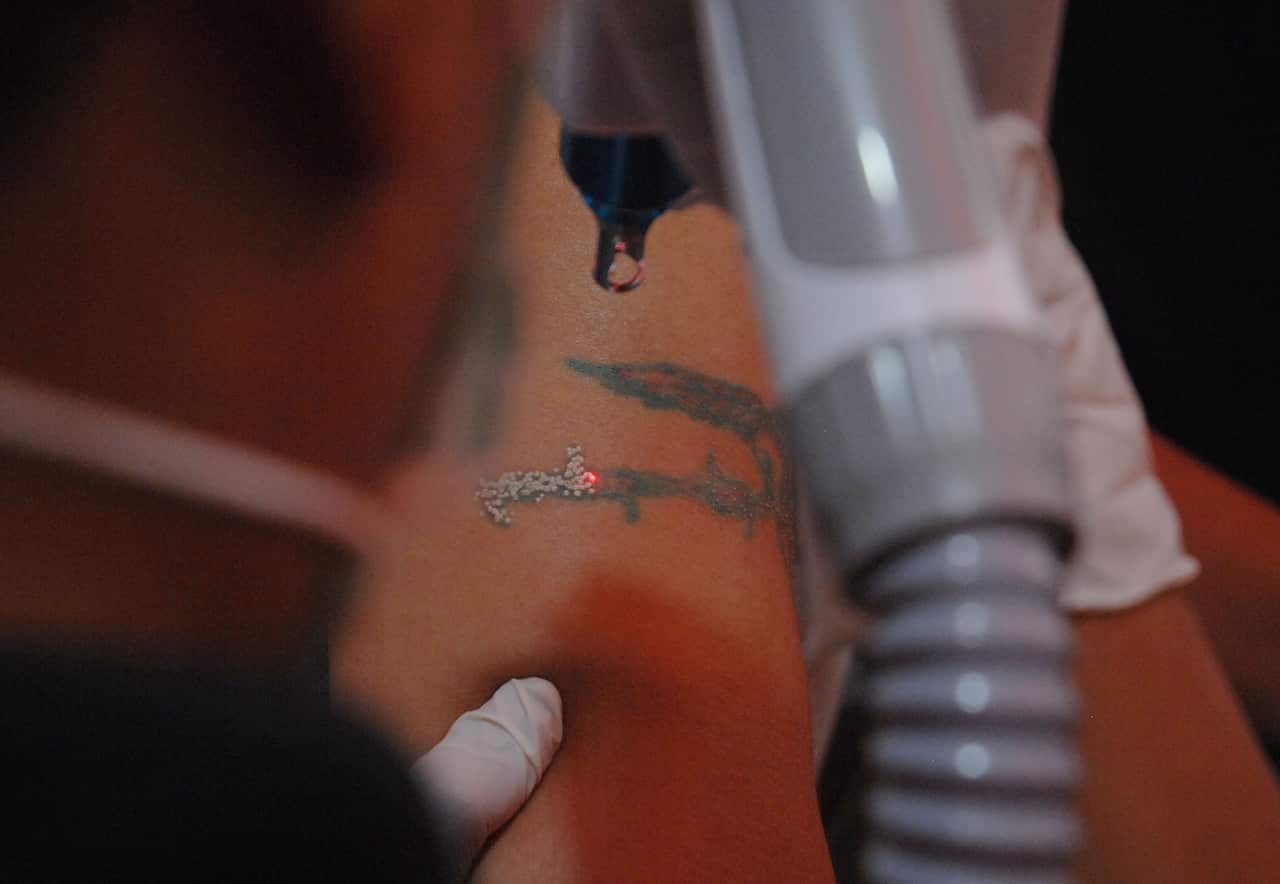
But he says later decades helped push tattooing beyond its traditional subcultures and into the mainstream.
"Now they've set the playing [field] for the newer artists to be able to take it to the next level."
According to 2023 McCrindle research, three in 10 Australians (30 per cent) had a tattoo, compared with 20 per cent in 2018.
A cultural archive
Hong Kong-style tattoo artist Jonathan Tsang has built a global following by taking his work on the road, setting up temporary studios in cities around the world.
He's currently in Melbourne until mid-September, attracting clients from across Australia and beyond.
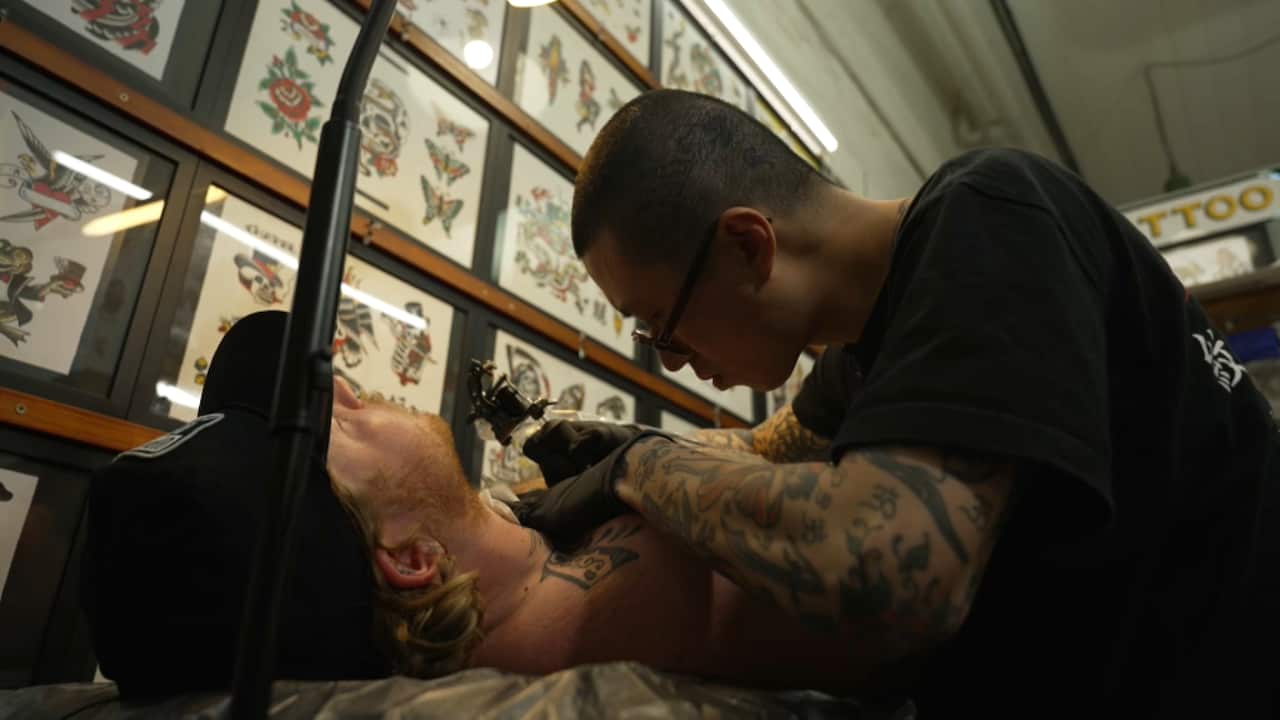
Tsang believes the bold dragon, tiger, and eagle designs once strongly associated with sailors, gangs and other subcultures live on as a form of cultural expression.
"Back in the day, it was seen only on sailors or gangs in Hong Kong, but nowadays it's more of an appreciation for the style," he tells SBS News.
Tsang says tattoos are more than designs: they can act as a cultural archive, preserving a connection to a moment, a history and place in time. He says, just like sailors, migrants often choose ink to represent their journeys.
"Sometimes immigrants that live in Australia see it as an identity thing."
Ink as identity
Gordon, who has been tattooing for 36 years and specialises in Japanese-style tattooing at his parlour in Queensland's Surfers Paradise, says demand for cultural and identity-driven tattoos is strong as ever.
"So many sub-cultures and sub-sections have embraced tattooing; anime tattooing is probably one of the biggest movements. It appeals to anyone and everyone," he says.
"Here in Australia now it's great to see Samoa[ns], Māori, Polynesians from all aspects embracing their culture and getting covered.
It's beautiful, power[ful] and there is so much connection to the land and history.
But cultural tattooing is not limited to people of that particular heritage, Gordon says, pointing to his own tattoos as an example.
"I've never had an adverse reaction by a Japanese person [to] me wearing Japanese culturally significant tattoos," he says.
"If anything, they're like, 'Man, this is amazing; good for you'.
"It's freedom of expression and society is now accepting people's choices in life."
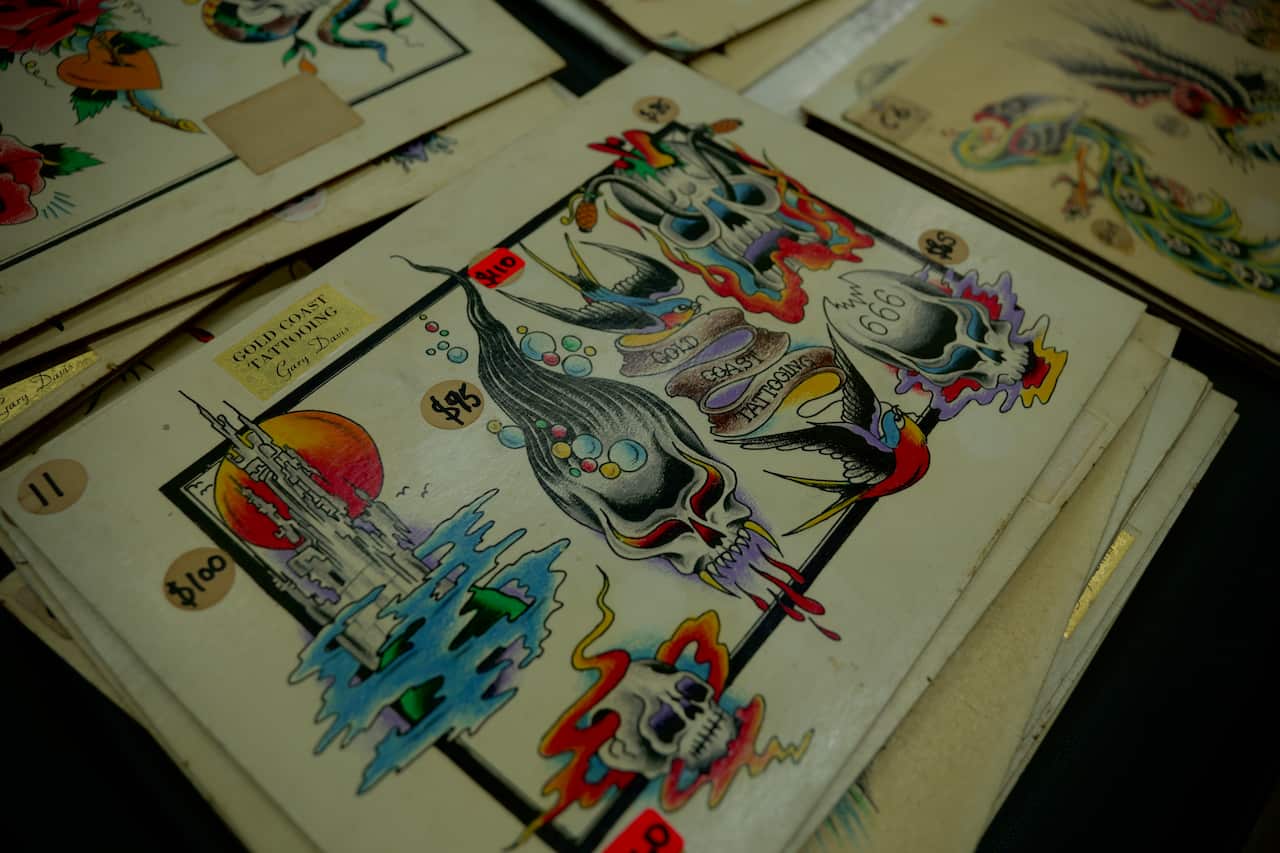
For Anderson, that freedom can also mean having the choice to let go of something once considered permanent.
Reflecting on the clients who have come through his charity program seeking to remove hate symbols, he says the impact can extend well beyond the tattoo itself.
"We've had clients in tears. Their kids have never seen their arm; they've never worn shorts to the beach.
It can have a really meaningful impact.
For the latest from SBS News, download our app and subscribe to our newsletter.







