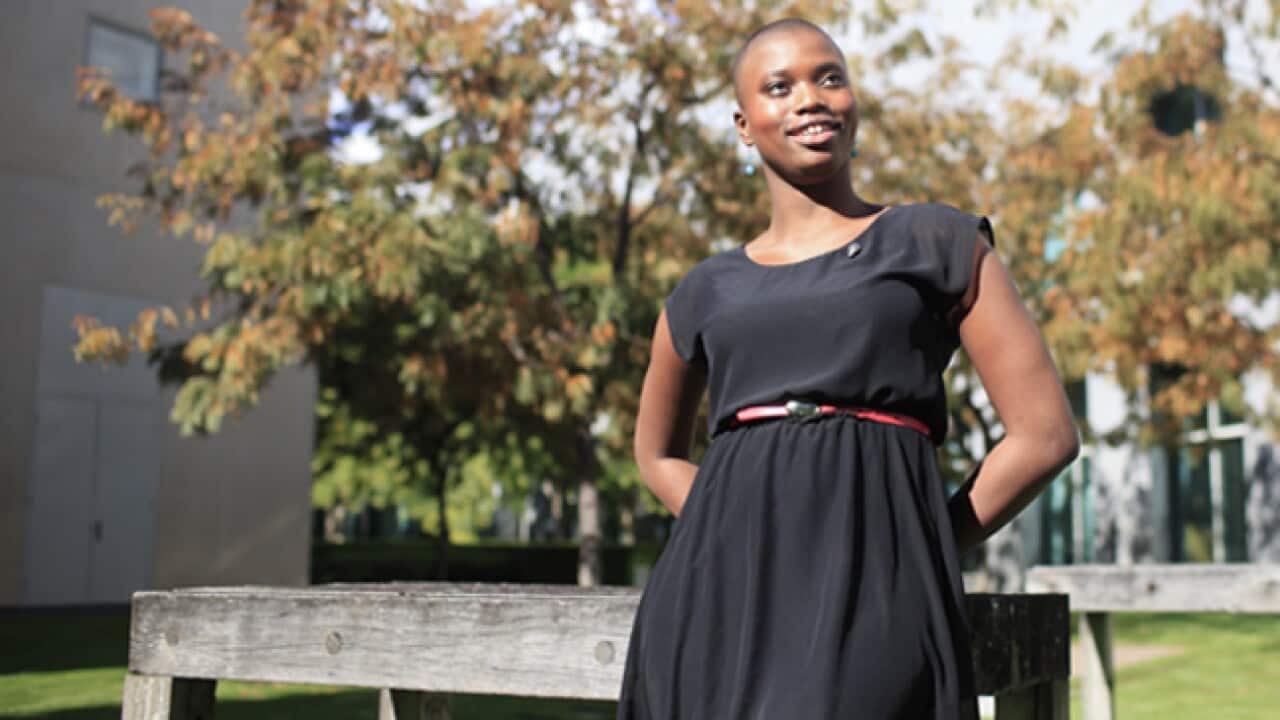
For Khadija Gbla going on "a holiday" was the euphemism her mother used before she was taken away and subjected to female genital mutilation.
She has vivid memories of the traditional practice performed on her, as a nine-year-old, in a rural village in her home country Sierra Leone.
"My mum was holding me down. I struggled for my life, thinking this is not what I was promised," she told AAP.
An old woman came at her with a rusty old blunt knife.
"I was thinking, this is not going to end well."
News that makes sense
Your trusted source for staying up-to-date with the world around you. Get free daily news updates and analysis, straight to your inbox.
No anaesthetic was used.
"I remember being cut, inch, by inch, by inch and bleeding for weeks."
The practice, which removes the clitoris and inner labia, was done to Khadija's grandmother and her mother.
But in her family at least, it will definitely stop at her generation.
Khadija's family moved to Australia when she was 13 and it was only then that she came to terms with what had been done without her consent.
Now 24, the Adelaide law student has started a support group for other young girls who are living with the consequences of female circumcision.
"I did not feel like a complete woman," she said.
Khadija experiences stomach pain that leaves her crying on the floor. She also worries about how it will affect future intimate relationships.
She joined health experts at Parliament House in Canberra on Tuesday for a summit on efforts to stamp out the practice in Australia and globally.
Federal Health Minister Tanya Plibersek told the summit it was a "difficult and confronting topic".
"All mothers, all parents, want the best for their children," she said.
"Mothers and grandmothers have agreed or arranged female genital mutilation because they believed their daughters would not be marriageable without it."
A review of state laws found that penalties needed to be consistent across the country, Ms Plibersek said.
UK specialist midwife Comfort Momoh told the summit she helped 400 girls a year at her London clinic and performed one or two reversal procedures each week.
Many of her patients need ongoing support and counselling.
"If a child dies from excessive bleeding, (the mindset is) it was meant to be because she's a witch," Dr Momoh said, adding that societal change must happen at community level.
James Cook University academic Ajay Rane has seen the ugly consequences of the practice, including "an axe in the vagina put there by the Taliban in a nine-year-old" and fistulas - abnormal connections between the bowel or bladder and the vagina.
These caused the women to leak and led to ostracism in their society, he said.







