Published in collaboration with The Conversation, a website that features commentary, research and analysis from Australian universities and the CSIRO.
Is Syria fitting into a pattern of Middle Eastern regime change that will see Assad go the same way ousted Tunisian leader Zine El Abidine Ben Ali and former Egyptian strongman Hosni Mubarak?
The Conversation spoke with Deakin University Middle East expert Mat Hardy to find out where Syria goes now.
News that makes sense
Your trusted source for staying up-to-date with the world around you. Get free daily news updates and analysis, straight to your inbox.
Has a pattern emerged for the way the Middle Eastern revolutions have developed?
I don't necessarily think there is a pattern. There is a pattern in-so-much as a number of countries in the same region are experiencing probably their first wave of democratic reform, or attempted democratic reform. That is a pattern.
But I don't see that there's a pattern that has been applicable to each and every one of those countries, because each of those countries has particular circumstances of governance and geography that make it different in the way things are played out.
Is the Western media looking for a pattern to fit its pre-supposed view of the Arab world and the “Arab Street”?
There is a tendency to genericise the Middle East and we [also] genericise democracy and we genericise reform.
They cannot be equated all over the place. What Americans understand from democracy will be different from what some people in various Arab countries are looking for.
I think it is very easy to put a label on democracy but what I think a lot of these people want is a bit more freedom and they are not always exactly the same thing.
Would Islam still be a guiding force in whatever form of government emerges?
Islam is always going to be a guiding force because Islam is much more a political force [than other religions]. Islam governs every part of your daily life, there is no fear of getting religion involved in government.
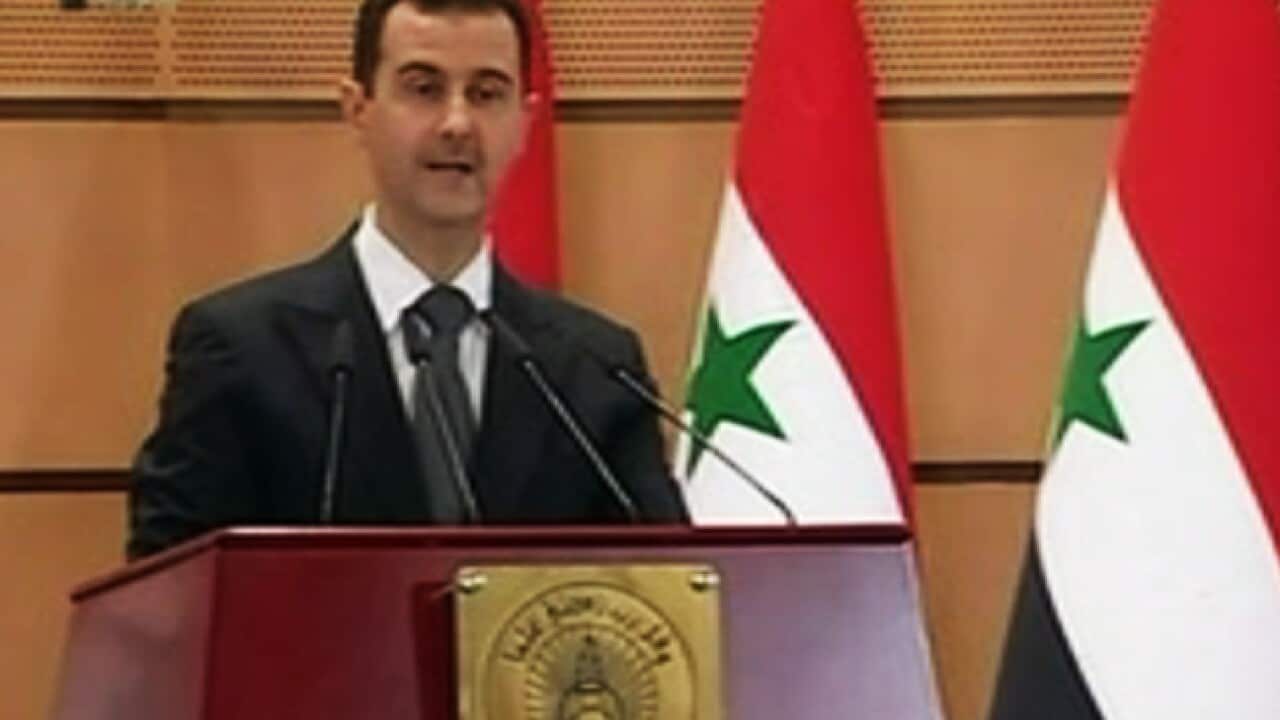
Other now-deposed Middle Eastern leaders have given speeches similar to the ones Syrian President Assad has given. Is there a chance Assad will be able to shore up his position with his latest speech?
This goes to the heart of the idea that every case is different in the Middle East. The big difference between Syria and Libya and Egypt is that Assad is not the outright leader like someone such as Gaddafi was.
Assad is more like a senior partner in a firm and the other partners are members of his broader Alawite family and clan who have a lot more share of what goes on.
You can compare Assad's speech to the waffly marketing stuff that a Western corporation puts out where it says stuff, but does not really say anything of substance and hedges every single bet.
Assad is not only trying to keep himself in the palace, he's trying to keep his clan and all his cronies in power as well. Even if Assad woke up tomorrow and had a complete revolutionary change and wanted to institute a Westminster system, there'd be too many other powerbrokers who wouldn't let that happen.
Is the Assad/Alawite regime going to have to fight to the end because Assad cannot simply get on a plane and leave like Mubarak or Ben Ali did?
There are a lot of minorities in Syria and for even those who aren't Alawites, they'd be worrying about what would happen if the Sunni majority got hold of the country.
The Assad regime can't just get on a plane because they'd need too many planes; there's too many people involved. Unlike in Egypt, there's no gap between the Syrian government and the Syrian military – they are the same thing. The Syrian military is controlled by high ranking Alawite officers.
There's less rationality in Syria. For Mubarak, slaughtering hundreds of people in the street was never really an option, they are a bit more rational than that in Egypt. We have already seen that Assad is prepared to do that.
Is there is a chance of military intervention from Turkey?
I seriously doubt it. Turkey is a member of NATO. It is not necessarily just free to do as it pleases. Syria is intrinsic to the Israeli/Palestinian peace process and alienating Syria too far could have repercussions in the Israeli solution as well.
I can't see anyone queuing up to invade Syria and try and sort things out there. Even the nature of the geography means that it is much easier for Assad to move forces around in Syria than it was Gaddafi in Libya where there is only one road up the coast and that is it.
Assad can reach out anywhere in Syria and quell whatever military intervention might be going on. The other problem with Syria is there is a number of non-government actors in the region like Hezbollah and Hamas and any intervention in Syria can have repercussions in Israel, Palestine and Lebanon.








