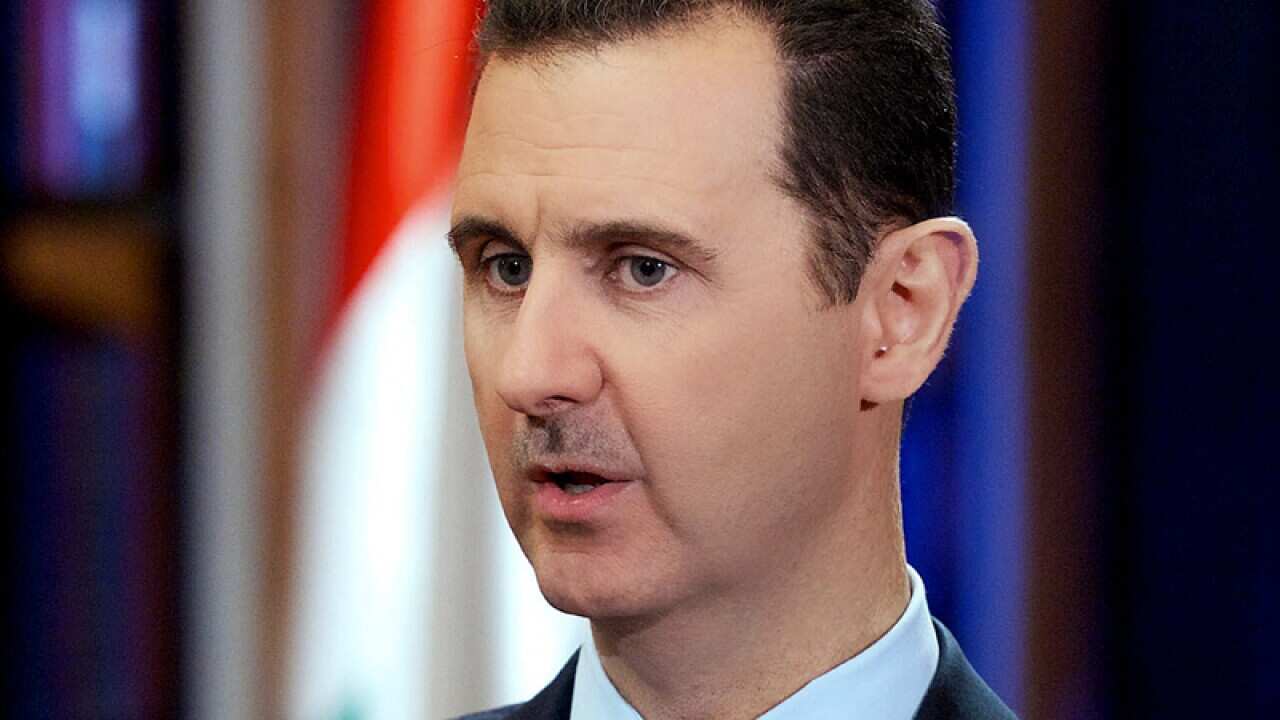
Syria is committed to a deal to hand over its chemical weapons, President Bashar al-Assad said in an interview, as major powers inched closer to a UN resolution enshrining the agreement.
The Syrian president, in an interview with Venezuelan television station Telesur broadcast on Wednesday, said he saw "no obstacles" to a plan under which Damascus will relinquish its chemical arms.
His comments came as UN experts arrived in Damascus to resume investigating around 14 incidents in which chemical weapons are alleged to have been used.
On the ground, an Iraqi woman was killed when a mortar round hit the Iraqi consulate in Damascus, a diplomat said.
Assad told Telesur his government was committed to the Chemical Weapons Convention, which it signed as part of the US-Russian agreement on the destruction of its chemical arsenal.
News that makes sense
Your trusted source for staying up-to-date with the world around you. Get free daily news updates and analysis, straight to your inbox.
"Syria is generally committed to all the agreements that it signs," he said in the interview, published in full by the state news agency SANA on Thursday.
He said Damascus had begun to send the required details of its chemical arsenal to the Organisation for the Prohibition of Chemical Weapons which is overseeing the deal, and that OPCW inspectors were expected in Syria.
"Experts (from the OPCW) will come to Syria in the coming period to look into the status of these weapons," he said.
"As the Syrian government, there are no serious obstacles.
"But there is always the possibility that the terrorists will obstruct the work of the experts by preventing them from accessing certain places."
Assad's Syrian regime labels those fighting against it "terrorists".
Syria agreed to turn over its chemical arsenal under a deal thrashed out following an August 21 sarin attack in the suburbs of Damascus, which killed hundreds of people.
The attack, which occurred as UN chemical weapons experts were in Syria investigating previous alleged chemical attacks, was blamed on the Syrian regime by Washington and other international backers of the Syrian opposition.
Assad's government denies involvement, but agreed to turn over its chemical arsenal in the face of threatened US military action.
The deal halted talk of a US assault, but Assad said "the possibility of aggression is always there".
"This time the pretext is chemical weapons, next time it will be something else," he said.
The permanent members of the UN Security Council meanwhile made progress on a resolution enshrining the chemical weapons deal, agreeing on the "main points" of a text.
A diplomat said it could result in a resolution that allows for a later vote on sanctions under Chapter VII of the UN Charter if Damascus fails to honour the Russia-US plan.
A senior State Department official cautioned to AFP: "We're making progress but we're not done yet."
US President Barack Obama told the UN General Assembly on Tuesday there had to be a "strong" resolution and French President Francois Hollande said it must include the threat of eventual "coercive" measures.
But Russia opposes a resolution with any such language.
A team of UN experts led by Swedish chief Ake Sellstrom is in Damascus for further investigations into chemical weapons use.
After determining that sarin gas was used in the August 21 attack, the team must now try to reach up to 14 sites where allegations of chemical weapons use have been made.
On the rebel side, a group of 13 rebel factions, including some previously under a Western-backed command, announced they were joining the Al-Qaeda-affiliated Al-Nusra front and rejected the key National Coalition opposition grouping based in Turkey.
At the UN, where the General Assembly is being held, nations pledged new aid to deal with the fallout from the 30-month conflict which has killed more than 110,000 people and displaced millions.







