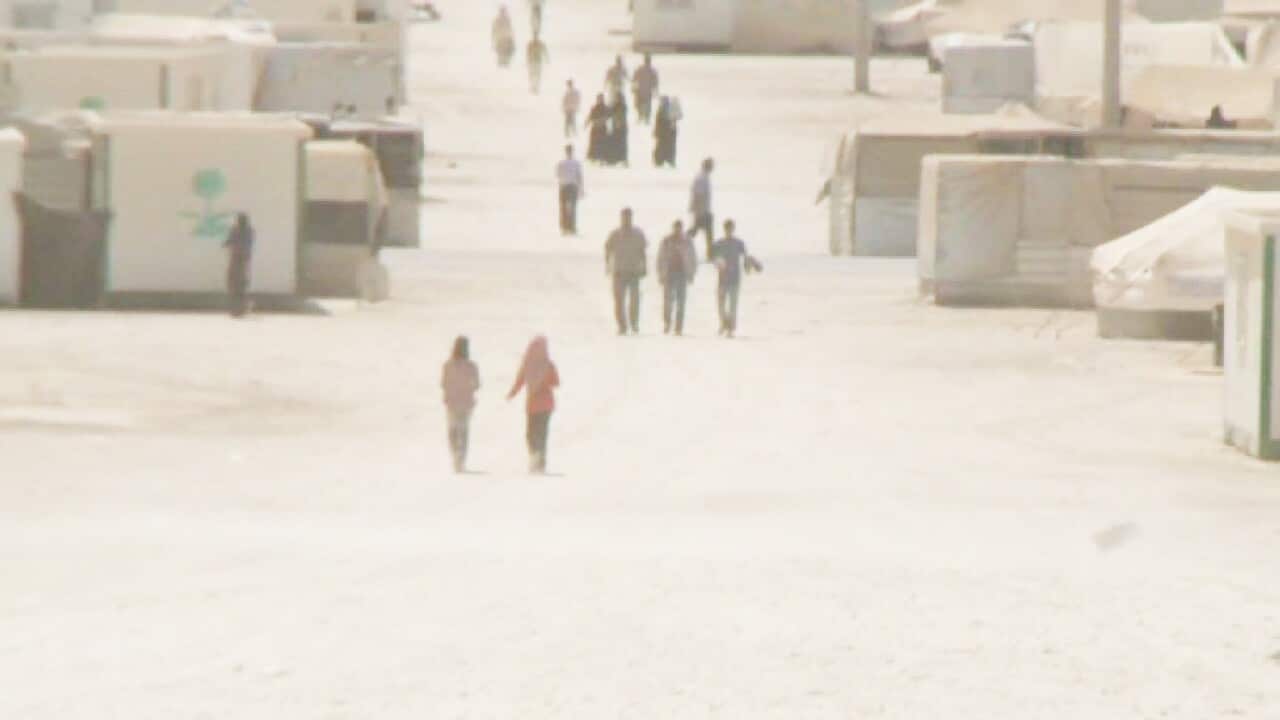
Eyes glued to a television news report on Syria from a Jordan refugee camp, Said Salem has lost hope of returning home, where the 30-month war has forced two million to flee abroad.
"The conflict has lasted too long, there is only death and destruction and the world is watching on as a spectator. It must end," Salem said.
Salem is originally from the southern Syrian province of Daraa, like most of the refugees in Jordan's Zaatari camp, which stretches into the desert as far as the eye can see.
"We spend most of our time watching the news. It breaks our hearts to see Syria ruined and sinking into a civil war while the world sits still," the father of 11 said.
As talk of possible US strikes on targets in Syria grows louder, Salem, who lost his right hand in an army raid a year ago, said that he wants an end to the suffering.
News that makes sense
Your trusted source for staying up-to-date with the world around you. Get free daily news updates and analysis, straight to your inbox.
"There is no light at the end of the tunnel," he said.
US President Barack Obama said he is confident he will win congressional approval, as early as next week, for strikes on Syria in response to alleged chemical attacks by the regime on August 21.
"The question that always comes up as I talk with my husband is: are we going to return to our country?" asked Hanan, a mother of four daughters.
"Our children do not go to school, we no longer have a source of income and nobody is helping us," the 38-year-old said.
Some refugees managed to flee Syria with money, while others subside on handouts from relatives who work abroad. But many are totally destitute.
Opened one year ago to house Syrians fleeing the war, the Zaatari camp today has some 130,000 residents, living in extremely tough conditions.
Over the months it has become Jordan's fifth-biggest city in terms of population. Most of its residents originally come from Daraa, the town in southern Syria where protests against President Bashar al-Assad broke out in March 2011, before morphing into a bloody civil war that has killed more than 110,000 people.
On Tuesday, United Nations High Commissioner for Refugees Antonio Guterres said the number of Syria refugees had already topped two million.
"There are no words to express... this tragedy," Guterres told reporters in Geneva, adding that the exodus showed no sign of abating and risked destabilising the region.
In addition to refugees who have fled to Jordan, Lebanon, Turkey, Iran and Egypt, the fighting has also displaced more than six million people, over one quarter of Syria's population of 22 million.
"What is the world waiting for to act?" asks Ali Salman, 38, taking a drag on his cigarette. His five children, who seem weakened, are playing nearby.
"We are eating very badly, we are drinking dirty water and there is no care when we get ill.
"Why is the world watching the massacres without taking action? Why are they not doing anything for us and our children? More than 100,000 people have died, is that not enough for the world to intervene."
Hassan Nashwa was able to open a store to support the needs of his large family, but says that he cannot see any future for his children, who do not have any education.
"The only solution is to return to Syria, because this camp is nothing but a huge prison".
"My main hope is to find my house, my school and my friends again," adds Mahmud Jamal, 12, who does odd jobs to help the eight members of his family in the camp, including his sick father and a brother wounded by shrapnel.
The Jordanian government puts the number of refugees currently in the kingdom at 550,000.
But their numbers could rise again as the violence in Syria rages, stretching Jordan's limited water resources and threatening its fragile social makeup.
"Life is difficult in the camp," says Mohammed al-Darawi. "We are in the middle of a desert... without work of money and our problems are only growing."







