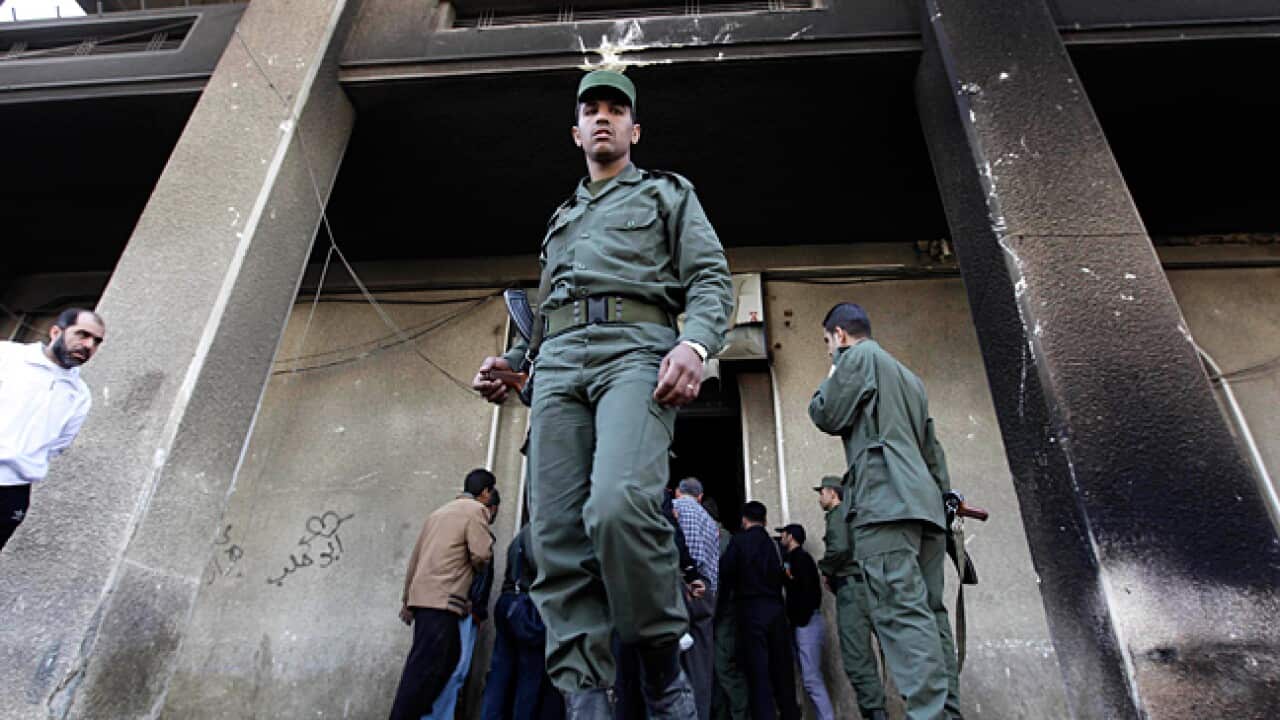
The Syrian army says it has begun withdrawing from a city at the heart of the country's uprising, but the regime has expanded its crackdown elsewhere by deploying soldiers and arresting hundreds ahead of a new wave of anti-government protests.
The siege on Daraa - the southern city where Syria's six-week-old uprising began - lasted 11 days, with President Bashar Assad unleashing tanks and snipers to crush dissent there.
Syria's state-run media says the military has "carried out its mission in detaining terrorists" and restored calm in Daraa.
News that makes sense
Your trusted source for staying up-to-date with the world around you. Get free daily news updates and analysis, straight to your inbox.
Still, an activist who has been giving AP updates from Daraa cast doubt on the army claim. The activist, who left Daraa early on Thursday, said residents were reporting that tanks and troops were
still in the city.
The accounts could not be independently confirmed and telephone calls to Daraa were not going through.
UN deputy spokesman Farhan Haq said on Thursday a UN humanitarian team will be going to Daraa in the coming days following a phone appeal by Secretary-General Ban Ki-moon to Assad.
Even as the army said it was pulling out of Daraa, military units were deploying elsewhere, including around the coastal town of Banias that is home to one of Syria's two oil refineries, witnesses said.
Four armoured personnel carriers, several tanks and a bus carrying soldiers had been spotted.
"The situation is very worrying," a Banias resident said, asking that his name not be published out of fear for his personal safety.
Hundreds of families were fleeing the area in case Banias also comes under siege.
Damascus raid detains hundreds
Also on Thursday, a human rights activist said Syrian security forces conducted a major raid in a suburb of the capital, Damascus, detaining more than 200 people. Other sources said up to 300 were arrested.
Rami Abdul-Rahman, head of the Syrian Observatory for Human Rights, said the raid in the Saqba neighbourhood occurred in the early hours of Thursday after authorities cut telecommunications in
the area.
Assad is determined to crush the revolt, which was inspired by uprisings in Tunisia and Egypt and has become the gravest challenge to his family's 40-year dynasty.
Assad has tried a combination of brute force, intimidation and promises of reform to quell the unrest, but his attempts have failed.
Security forces have repeatedly opened fire on protesters during rallies around the country, including in the northern city of Hama, where amateur video captured the sound of heavy gunfire last week
as men yelled and ran for cover. Later, the same video showed a nighttime candlelight march.
Syrian activists were planning to take to the streets again on Friday, the main day for protests in the Arab world, for what they are calling a Day of Defiance.
More than 550 people have been killed since security forces began cracking down on the protests. Scores of soldiers have also been reported killed.
The mounting death toll - and the siege in Daraa - has only served to embolden protesters, who are now demanding nothing less than the downfall of Assad's regime.
There has also been growing international condemnation of the government's tactics.
The US and Italy warned Syria it will face penalties and increasing isolation if it does not halt its violent crackdown on pro-reform demonstrators.
US Secretary of State Hillary Rodham Clinton said Syria had to know that there would be "consequences for this brutal crackdown."
Speaking at press conference with Italian foreign minister Franco Frattini, Clinton said the US is looking at boosting sanctions it has imposed on Syrian leaders. Frattini said Italy would support similar measures by the European Union.
Syria blames the unrest on a foreign conspiracy and "terrorist groups" it says have taken advantage of protests.
The uprising in Syria was sparked by the arrest of teenagers who scrawled anti-regime graffiti on a wall in Daraa. Protests spread quickly across the nation of about 23 million people.







