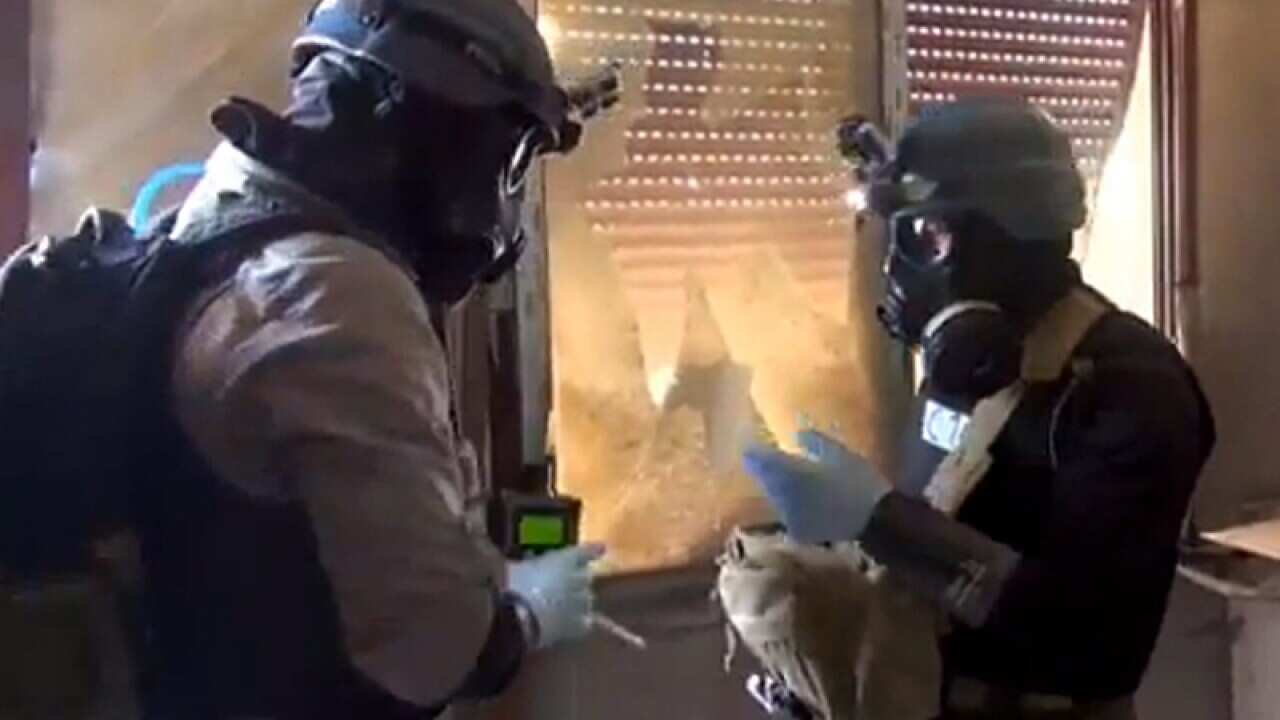
Syria has begun destroying its remaining chemical weapons production sites, despite being hampered by bad weather and logistical problems, the world's chemical watchdog says.
"Destruction operations commenced in December," Organisation for the Prohibition of Chemical Weapons (OPCW) spokesman Peter Sawczak said in The Hague, without elaborating.
Syria had said previously demolition of the 12 hangars and tunnels would begin in November, but work stalled when the contractor pulled out.
Two other Syrian companies were given the project but the firm tasked with destroying five tunnels had to wait for deliveries of explosives and equipment, Syria told the United Nations in November, after running months behind schedule.
The OPCW, which is overseeing the dismantling of Syria's chemical weapons program, in July gave Damascus 60 days to finish demolishing the sites.
News that makes sense
Your trusted source for staying up-to-date with the world around you. Get free daily news updates and analysis, straight to your inbox.
"The destruction has began. They are starting on the tunnels," confirmed a Hague-based source on Monday, asking not to be named.
"There was a bit of a delay on the pouring of cement because of the snow," the source added, saying "they aim to tackle one tunnel each month."
Syria's UN Ambassador Bashar Jaafari has said the destruction process will be completed by June.
Syria finished disabling the production sites by October 2013, however the structures that house them still needed to be destroyed.
A total of 1300 metric tonnes of chemical weapons have been removed from Syria, with the majority being destroyed aboard the US Navy ship MV Cape Ray.
After an August 2013 sarin attack outside Damascus that much of the international community blamed on President Bashar al-Assad's government, the regime agreed to turn over its chemical arsenal.
The United States threatened military action against Damascus over the attack, but held off following the chemical disarmament agreement.
Damascus and the rebels have accused each other of using chemical weapons, including chlorine, in the nearly four-year war that has killed more than 200,000 people.







