Syria launched a long-anticipated assault to crush the opposition in the rebellious north on Saturday, bombarding its main city with tank shells from all sides and clashing with rebel fighters struggling to hold back an invasion.
President Bashar Assad rejected any immediate negotiations with the opposition, striking a further blow to already staggering international efforts for talks to end to the conflict.
Assad told UN envoy Kofi Annan that a political solution is impossible as long as "terrorist groups" threaten the country.
The opposition's political leadership has also rejected dialogue, saying talk is impossible after a year long crackdown that the UN estimates has killed more than 7500 people. That makes it likely that the conflict will continue to edge toward civil war.
Syrian forces have been building up for days around Idlib, the capital of a hilly, agricultural province along the Syria-Turkey border that has been a hotbed of protests against Assad's regime.
News that makes sense
Your trusted source for staying up-to-date with the world around you. Get free daily news updates and analysis, straight to your inbox.
On Saturday morning troops blasted Idlib for hours with dozens of tank shells as the forces moved to encircle the town, an Associated Press team in Idlib reported.
Families fled their homes, carrying blankets and a few other meagre belongings. Others huddled in homes.
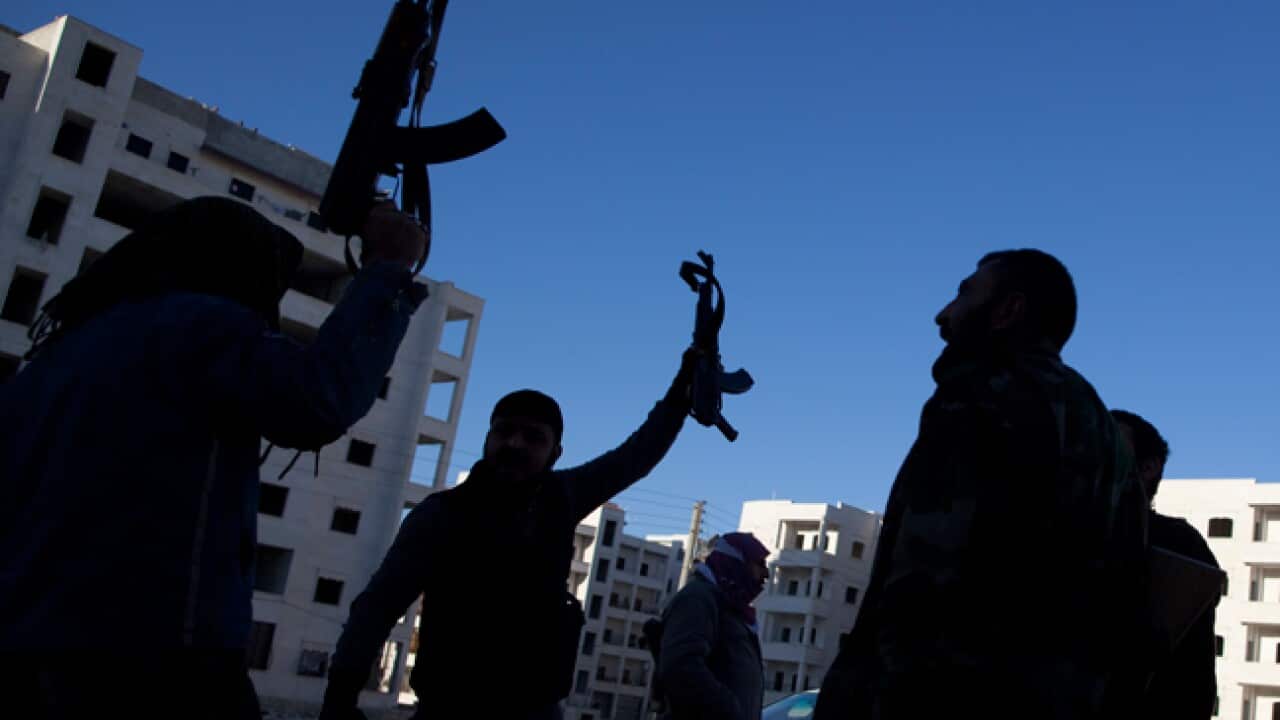
Rebel fighters rushed through Idlib's streets, taking cover behind walls to fire on the attackers with automatic weapons, the AP team said. Trucks sped wounded fighters to clinics, and men on one street destroyed speed bumps with shovels so ambulances could drive faster. Many low-level soldiers in the area have joined the opposition and fight along with civilians who have taken up arms as part of the loosely organised Free Syrian Army.
Many fear the offensive in Idlib could end up like the regime's campaign against a rebel-held neighbourhood in the central city of Homs. Troops besieged and shelled Baba Amr for weeks before capturing it on March 1. Activists say hundreds were killed, and a UN official who visited the area this week said she was "horrified" by the destruction in the district, now virtually deserted.
Late Saturday, Idlib activist Fa di al-Yassin said the army had closed off the city's main exits, making harder for civilians to flee. Rebel fighters destroyed six armoured trucks in an ambush and shot down one helicopter with a high-calibre machine gun, he said.
Al-Yassin estimated that the city has as many as 1000 fighters, but that they have mostly light arms and are short on ammunition. Most supply lines have been cut.
"The Free Army will able to keep them out for a while, but if they cannot get more weapons and if the army keeps shelling from outside, they won't be able to hold out," he said.
"Right now their morale is very high," he said. But, he added, "We worry that what happened in Baba Amr will happen here."
In the evening, clashes eased, with occasional shells falling on the city, al-Yassin said. He said many were killed and injured but could not be taken to the central hospital because regime forces controlled it and other government buildings.
Regime forces ambushed a group of rebels heading to Idlib to join the fight, killing 16, according to two activist groups - the Local Coordination Committees and the Britain-based Syrian Observatory for Human Rights.
The Observatory said 17 civilians were killed in Idlib province on Saturday, part of 28 killed nationwide. It said five other rebels were killed in fighting elsewhere, and that 19 regime troops were killed in Idlib and outside of Damascus. The LCC said 63 were killed nationwide, including 46 in Idlib province.
Al-Yassin's claims and the death tolls could not be independently verified.
The visit to Damascus by Annan, a former UN secretary-general, is the centrepiece of a high-profile international attempt to find a solution to the worsening conflict amid sharp divisions among world powers and Arab countries over how to deal with the crisis.
Annan planned a second round of talks with the Syrian president on Sunday, the UN spokesperson's office said in a statement.
Annan's call for an immediate cease-fire and political dialogue has been dismissed as a nonstarter by both sides. In his talks on Saturday with Assad, Annan put "several proposals on the table" for stopping violence, gaining access for humanitarian aid deliveries to Syrians and starting an "inclusive political dialogue," the UN statement said.
Assad told Annan the plan was doomed "as long as there are armed terrorist groups that work to spread anarchy and destabilise the country," according to Syria's state news agency. The regime blames the uprising on terrorists serving a foreign conspiracy.
That appeared to signal that there could be no talks until the opposition is crushed.
The head of the Syrian National Council, the most prominent opposition group, said on Friday that calls for dialogue are naive while Assad's troops continue to kill. Many in the opposition want military aid.
The uprising began a year ago with anti-Assad protests in some of Syria's impoverished provinces. As the regime cracked down, the protests spread and some took up arms to defend themselves and attack government troops. Activists put the death toll at more than 8000, compared to the UN count of more than 7500.







