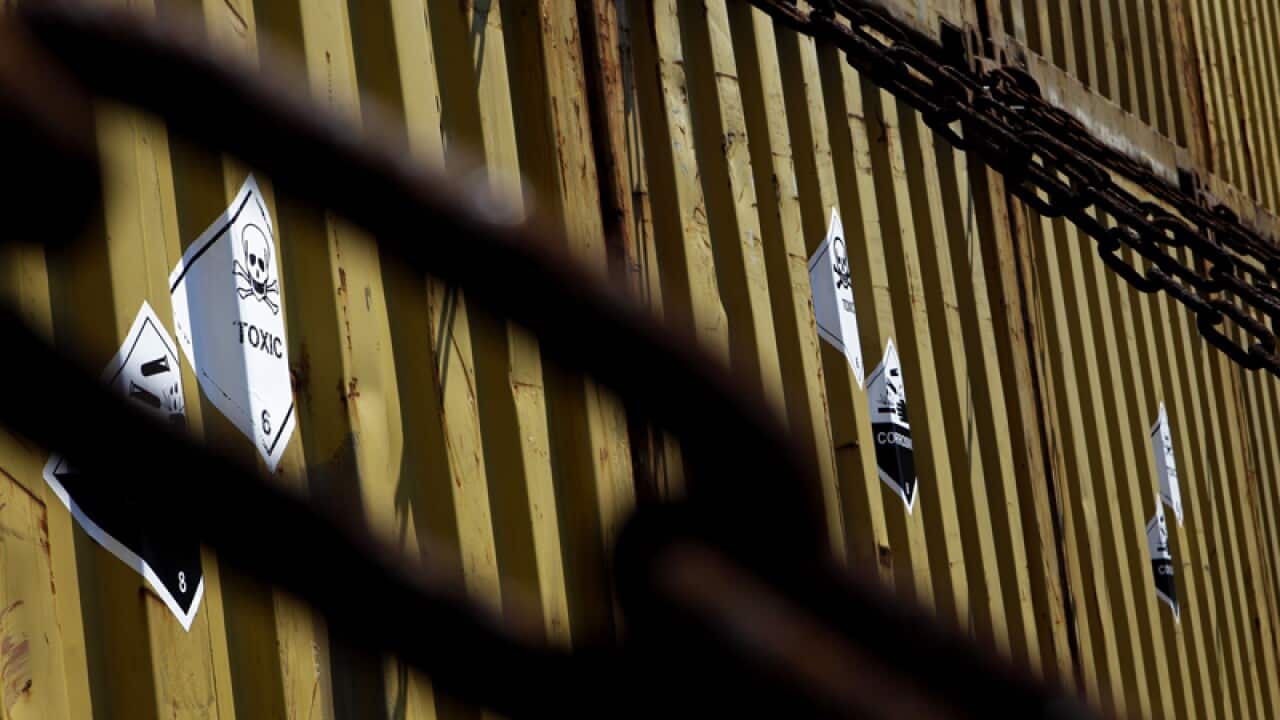
The head of the mission overseeing the destruction of Syria's chemical arsenal has urged Damascus to urgently hand over its remaining agents, and pressed countries with influence to intervene.
Under a deal backed by the UN and brokered by the US and Russia after Washington threatened air strikes against Syrian government targets, the weapons were to be destroyed by June 30.
But 7.2 per cent of Syria's declared chemical agents - 16 containers packed and ready to go - remain outside Damascus, Sigrid Kaag, the UN official overseeing the process, told AFP.
Gripped by a civil war now in its fourth year, Syria says it is currently too dangerous on the ground to transport the chemicals safely by road to the port of Latakia.
Danish and Norwegian ships are waiting to take the chemicals to a US ship for a destruction process that lasts around 60 days.
News that makes sense
Your trusted source for staying up-to-date with the world around you. Get free daily news updates and analysis, straight to your inbox.
"We call on all member states to exercise their influence to ensure the immediate removal of the remaining chemicals," said Kaag, head of the joint UN and Organisation for the Prohibition of Chemical Weapons (OPCW) mission to disassemble the weapons.
"The urgency, the time, the pressure to remove the remaining 7.2 per cent is very, very critical," she told reporters after briefing the Security Council behind closed doors.
Western diplomats say a key question is how long the mission will go into overtime.
Kaag said in an interview that she hoped it could be wrapped up by the end of September.
A staff of 110 people in Syria will be slashed to fewer than 50, including 15 to 20 international personnel, after June 30.
"Our hope is that by the end of September everything will have been concluded," Kaag told AFP.
Technical visits to inspect Syria's progress every two months could then be managed from The Hague.
But Kaag was upbeat earlier this year about meeting the June deadline. Syria has now missed a string of target dates.
She admitted there was "no magic wand" to force compliance, but said senior Syrian officials and "important member states" had given assurances that it would happen "fairly shortly."
Security concern "doesn't mean, however, that there's not a tremendous urgency to get the job done", Kaag warned.
Western diplomats, pressing for a UN resolution to enforce humanitarian corridors in Syria, are waiting for a separate report on the regime's alleged ongoing use of chlorine gas.
Humanitarian chief Valerie Amos said that there had been a marked increase in violence during the conflict, including "poisonous gases allegedly used against civilians".
France and the United States allege government forces may have unleashed industrial chemicals on a rebel-held village in May.
Syria did not have to declare its stockpile of chlorine - a weak toxic agent - as part of the disarmament deal as it is widely used for commercial and domestic purposes.
Kaag refused to be drawn on the issue of chlorine as an OPCW fact-finding mission is a separate operation.







