

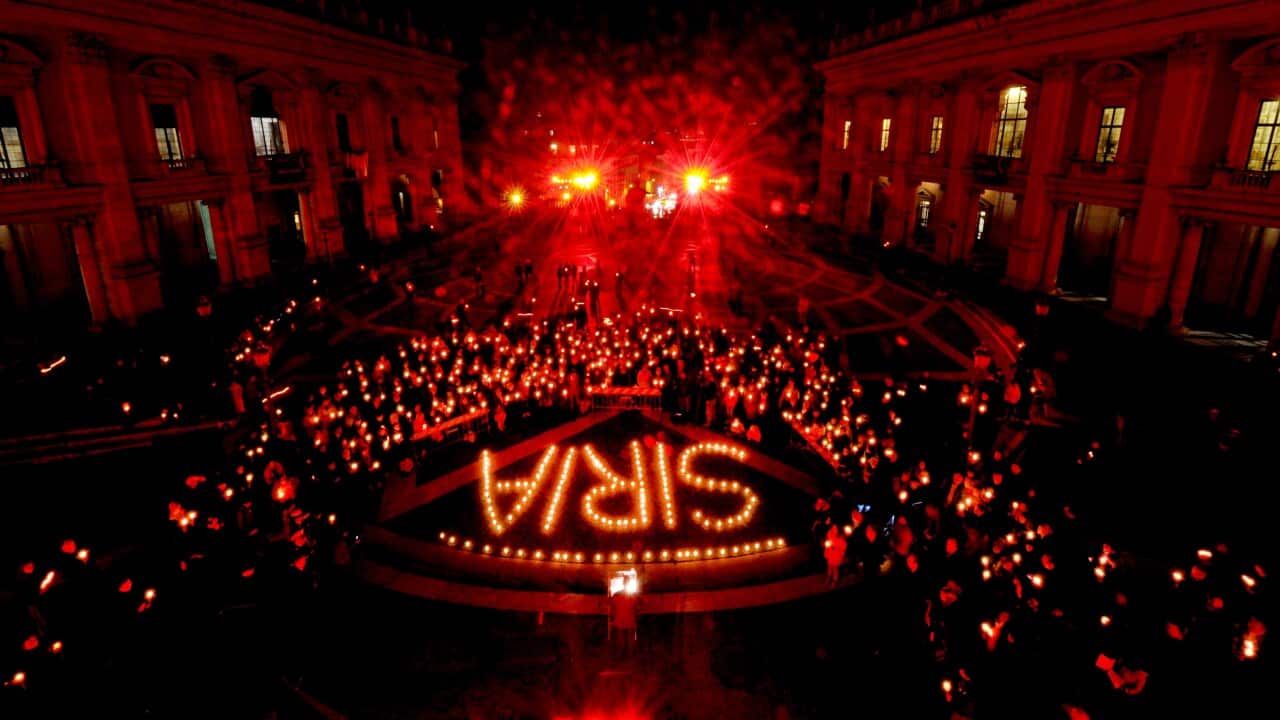
Syria's civil war enters a fourth year with at least 146,000 people dead, millions more homeless, cities and historical treasures in ruins, the economy devastated and no end in sight.
On March 15, 2011, just weeks after popular uprisings toppled dictators in Tunisia and Egypt, protests erupted in Syria's southern city of Daraa after teenagers were arrested over anti-regime graffiti.
"The people want the fall of the regime," the youths wrote on walls, echoing similar sentiments elsewhere in what was becoming known as the Arab Spring.
President Bashar al-Assad's regime reacted forcefully, and people began to die.
Protests spread, and as they did, the response was more force aimed at drowning out calls for change.
News that makes sense
Your trusted source for staying up-to-date with the world around you. Get free daily news updates and analysis, straight to your inbox.
Friday after Friday of demonstrations that followed weekly Muslim prayers were met with violence, and the popular mood hardened.
Civilians took up arms, soldiers began to desert and an insurgency became full-scale civil war after the regime bombed the central city of Homs in February 2012.
Two years after that, the war appears to have reached stalemate, with some pessimists saying it could last another 10 or 15 years.
Rebels, now fighting among themselves as al-Qaeda-linked jihadists muscled in on them, control large swathes of Syria.
But the government holds the more densely populated regions, and Assad's strategy is to protect "useful Syria" - the coast, major towns in the north and south and key roads.
And the regime is advancing on three fronts, south of Damascus, in the strategic Qalamun region near the Lebanese border to cut rebel supply lines and in Aleppo in the north.
In Aleppo, once Syria's commercial capital, the regime has retained the city's west, while advancing around the outskirts of the rebel-held east and securing and reopening the nearby airport.
Syria's mostly exiled political opposition, recognised by Western powers who hope for a negotiated end to the war, is largely ignored by rebels on the ground.
Despite such divisions, the entire opposition insists that any political solution exclude Assad, but that came up against a stone wall earlier this year when the two sides met in Geneva under pressure from their respective foreign allies and got nowhere.
Indeed, just this week, the talk in regime circles has turned to elections, with Assad expected to stand for another term and, undoubtedly, win.
The regime has long portrayed the rebels as "terrorists" backed by foreign powers, claiming it has survived because it has popular support.
But it has been accused of wide-ranging atrocities, from jailing and torturing thousands to dropping so-called barrel bombs from the air, a tactic rights groups say fails to discriminate between fighters and civilians.
Rebels, particularly from the jihadist Islamic State of Iraq and the Levant, have also been accused of rights violations.
The war has forced more than nine million people from their homes, creating the world's largest displaced population, the UN's refugee agency said Friday.
More than 2.5 million Syrians are registered or awaiting registration as refugees in neighbouring countries, and in excess of 6.5 million people are displaced inside the country.
The total number who have fled their homes now exceeds 40 per cent of the pre-conflict population, the UN said.