In brief
- Donald Trump has declared that a "historic agreement" for Hamas' disarmament had been reached.
- However, one expert says the likelihood of the US president's promised deal coming to fruition is slim.
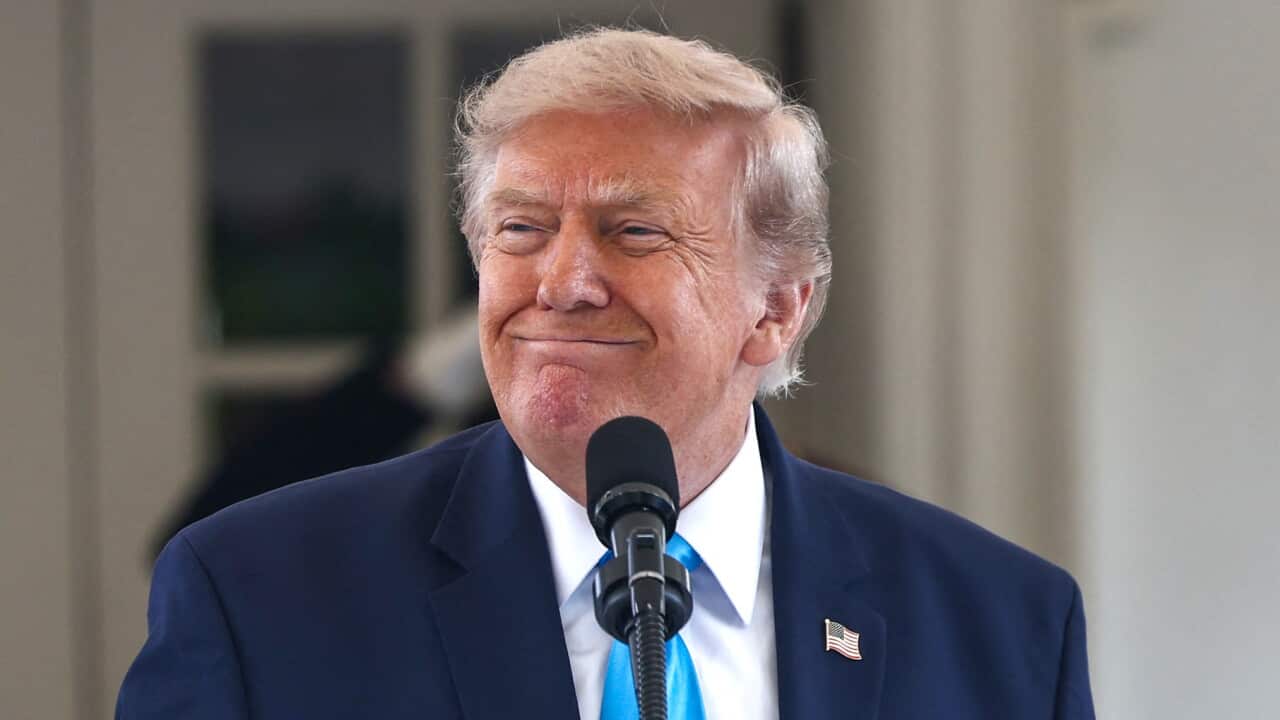
United States President Donald Trump's declaration of a "historic agreement" for the "complete disarmament" of Hamas landed on Friday — but experts have pointed out an acute lack of detail, in an announcement that may lead nowhere fast.
Trump announced the deal on Truth Social on Friday morning, saying disarmament would happen in "carefully structured phases", with Israeli forces gradually withdrawing and a United Nations-mandated multinational peacekeeping force working alongside a new Palestinian police force to take responsibility for Gaza's security.
Israeli forces have not yet agreed to do so, and may not.
The agreement was a critical step towards Gaza being governed by a new Palestinian technocratic body that would work closely with the so-called Board of Peace, Trump said.
The Board of Peace confirmed the agreement in a statement on X, saying Hamas had officially "committed to an actionable plan for relinquishing all its weapons" that would be followed by an Israeli withdrawal.
News that makes sense
Your trusted source for staying up-to-date with the world around you. Get free daily news updates and analysis, straight to your inbox.
"The Board of Peace has worked closely with the National Committee for the Administration of Gaza (NCAG)," it said.
"It will soon begin a phased transition toward full authority, backed by the International Stabilization Force (ISF), and will accelerate implementation of the rule of law, security, and humanitarian improvement in Gaza."
Senior Hamas officials told Agence France-Presse (AFP) a deal had been agreed on.
Ghazi Hamad, a senior Hamas official, said the agreement had a clear provision that Israel must commit to and implement its obligations, adding: "If Israel does not implement the agreement, neither will we."
Israel has not issued a formal public response, but prior to the announcement, an Israeli official told Reuters Israel had rejected a proposal.
"Israel demands the complete disarmament of Hamas, including the removal of weapons from Gaza and the complete demilitarisation of the Strip as a precondition for any process," the official said earlier on Friday.
"The 15-point document in question does not provide a satisfactory response to these demands and Israel conveyed its objections."
Foreign Minister Penny Wong said Australia wanted to see the Gaza peace plan — endorsed by the UN Security Council — implemented and reiterated that "Hamas must disarm and play no role in the State of Palestine", adding that she was looking forward to more details.
Trump's announcement offered little detail on how a disarmament process would actually work, with the Board of Peace telling Reuters that the conditions required for the deal to proceed would be published within two weeks.
According to one expert, it's unlikely to change much on the ground in Gaza any time soon.
Will a disarmament deal actually be reached?
Jessica Genauer, an associate professor in international relations at UNSW, believes a disarmament deal is unlikely to materialise in the near future.
"It's a big announcement that the disarmament of Hamas will take place or has been agreed, but it really doesn't say how that's going to happen," Genauer told SBS News.
"The details are going to be critical to whether or not this can actually be carried out — and whether or not Hamas and Israel will agree to the deal."
A US official on Friday told reporters that Israel is "very sceptical that Hamas will disarm".
Asked whether the US is convinced Israel will agree to the terms, the official said: "We're very confident they will adhere to it. If they don't, obviously President Trump would be very, very disappointed."
Genauer doesn't believe an agreement will be signed at all, in the near term or otherwise.
"It's incredibly unlikely given that Hamas and Israel are still sitting very far apart on core issues and there's been no attempt made to actually get them closer to an agreement in terms of what they would see as their core interests," she said.
Should an agreement eventually be struck, she predicts it would take months to get there, if not longer.
Several unsolved practical questions
Genauer said implementing an agreement required solving several practical questions — the first being which militants were disarmed.
"There are a number of different militant groups operating in Gaza, not just Hamas," Genauer explained. "I expect that Israel would want this to be disarmament of all militant groups within the Gaza Strip."
The second is what she calls a "commitment problem" — even if Hamas' leadership agreed in principle, there's no clear mechanism for ensuring every individual fighter actually gives up their weapons.
Third, and perhaps the most basic, is how a handover would actually be executed.
"Who would go into the Gaza Strip and take those weapons from Hamas fighters and then get them out of the Gaza Strip again?" Genauer said.
Speaking with AFP, Hamad said Israel "will not intervene in the issue of disarmament", with the National Committee for Administration of Gaza managing and executing the handover.
Genauer said a stand-off dynamic would complicate the process.
She said that if Hamas were to agree to disarm, they would want something in return — likely a formal governance role Israel is unlikely to grant, or a full Israeli withdrawal.
"We're kind of back to a similar dynamic that we saw when the war was ongoing ... that both Hamas and Israel want the other one to move first," she said.
For Israel, she said, the goal is the complete end of Hamas as a governing entity in Gaza in any capacity.
On the other hand, Hamas sees its continued existence as an organisation as an "existential issue" on which it would be unwilling to concede any ground, she added.
"I don't think that that's a point where we're ever going to see agreement between Israel and Hamas given what happened on 7 October," Genauer said.
Hamas in its entirety is listed as a terrorist organisation by the European Union and seven other countries, including Australia. But the UN Assembly rejected classifying Hamas as a terrorist group in a 2018 vote.
Is this a win for Trump?
Genauer sees it as anything but.
The timing, she said, is strategic, coming as the US war effort in Iran spirals into a broader regional conflict.
"I think Trump making this statement at this time is partly him trying to divert attention from what is happening in Iran with a big announcement that doesn't have a lot of detail," she said.
She believes Trump is using the announcement to project himself as a peacemaker — an image he has long cultivated — even as the details remain thin.
"He is trying to show good news in terms of his ability to end conflicts, to create peace — something he has been very proud of in the past.
"We have to very much take what Trump is saying with a grain of salt, and I don't actually expect it to change the reality on the ground at this stage."
The announcement of the deal — and Israel's apparent reluctance to sign on — also points to a shifting Trump-Netanyahu relationship.
While the broader US-Israel alliance remains strong, Genauer describes a "frosty" patch between the two leaders, driven partly by Trump's frustration over how the Iran war has dragged on, and partly by what he sees as Netanyahu's unwillingness to compromise on Gaza when Trump would rather claim any resolution as a win.
For Netanyahu, she said, the priority is domestic: projecting strength and resistance to Hamas matters more to him right now than reaching a deal.
For the latest from SBS News, download our app and subscribe to our newsletter.







