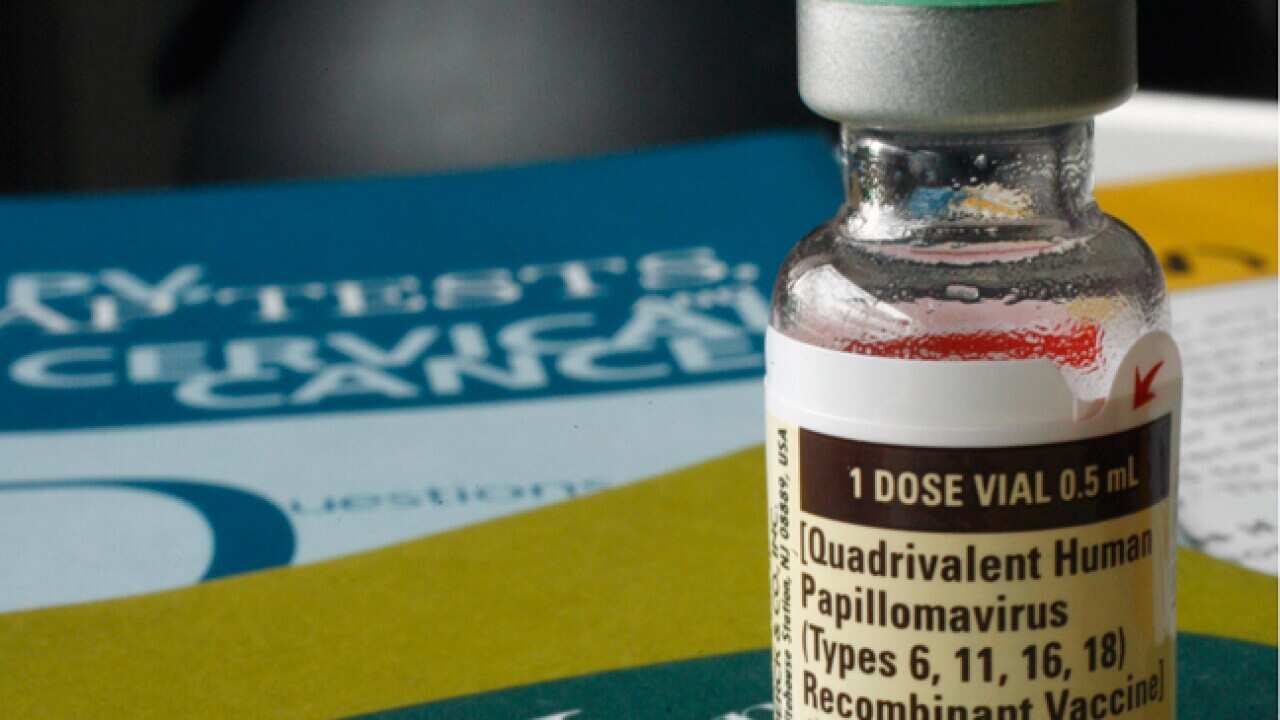
The Cancer Council is urging the federal government to release current cervical cancer vaccine data, after a recent study showed a drop-off in the number of teenage girls completing the three-dose course.
Government data for 2007 to 2009 showed all states fell below minimum coverage guidelines set out by health experts.
The Department of Health data also showed 73 per cent of girls aged 12 to 13 were completing the three-stage vaccine process, down from 83 per cent who started the course in 2007.
"This means they will have much less protection against human papillomavirus types 16 and 18 - which are responsible for 70 per cent of cervical cancers - than girls who have completed the full three-dose course," Cancer Council spokesperson Kate Broun said.
Ms Broun said no hard data existed explaining why some teenagers shied away from the later stage vaccine, although there was anecdotal evidence that the pain caused by the first stage might be a factor.
News that makes sense
Your trusted source for staying up-to-date with the world around you. Get free daily news updates and analysis, straight to your inbox.
She also said that some girls and their parents might not understand the process or the importance of the cervical cancer vaccine.
Ms Broun compared the government data to a British government report, released in January 2011, that had a detailed regional breakdown of vaccine progress for 2009/10.
"It would be terrific wouldn't it? Here, in Victoria, we work in local government areas, and it would be great to actually get that data in a local government area," Ms Broun said.
"The Cancer Council has been wanting to see that information for years."
All states and territories fell short of the minimum 80 per cent coverage for completing the vaccine course, a figure the Cancer Council says is needed to reduce the incidence of cervical cancer.
Sometimes referred to as the "common cold" of sexually transmitted diseases, the human papillomavirus (HPV) is a group of viruses that causes skin warts, genital warts and some cancers.
Four out of five people have HPV at some point in their life.
The government has been providing the free vaccine for girls aged 12-13 years through their schools since 2007.
The data, which was released on April 4, also showed 38 per cent of women aged 18-19 and 30 per cent of women aged 20-26 received all three doses.
This compares to programs for adult measles, mumps and rubella in 2000 which resulted in coverage rates of around 10 per cent.
Ms Broun said a positive from the vaccination program was equity across lower socio-economic groups, who are less likely to have pap-smear tests to decrease their risk of cervical cancer.







