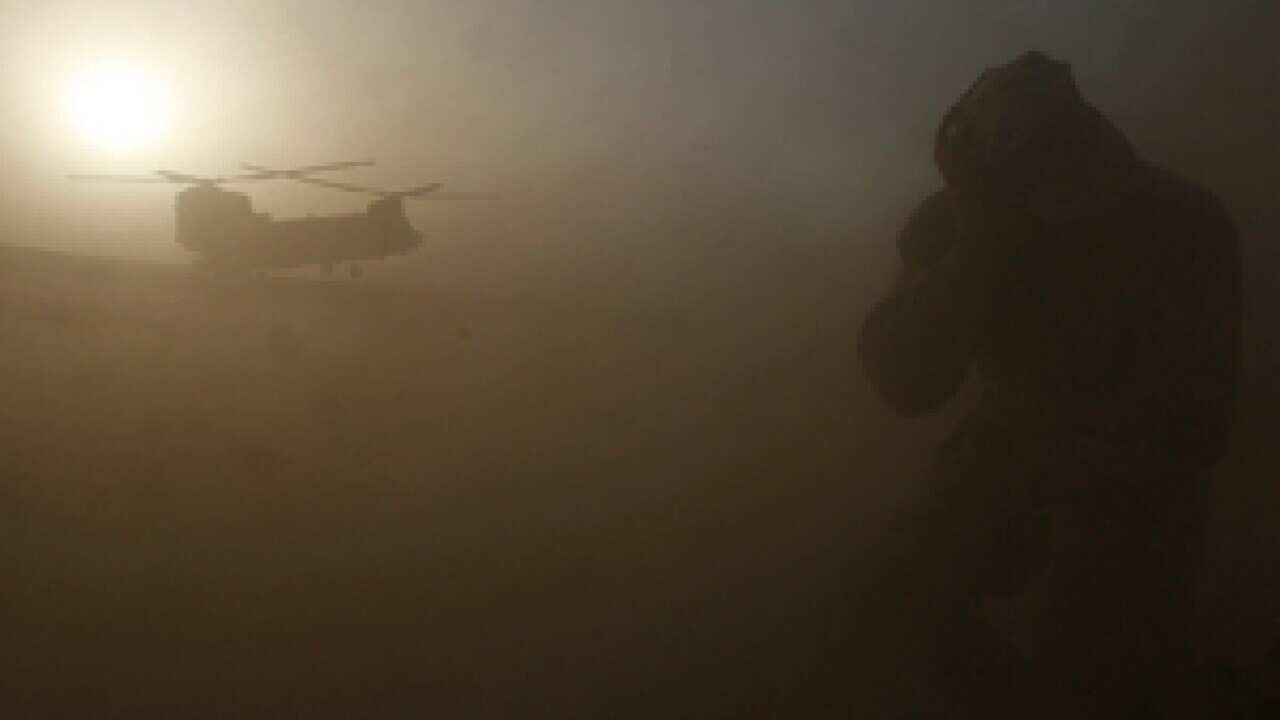
People were seemingly going about their everyday business, not bothered by or even noticing our presence.
That was how the Marines wanted it as the radio suddenly crackled into life and we got word – the trucks and Humvees were minutes away, speeding toward an intersection earlier designated as the rendezvous point for the operation.
Marines jumped from the vehicles as they pulled up. Some fanned out around the buildings while others, including female officers, moved into the village's main square. The objective was partly to meet-and-greet Afghan locals and partly to find any bad guys, question them, and hopefully locate even badder guys.
The shakedown was tense but more nervous than necessarily hostile. Until, that is, one local guy decided to run. He sprinted away from the village, yelling something unintelligible, past one group of Marines, past a Humvee, and down the road out of the village.
“We got a runner!” yelled a Marine. Again: “Runner!”
News that makes sense
Your trusted source for staying up-to-date with the world around you. Get free daily news updates and analysis, straight to your inbox.
What to do? You have less than an instant to make a life changing decision.
Two shots cracked out.
The guy running pitched forward, spun, and made a dramatic lurch to the side of the ground before lying motionless.
This day just turned very, very bad.
I turned to the Marine captain standing next to me and grimaced.
“That would have set back our cause in whatever country this is meant to be by about two years,” sighed Captain Michael Harmon. “Shooting that guy was a violation of terms of war. There's nothing wrong with running away. We'll have to talk about that later.”
Thankfully, this incident was just an exercise. The “Afghan village” was actually in a forest in Virginia, a few hours from Washington DC, and the “dead” local was a Marine veteran, with experience in Afghanistan, playing a role for the benefit of Marine officers before their deployment.
But Captain Harmon's words echoed through my head as I read of The Kill Team, an excruciatingly brilliant story by Mark Boal for Rolling Stone magazine on American soldiers going rogue in Afghanistan.
Last week, Army Specialist Jeremy Morlock, a member of the unit, was sentenced to 24 years in jail after pleading guilty to murdering three civilians in Kandahar province in Afghanistan last year.
Morlock's sentence is expected to be part of a plea deal where he will testify against other soldiers involved in the incidents. He told the judge during the hearing “the plan was to kill people.” Civilians, that is. Not enemy combatants.
Top of the list is Staff Sergeant Calvin Gibbs, the platoon's squad leader who allegedly cut fingers from dead civilians for souvenirs after killing them. Gibbs, a 26-year old giant has been portrayed as a crazed killer obsessed with taking out as many Afghanis as he could – Taliban or civilian.
If Captain Harmon had a view for public consumption, he'd probably suggest the cause had been put back about 200 years.
The messy episode has the potential to become an equivalent of the Abu Ghraib scandal for Afghanistan and President Obama. Also under scrutiny is the US Army leadership that failed to detect and then act upon reports of the 'Kill Team's trail of destruction.
Morlock's sentence comes soon after Australian troops in Afghanistan were criticised for racist comments on Facebook. Australian soldiers were caught on video referring to Afghans as “sand coons”, “dune coons”, “niggers” and “smelly locals”.
Not exactly the best vocabulary nor attitudes for winning hearts and minds among the locals.
Back in Virginia, I'd asked Captain Harmon if he had advice for Marines being deployed to Afghanistan.
“Uphold the standard,” he quickly replied. “Little problems that seem very inconsequential tend to manifest themselves into very big problems.”
They most certainly do.







