in brief
- Canadian tariffs on US goods came into effect overnight, adding fuel to the neighbours' trade war.
- Experts say the relationship breakdown could reshape North American industries and diplomacy.
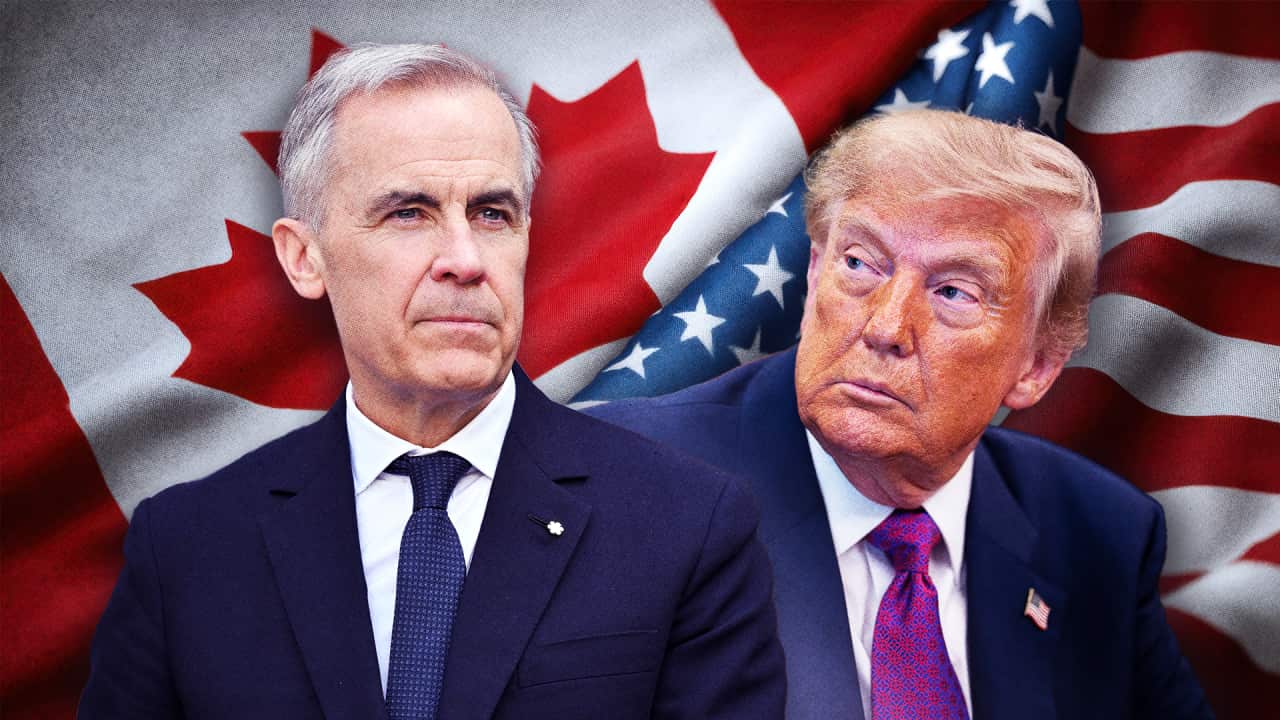
The escalating trade war between the United States and Canada could cause mass layoffs across North America, as the long-term allies find themselves "at serious odds".
The latest round of retaliatory tariffs took effect overnight, as Canada matched the US by imposing levies of up to 50 per cent on US$20 billion ($27.7 billion) worth of US goods.
The Canadian levies follow 50 per cent tariffs the US imposed on some US$20 billion ($27.7 billion) of Canadian goods last month, after several rounds of negotiations collapsed, with no new talks scheduled.
The breakdown has widened a rift between the longtime allies, both of whom have blamed the other for the failed talks, as the 18-month-old trade war intensifies.
But the costs could go beyond economics, as the countries have historically relied on close trade and supply-chain ties.
News that makes sense
Your trusted source for staying up-to-date with the world around you. Get free daily news updates and analysis, straight to your inbox.
Jobs at stake
As former US ambassador to Canada David Cohen explained, many products, such as motor vehicles, cross the two countries' borders several times during the manufacturing process.
"The trade relationship between the United States and Canada is arguably the most interconnected trade relationship anywhere in the world," he told ABC Radio National on Wednesday morning.
The "people getting hurt" are not the leaders of Canada and the US, he added, but small and medium-sized businesses getting "caught in the middle".
On Monday, US President Donald Trump said on social media that Canadian private jet maker Bombardier would no longer be allowed to sell its planes in the US unless it started manufacturing in the country, without saying whether an official government order would follow.
While Bombardier is owned by Canada, the company employs more than 1,000 US workers in Kansas and works with US companies across 47 states.
Blocking this manufacturing is a "clear example" of the two countries' interconnectedness, Cohen said, as an attempt to punish Canada will also affect US workers.
"In a trade war, the only people being hurt are small businesses and individual employees in both Canada and the United States. That can't go on. We have to find a resolution to it," Cohen said.
'Pivot and prosper'
Canada and the US have had a tense relationship at times.
Jessica Genauer, an expert in international conflict and international relations at the University of NSW, said recent animosity stems back to Trump's first term as president and has been reignited.
"What we're seeing now is a much more fractious, deep-seated antagonism that's starting to emerge," she told SBS News.
Comments made by Trump that undermine Canada's sovereignty and national identity, such as referring to the country as a 51st state of the US, have been "particularly egregious" to Canadians.
Canada's Prime Minister Mark Carney has been shifting away from the US, despite it being his country's biggest trading partner.
For him, the economic cost of pivoting away from the US is outweighed by the "cost of standing still".
"We have everything we need to pivot and prosper," Carney said in a video posted on YouTube after the latest tariffs came into effect.
Canada designed the retaliatory measures to put economic and political pressure on the US, Canadian government officials said, and the tariffs are expected to hit sectors in some competitive states such as Michigan and Ohio, ahead of US midterm elections in November.
While the new tariffs affect a small number of exports relative to total trade between the US and Canada, some analysts worry the standoff could destabilise the US-Mexico-Canada Agreement, the free-trade pact that succeeded the North American Free Trade Agreement.
Together they have underpinned commerce across North America for decades.
So, what does a "pivot" by Canada away from the US look like?
'Leap over the US'
Carney has been shoring up support with other countries since he became prime minister in March 2025.
Ron Levy, a professor at the ANU College of Law, Governance, and Policy, said Canada has plenty of options for trade and diplomacy, albeit at the expense of convenience.
"Mostly Europe, which is not that far across the Atlantic, also across the Pacific to China and other Asian economies and also South America. So just leaping over the United States into Mexico and Central America and other Latin countries," he said.
While its border neighbour would be the best option for direct trade, Canada could gain symbolic and substantive benefits by diversifying its economic portfolio.
"It could actually be a really good idea for Canada, and a way to push back on Trump," Levy added.
What's next for Trump and Carney?
Polls suggest Carney has broad support from Canadians, as the tariff war deepens.
Genauer said the leader has "read the room well" and captured a sense that Canada's "national sovereignty and integrity" are under threat from Trump.
"That's something that is going to resonate with the Canadian population."
Levy added that the anti-Trump sentiment has also had a unifying effect on Canada.
"For example, the province of Quebec has kind of shelved plans to think about seceding from Canada until Trump is out of office," he said.
"It's kind of like drop everything and deal with the apparent existential risk across the border."
A new Angus Reid poll on Tuesday showed that approval of Carney's performance jumped 11 points to 62 per cent from an August poll.
Meanwhile, just 20 per cent of people in the US approved of Trump's tariffs on Canadian goods, a Reuters/Ipsos poll found.
Genauer said Trump could continue to poll poorly throughout his presidency because of his tariff legacy, despite a strong core support base.
"There will be a bit of an association with Trump and the fact that industries and populations across the United States are more and more just starting to bear the costs of the way that Trump uses tariffs and aggravates other countries into applying reciprocal tariffs," she said.
Levy said that while Trump's popularity is low, it's not dire for his administration nor party.
"His popularity is probably low enough for the Democrats to win the midterms. But if a presidential election were held today, anything could happen."
— With additional reporting by Reuters.
For the latest from SBS News, download our app and subscribe to our newsletter.







