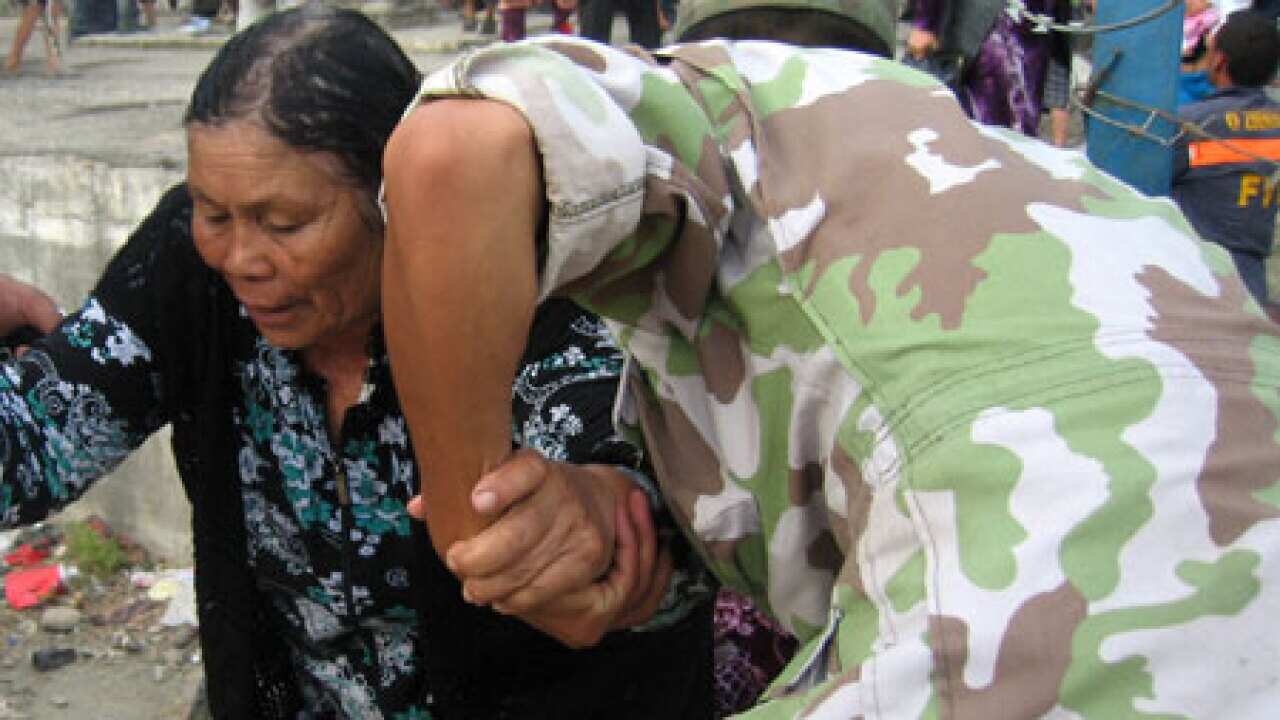
The Central Asian nation's interim government struggled to stem the worst ethnic clashes since the end of the Soviet Union, as gunbattles between rival groups turned cities into warzones and marauding mobs torched whole villages on a third day of bloodshed.
Neighbouring Uzbekistan said up to 80,000 ethnic Uzbeks, mostly women and children, had fled the fighting and were being housed in hastily-set up camps along the border as rights groups warned of a looming humanitarian crisis.
Russia sent paratroopers to protect its airbase in Kyrgyzstan but rejected requests from Bishkek to get involved in the unrest that has riven the country since President Kurmanbek Bakiyev was ousted in April.
News that makes sense
Your trusted source for staying up-to-date with the world around you. Get free daily news updates and analysis, straight to your inbox.
Officials said 113 people were killed in the three days of clashes and 1,400 injured.
Interim Kyrgyz President Roza Otunbayeva's provisional government late Saturday gave security forces shoot-to-kill orders to protect civilians, amid growing calls from foreign leaders and aid groups to end the clashes.
"If we do not take opportune and effective measures the unrest could become much more serious and descend into a regional conflict," it said.
It tightened a state of emergency to a 24-hour curfew in the Osh region, where the violence erupted Thursday and extended the emergency rule across the country's entire southern Jalalabad region as fighting spread there.
Kyrgyz authorities sent five planes of soldiers from Bishkek to Jalalabad, government radio reported, while the defence ministry mobilised all army reservists age 18 to 50.
But the violence raged on, with many of refugees flooding the Uzbekistan border village of Yorkishlok accusing Kyrgyz law enforcement officials of abetting marauding gangs of ethnic Kyrgyz.
"They are killing us -- all the Uzbeks -- one after the other!," Rani, 51, told AFP after quitting her home in the Osh region. "I fled. I don't know what happened to my children and my grandchildren.
Uzbekistan has voiced "extreme alarm" over the situation, calling it an organized bid to inflame ethnic tensions, as it officially allowed people over the border for the first time.
"In the whole of the Andijan region, 32,000 adult refugees have been registered," Abror Kosimov, the head of the regional emergency services, told AFP, adding that the number of child refugees was in the thousands.
A police official put the total number including children at more than 80,000.
In Kyrgyzstan's south, panicked residents described mounting chaos.
"The authorities are not doing anything to stabilise the situation.... We are not even able to collect bodies from the streets," Ruslan, an Osh resident who preferred not to give his surname, said by telephone.
"The truth and the enormity of the tragedy cannot be hidden. The city centre is under the control of bandits."
In Jalalabad, where the worst of the fighting now appears to be centered, local resident Sergei Kim, described gunbattles throughout the city.
"There are shoot-outs going on in the streets and many people. A gang is moving in the direction of the university," he said.
Smoke hung over the city as fires raged in several buildings, another local resident, journalist Zhalil Saparov, told AFP.
"The authorities are completely overwhelmed, as are the emergency services," said Severine Chappaz, the deputy head of the International Committee of the Red Cross (ICRC) mission in Kyrgyzstan.
The provisional government has struggled to impose order since coming to power during deadly riots that ousted Bakiyev and left dozens of people dead.
Bakiyev, exiled in Belarus, himself denied any link to the violence, slamming the suggestion as a "shameless lie."
Since April's uprising, foreign leaders have warned of the risk of civil war in the strategic state, which hosts both a US airbase outside the capital Bishkek that is vital to its operations in Afghanistan and Russian bases.
UN Secretary General Ban Ki-moon expressed alarm Sunday at the scale of the clashes, the inter-ethnic nature of the violence, the mounting casualties and the large number of displaced people, his spokesman said in a statement.
The UN is urgently assessing humanitarian aid needs, it added.
Russian President Dmitry Medvedev called on Kyrgyzstan to "restablish order as soon as possible", the Kremlin said in a statement quoted by Russian news agencies.







