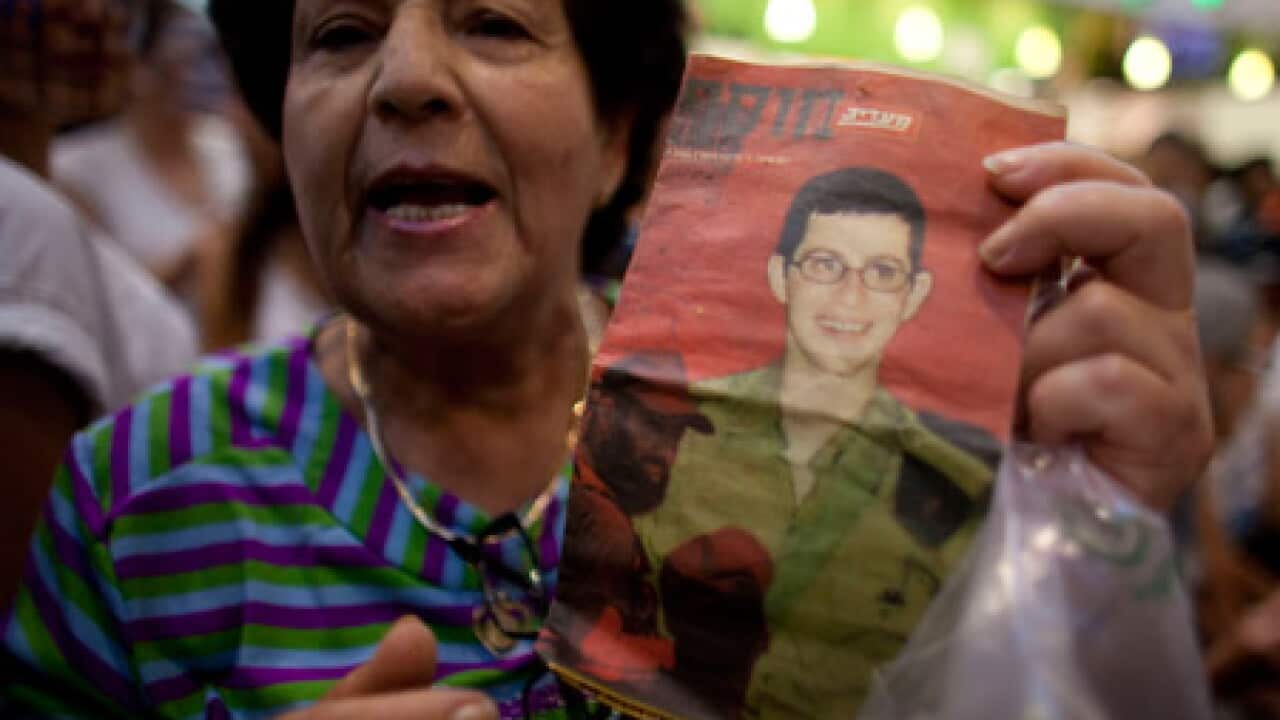
Roars of support and a sea of ribbons have marked the start of a march across Israel by Gilad Shalit's family in a campaign to bring back the soldier held in Gaza for four years.
Thousands of well-wishers and supporters flocked from the family's home in Mitzpe Hila near the Lebanese border to a kibbutz near the seaside town of Nahariya in the first leg of a 12-day cross-country march to Jerusalem.
The white-clad demonstrators, most of them wearing hats and T-shirts emblazoned with the words "Gilad is still alive," had mushroomed by midday, with organisers putting the figure at about 10,000.
News that makes sense
Your trusted source for staying up-to-date with the world around you. Get free daily news updates and analysis, straight to your inbox.
The march aimed to ramp up pressure on Prime Minister Benjamin Netanyahu to reach a prisoner swap deal with the Hamas rulers of Gaza, who have held the soldier at a secret location since June 25, 2006.
The demonstrators wore yellow ribbons -- a symbol of the campaign for Shalit's release -- and carried Israeli flags and banners reading "It's time to bring Gilad home," as they launched the 200-kilometre (120-mile) trek.
They joined parents Noam and Aviva Shalit and their two other children on the route to Jerusalem, where they will set up camp outside Netanyahu's residence.
"I'm calling on the whole world to join us and march with us: We will not come back here without Gilad," said Noam Shalit, before locking his front door for the last time and setting off on the walk.
"We don't want to wait here any more," said Shalit, who has spent the past four years lobbying governments and officials across the world.
Later, as the marchers set up camp after their first day trekking, Shalit told supporters he was heartened by the turnout.
"The public turned out in masses and we welcome this. It strengthens us," said Shalit.
Ahmad Taun, a 48-year-old from the nearby Druze village of Kfar Yassif, took the day off to demonstrate his solidarity with family.
"Gilad could be anyone's son," said Taun. "Taking part in this march is the least anyone can do."
The campaign has received huge public support as well as the backing of dozens of public figures and celebrities.
Friday marked four years since the soldier, now 23, was captured by militants from the Islamist movement Hamas and two other Palestinian groups in a deadly cross-border raid.
Since then, Shalit has had no contact with his family or the International Committee of the Red Cross, a move that Human Rights Watch, the New York-based international human rights watchdog, slammed by as cruel and inhuman.
As the demonstrators set off, Netanyahu insisted his government was pursuing all avenues for Shalit's return and urged the international community to step up diplomatic efforts to that end.
"The government and security officials continue to work at all times by open and covert means for the return home of Gilad Shalit safe and well," he told reporters at the start of a cabinet meeting.
Hamas, which has ruled the Gaza Strip since 2007, wants hundreds of Palestinian prisoners in exchange for Shalit, including scores of top militants responsible for deadly attacks.
Negotiations for a prisoner exchange held through Egyptian and German mediators broke down late last year when Israel made an offer to which Hamas has yet to formally respond.
On Sunday, Israeli newspapers revealed new details about the proposal they said were leaked by the government, including its willingness to release militants implicated in attacks that killed 600 Israelis.
Commentator Nahum Barnea, writing in the top-selling Yediot Ahronot, said the disclosure was from the prime minister's office and "reeks of a public relations stunt."
Yediot said the offer would allow the release of those who had killed up to 10 Israelis each, excluding top political leaders and what it called "archterrorists" who masterminded the deadliest attacks of the last decade.
Netanyahu's office declined to confirm or deny the reports.
Nearly three-quarters of Israelis would back a prisoner swap deal, according to a Yediot Aharonot poll published Friday.







