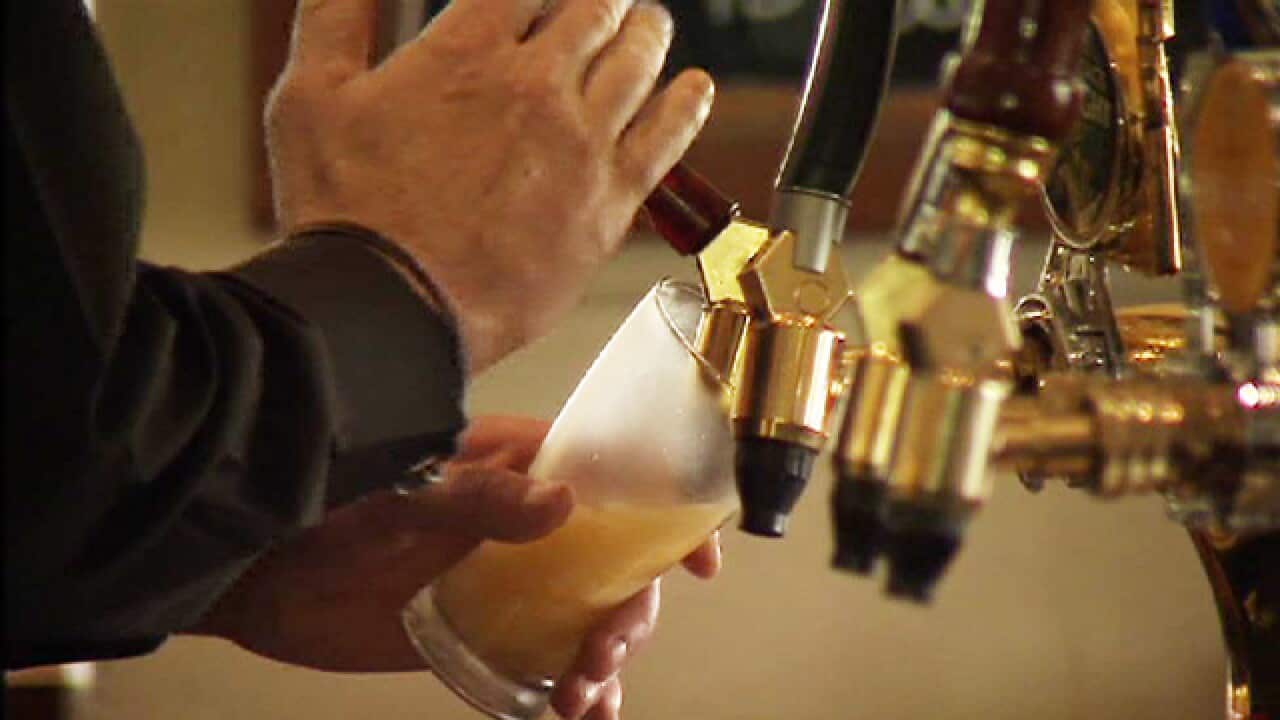
The Northern Territory Government has announced tough new penalties for Territorians who are drunk in public.
After being caught three times within two months, the offender will be forced into rehabilitation, after being assesed by the Alcohol Mandatory Treatment Tribunal.
They'll face up to twelve weeks treatment at centres located in Darwin, Alice Springs, Katherine and Nhulunbuy.
The program will accomodate eight hundred people per year.
There are renewed calls for indigenous specific rehabilitation services in South Australia.
News that makes sense
Your trusted source for staying up-to-date with the world around you. Get free daily news updates and analysis, straight to your inbox.
They come a year after the defunding of the state's only such facility, and six years after the commonwealth promised another.
A Parliamentary committee has heard that millions earmarked for services remains unspent, and may be lost to the state if there's a change of government in September.
In February last year South Australia's only Aboriginal residential rehabilitation facility - Kalparrin near Murray Bridge - was suddenly stripped of its $1.3 million in annual funding.
"Roughly about 20 per cent of the Aboriginal population here in Adelaide for example are into some form - whether it's injecting drug use or other substance abuse problems," Scott Wilson of the Aboriginal Drug and Alcohol Council told SBS.
"So that's quite a lot of people who obviously on a daily basis could be helped"
Parliament's Aboriginal Lands Committee heard that since Kalparrin's closure, street patrols have seen a spike in pickups from 1000 to 3000 people per quarter, most ending up in police cells.
Said Mr Wilson: "if there is no rehab or whatever, something like an overnight shelter is definitely needed in Murray Bridge."
It's not just Murray Bridge, but the whole state - Coober Pedy's Aboriginal health service says the lack of treatment options is fuelling incarceration.
Dora Mushongera, of the Umoona Tjutagku Health Service Coober Pedy told SBS they are finding that three quarters of their clients are imprisoned at the moment for other reasons.
"However I'm very sceptical that's the right way to go - I would rather see these people in prison in a rehab centre somewhere, where they can be taught a skill."
It's emerged a 2007 COAG commitment for a rehabilitation centre at Port Augusta has been withdrawn from tender, sparking fears that funding will be lost if the Coalition takes power in September.
"If a new government is elected who is to say that once they go through and look at every dollar to see where the savings are, they might think hang on, South Australia has been sitting on this $7 million since 2007, we'll take that back. So the chance of having another rehab clearly isn't going to happen," said Mr Wilson.
Tammy Franks, Greens MP told SBS "we have a role to play to ensure that Aboriginal organisations are able to access the money that's sitting there and already earmarked for a service just like this."
"It's sitting there going to waste, where people's lives are being ruined in the process, people are unable to access rehab and so they're going to jail, they're ending up in hospital beds, they're losing years of their lives because we can't get our act together at the state level and work with the feds on this."
A recent Access Economics report shows diverting Indigenous people from prison into rehab could save about $200,000 per client per year.
Health Minister Jack Snelling says he's speaking with the Commonwealth about future drug and alcohol rehabilitation services to compliment existing State services.
A Health Department letter says there's a new plan to split the funding between the states north west and south east in a fresh tender process this year, but advocates fear the divided funds won't go far, and it's unlikely that two deals can be struck before the election.







