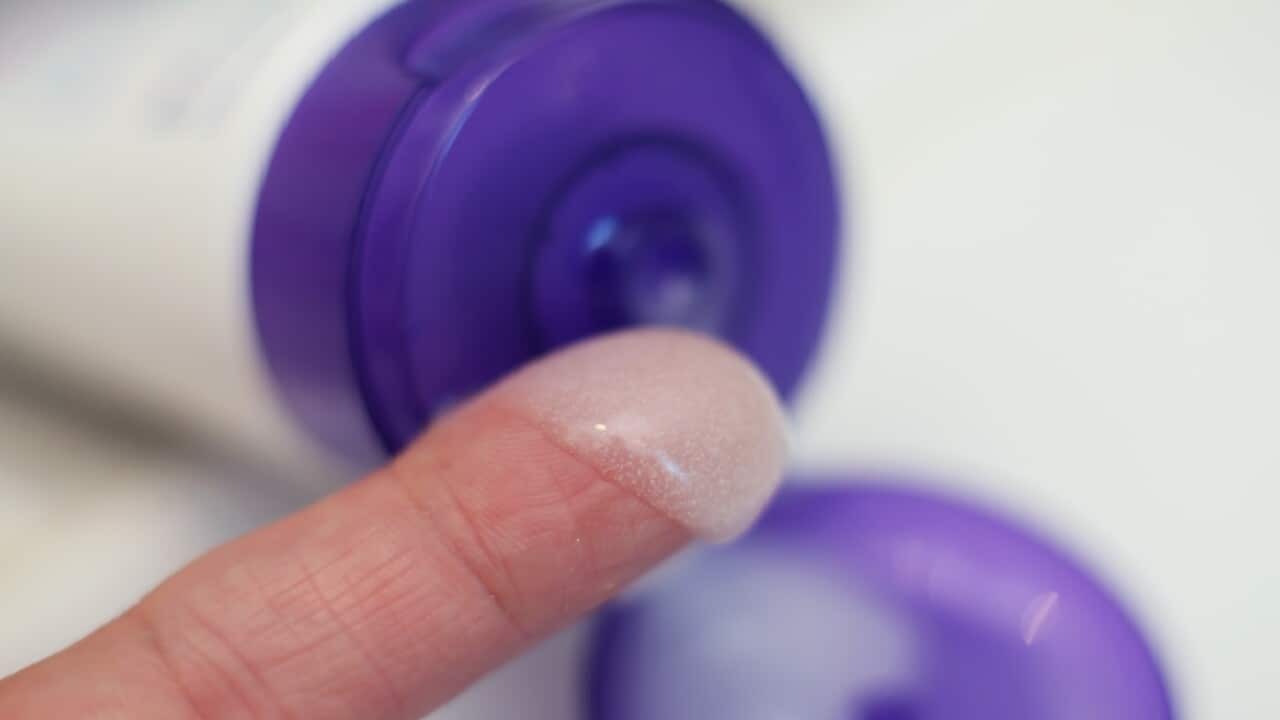
Unlike the shocking images of country-sized garbage patches floating in the oceans, the microplastic particles that wash off textiles and roadways leave the waterways looking pristine.
But they constitute a significant part of the "plastic soup" clogging our waters -- accounting for between 15 and 31 percent of the estimated 9.5 million tonnes of plastic released into the oceans each year, according to the International Union for Conservation of Nature (IUCN).
In its report "Primary Microplastics in the Oceans", IUCN found that in many developed countries in North America and Europe, which have effective waste management, tiny plastic particles are in fact a bigger source of marine plastic pollution than plastic waste.
In addition to car tyres and synthetic textiles, such particles stem from everything from marine coatings and road markings, to city dust and the microbeads in cosmetics.
"Plastic waste is not all there is to ocean plastics," IUCN chief Inger Andersen said in a statement, insisting that "we must look far beyond waste management if we are to address ocean pollution in its entirety."
News that makes sense
Your trusted source for staying up-to-date with the world around you. Get free daily news updates and analysis, straight to your inbox.
"Our daily activities, such as washing clothes and driving, significantly contribute to the pollution choking our oceans, with potentially disastrous effects on the rich diversity of life within them, and on human health," she warned.
Considerable impact
While microplastics are hard to spot, they can seriously harm marine wildlife and as they enter the global food and water supplies they are believed to pose a significant risk to human health.
Karl Gustaf Lundin, who heads IUCN's Global Marine and Polar Programme, acknowledged that few studies have been done so far on the impact of tiny plastic particles on human health.
But he pointed out to AFP that such particles are small enough to actually move through our membranes, "so we have to assume that there probably will be considerable impact."
IUCN is calling on the makers of tyres and clothing especially to shift their production methods and make products that pollute less.
Lundin pointed out that tyre makers could for instance revert back to using mainly rubber, while textile makers could stop using plastic coatings on clothes.
Washing machine makers could also install filters that could catch micro and even nano plastic particles, he said.
Such steps are vital to limit the damage, he said, warning that the situation is particularly worrying in the Arctic -- the biggest source of sea food in Europe and North America.
"It seems the microplastic is freezing into the sea ice, and since you actually lower the melting point of ice when you have small particles in it, you have a quicker disappearance of sea ice," he said.
Lundin pointed out that when the ice melts, it releases plankton that attracts fish, allowing the plastic particles to "go straight into our food chain."







